Languages
Wednesday, October 14, 2026



News and Views from the Global South
PAKISTAN: At the Butt of a Joke
The Butts of Punjab have become the butt of jokes after Pakistan’s telecom authorities moved to ban "obscene" content on short messaging service (SMS) texts over mobile phones.PAKISTAN: Persecution of Ahmadis Spreads
"Hatred against us has now spread to small towns and villages," Saleemuddin, spokesperson of the persecuted Ahmadiya community in Pakistan, told IPS.
PAKISTAN: Wanted: A Revolution For Girls
Sixteen-year-old Noor Bano believes nothing short of a revolution will convince the men in Malangabad – her remote village in the Khairpur district of the Sindh province, some 460 kilometres from the southern port city of Karachi – to treat women as equals.
PAKISTAN: Cricket Idol Bowls Political Googly
He could be Pakistan’s Obama, although he spews venom at the United States government for its drone attacks and its policies in the region. But Imran Khan speaks of change and, like Obama, enjoys huge online support from the youth.POPULATION: Youth Bulge Adds to Pakistan’s Woes
Pakistan’s population explosion is posing a greater danger than militancy and religious intolerance, says noted medical doctor and demographer Farid Midhet.DEVELOPMENT: Disgruntled Activists Meet in Seoul Ahead of Summit
As extreme weather conditions, rising carbon emissions, unprecedented global economic crises and widening social inequalities throw the planet increasingly off balance, the world is gearing up for another earth summit.PAKISTAN: Newborns at Increased Risk
A newborn baby dies every four minutes in Pakistan. It was not always so. With a sound population policy set out in the 1950s, Pakistan was second only to Sri Lanka in infant and neonatal survival rates during the 1960s and 1970s (compared to Bangladesh, India, Iran and Nepal).
PAKISTAN: Divided Over the Death Penalty
"I think Mumtaz Qadri carried out his action in a highly emotional state and should not be given the death penalty," Mufti Muhammad Naeem, founder of Binoria University International, a religious seminary in Karachi tells IPS. Qadri has been sentenced to death on two counts for assassinating Punjab governor Salman Taseer in January this year.
PAKISTAN: Flood Fatigue Closes Eyes to New Disaster
Men and women wading through waist-deep water with infants straddling their sides; a convoy of donkey carts laden with entire families’ possessions moving towards dry land; people being rescued by uniformed men in rubber boats; ailing elderly carried on rope cots; bird’s-eye views of vast tracts of land submerged under water.
Polio Spreading Out From Pakistan
Despite two decades of mass oral polio vaccination (OPV) drives, Pakistan has failed to control the crippling paediatric disease. Health authorities now fear that it is exporting the virus and setting back global eradication plans.
Bangladesh Draws Pakistan’s Garment Makers
Faced with serious political instability and a deteriorating industrial climate, Pakistan’s garment exporters are turning to Bangladesh, a territory which splintered away after a bloody war of independence in 1971.
PAKISTAN: Flood Relief by Caste, Creed
With just the clothes on their backs, Moora Sanafdhano, 68, and his family of nine waded through waist-deep flood waters swirling through their village of Allah Ditto Leghari, saving themselves in the nick of time.
PAKISTAN: For Shia Hazaras, it’s Funeral After Funeral
Rukhsana Ahmed finds comfort visiting her husband Ahmed Ali Najfi’s grave. "I feel at peace there," says the 60-year-old widow, mother of four and member of the Shia Hazara community.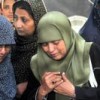
PAKISTAN: Violence Killing the Poor
Taj Bibi’s eyes well up as she recalls the day her ten-year-old son was shot dead, a victim of the violence sweeping through the port city of Karachi since early July. "My three sons, the 12-year-old twins and Adnan, 10, went out to play cricket in the street after lunch. Around 4 pm, the twins came running to tell me that Adnan had been shot. By the time I got there he’d breathed his last," said Bibi, a Pashtun.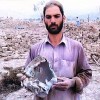
PAKISTAN: Videogames Pictured Killing the Innocent
‘Gaming in Waziristan’, a current photo exhibition, graphically supports charges that drone strikes carried out by the United States military and intelligence in Pakistan’s tribal areas kill more civilians than Taliban.
PAKISTAN: Tourism Takes On Taliban
Standing in the busy main market place of Mingora, it is hard to think that just two years ago this city in Swat district was under the tyranny of the Taliban.
PAKISTAN: After the Flood, Green Homes
Subhan Khatoon’s brand new home is nothing like the one that got washed away, along with all her worldly goods, in the 2010 monsoon floods that submerged a fifth of Pakistan and left 2,000 people dead.
PAKISTAN: ‘U.S. Military Aid Came With Spies Attached’
Defence analysts in Pakistan believe that foregoing 800 million US dollars worth of aid may be a fair bargain for ridding this country of over a hundred ‘military trainers’ who were suspected of being spies.PAKISTAN: Troubled Karachi Finds a Happy Enclave
The long boardwalk, balmy sea air and ebb and flow of water under the bridge, but most of all the festive carnival-like atmosphere of people enjoying the Karachi sunset, are images that stand in deep contrast to the violence this metropolis recently witnessed.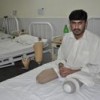
PAKISTAN: Soldiers Pay a Price in War on Terrorism
Army soldier Zaheer Abbas and his squad were hunting down militants in the outskirts of Darra Adamkhel, a town in northwest Pakistan famous for its weapons workshops, when they suddenly found themselves under a surprise volley of improvised explosive devices (IEDs).
PAKISTAN: ‘Ethnic Cleansing’ Feared in Balochistan
The pain and anger in 25-year-old Rukhsana Langho’s voice could be heard over the telephone line from Quetta, the capital of Balochistan province, 700 kms north of the port city of Karachi. "We hate Pakistan and we want freedom," she says, bitter over the disappearance of her brother more than a year ago.« Previous Page — Next Page »





The Week with IPS

NEXT STOP - SDGs
Tracking global progress towards a sustainable world
Tracking global progress towards a sustainable world
