Languages
Tuesday, October 13, 2026



News and Views from the Global South
Freedom of Expression

Cockroach Protests: How India’s Youth Movement Led to Minister’s Resignation
On July 25, after 50 days of protest at Delhi's Jantar Mantar, Union Education Minister Dharmendra Pradhan resigned.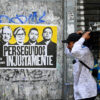
Guatemala: A Narrow Opening in a Captured Justice System
José Rubén Zamora, founder of elPeriódico, Guatemala’s now-defunct leading investigative newspaper, spent 1,295 days in detention before a court granted him house arrest on 12 February. He endured long stretches of solitary confinement in a military jail, held in near-constant darkness and subjected to treatment that six UN experts warned could amount to torture. His offence was simply doing his job. For decades, he exposed the corrupt dealings of Guatemala’s economic and political elites. Prosecutors are still trying to send him back to prison.
SERBIA: ‘We Are Becoming an Electoral Autocracy, a System Where the Government Cannot Lose’
CIVICUS discusses the prospects for elections in Serbia with Rasa Nedeljkov, Programme Director at the Center for Research, Transparency and Accountability, a civil society organisation that monitors electoral processes and the rule of law in Serbia.

Pride: Once Again a Protest
On the morning of 28 June, riot police sealed off Taksim Square with iron barriers and enforced bans on all weekend gatherings in Istanbul. Marchers pressed ahead anyway, re-emerging from side streets each time police dispersed them. By the end of the day police had detained at least 50 people, including a journalist. It was Istanbul Pride’s 24th edition, and the 12th year running that the authorities banned it outright.
MEXICO: ‘Our Call for Justice for Our Missing Loved Ones Must Reach the World Just as World Cup Goals Do’
CIVICUS speaks about efforts to use the 2026 FIFA World Cup to highlight Mexico’s enforced disappearance crisis with Ana Enamorado, a Honduran national who continues to search for her missing son in Mexico, and founder of the Regional Network of Migrant Families.
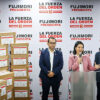
Peru’s Gridlock a Licence for Autocracy?
Right-wing candidate Keiko Fujimori has won Peru’s presidential runoff, narrowly defeating leftist Roberto Sánchez to become the country’s ninth president in a decade. She inherits a system so engineered for dysfunction that rather than making compromises, she may decide the concentration of power is her only means of survival. The constitution that created this trap was written by her father.
Tunisia: Civil Society Criminalised
In May, Tunisian lawyer and journalist Sonia Dahmani was handed her second conviction of the year. Her latest sentence, a two-year jail term, came in reaction to her criticism of poor prison conditions. She previously received an 18-month sentence for calling out the government’s anti-migrant policies. Dahmani faces five more charges under a 2022 cybercrime law that criminalises the spreading of what it calls ‘false information’.
Hong Kong: No Safety in Exile
When performance artist Sammu Chen tried to tie a red thread to a streetpost, plainclothes police stopped him before he could finish. Chen has twice been detained for his symbolic acts of commemoration of the 4 June 1989 Tiananmen Square Massacre, when Chinese authorities killed hundreds, perhaps thousands, to crush democracy protests.
RightsCon’s Cancellation Signals a Growing Threat to Human Rights and Digital Freedoms
RightsCon, the world’s leading summit on human rights in the digital age, has served for over a decade as a vital global gathering, bringing together civil society, academics, technologists, policymakers, and the private sector in cross-border collaboration. The abrupt cancellation of RightsCon 2026, following intervention by Zambia’s government just days before the convening was due to commence in Lusaka, should concern us all.
Systematic Vilification of Russian LGBTQ+ Community Pushes Them Underground
LGBTQ+ people in Russia are being forced to increasingly use self-censoring strategies in their daily lives as they struggle with systemic vulnerability, one of the largest surveys of the LGBTQ+ community in the country has shown.
Erdoğan’s Race to Avoid Orbán’s Fate
When Hungary’s Prime Minister Viktor Orbán lost by a landslide to a unified opposition in April, Turkey’s President Recep Tayyip Erdoğan was watching. The lesson he drew was not that he should be more moderate; it was that he needed to crack down harder. He had already arrested Istanbul Mayor Ekrem İmamoğlu, the opposition Republican People’s Party (CHP)’s leading presidential contender, in March 2025. After Orbán’s defeat, he has accelerated his campaign to fracture the opposition and rewrite the rules before the next election in 2028.
Trump Administration Weaponises Sanctions Against Human Rights
For a few days in May, Francesca Albanese could live more easily. On 13 May, a US federal judge ruled that sanctions the Trump administration imposed on her violated her right to free expression. The government was forced to remove the UN Special Rapporteur on the Occupied Palestinian Territories from its sanctions list. But the reprieve lasted barely a week. On 27 May, after an appeals court suspended the ruling, the US Treasury restored sanctions.
PERU: ‘For 20 Years, Voters Have Had to Choose the Lesser of Two Evils’
CIVICUS discusses the outlook ahead of Peru’s runoff presidential election with David Hidalgo, journalist and executive director of OjoPúblico, a Peruvian digital investigative journalism outlet.

TRANSNATIONAL REPRESSION: ‘China Feels Emboldened to Globalise Its Political Red Lines’
CIVICUS discusses the cancellation of RightsCon 2026 with Barbora Bukovská, Senior Director for Law and Policy at ARTICLE 19, a human rights organisation that works on freedom of expression and information around the world.

DIGITAL RIGHTS: ‘The Priority Should Be Holding Tech Companies Accountable, Not Banning Children from the Digital World’
CIVICUS discusses the rising trend of social media bans for children with Marie-Ève Nadeau, Head of International Affairs of the 5Rights Foundation, an organisation that promotes children’s rights in the digital environment.

What Hungary’s New Pro-Democracy Government Means For Rule of Law
Péter Magyar, leader of the pro-democratic centre-right Tisza Party, which recently swept into power on an unstoppable wave of hope for change, has now been sworn into office as Hungary’s new Prime Minister.
PHILIPPINES: ‘A Protest Is One Day, but Organising Is the Thousands of Conversations That Make That Day Possible’
CIVICUS discusses Gen Z-led protests in the Philippines with Charles Zander, a 17-year-old climate justice activist from Bohol and youth campaigner for Greenpeace Philippines.
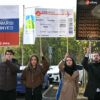
Hungary’s Long Road Back
When Péter Magyar took the stage in Budapest on the night of 12 April, he told the crowd they had ‘liberated Hungary’. The hyperbole seemed justified. His party, Tisza, had won a parliamentary supermajority on the highest turnout since Hungary’s first free election in 1990, ending 16 years of increasingly autocratic rule.
100 Days, No Outcry – The Cost of Speaking Out
“We’ve abandoned this couple completely; we have not done even 1% of what they did for us all these years!” said journalist Asad Ali Toor.
The UN NGO Committee: Civil Society’s Gatekeeper in Hostile Hands
In January, the government of Algeria succeeded in locking two civil society groups out of access to the United Nations (UN). It raised questions at the UN Committee on Non-Governmental Organizations, known as the NGO Committee, about two civil society groups with accreditation. It alleged that Italian organisation Il Cenacolo was making politically motivated statements at the UN Human Rights Council and the Geneva-based International Committee for the Respect and Implementation of the African Charter on Human and Peoples’ Rights (CIRAC) was selling UN grounds passes. Four days later, it called a vote to revoke their status. Other states urged delay, but the no-action motion failed, and 11 of the body’s 19 members voted to recommend that the UN’s Economic and Social Council (ECOSOC) revoke Il Cenacolo’s accreditation and suspend CIRAC’s for a year.
NEPAL: ‘Voting on Discord Was a Very Gen Z Way of Doing Politics’
CIVICUS discusses Gen Z-led protests in Nepal with Abhijeet Adhikari (Abhi), a lawyer and political activist who took part in the protests.
« Previous Page — Next Page »





The Week with IPS

NEXT STOP - SDGs
Tracking global progress towards a sustainable world
Tracking global progress towards a sustainable world
