Languages
Tuesday, October 6, 2026



News and Views from the Global South
Education

Stepping Up the Fight to End Cholera and Chikungunya Outbreaks in Mandera County, Kenya
Mandera’s double whammy, the concurrent outbreaks of cholera and chikungunya, is bringing to the fore the need for accelerated epidemic preparedness and prevention systems.
Young African Women More Vulnerable to HIV
When Lebogang Brenda Motsumi was 16 years old she fell pregnant, terrified about what her life would look like, she went to a backdoor clinic for an abortion.
A Jarring Anomaly of Society
It is easy to miss stories about child domestic workers being tortured and killed. Easy because stories of children being killed have become eerily regular. It is May 28 and there is the report of 14-year-old Konika Rani being hacked to death by a drug addict with three of her classmates also grievously injured by him. There is also the horror of having to read about a six-year-old being left critically wounded after being raped by her neighbour. Next to this is the news of 11-year-old Hasina Akhter dying in hospital from the fatal wounds inflicted on her, presumably by her employers.The Price of Non-Governmental Growth
It is well known that since the 1980s, Bangladesh has made astonishing progress on a wide variety of development indicators such as reducing the prevalence of extreme hunger and poverty, increasing primary education enrolment rates, and reducing child and maternal mortality. This progress has been mirrored by an impressive record of sustained GDP growth, spanning decades. In contrast to these successes, the quality of our democratic institutions has languished to the point where they now threaten to undermine all these hard-won gains. This article argues that the provision of public goods and services by non-governmental organisations (NGOs) has not only contributed to these successes, but also to this failure.
Latest Population Projection of 25 Million Poses Serious Challenges
The most recent population projections expect the Island’s population to reach 25 million by 2042 and 25.8 million by 2062. It is expected to stabilise around the mid 2060s at 25-26 million. This is a significant departure from earlier projections that expected population stability much earlier at around 23-24 million in the 2030s and to decline thereafter.
Menstrual Hygiene Gaps Continue to Keep Girls from School
Around the world girls are struggling to stay in school when their menstrual hygiene needs are forgotten or ignored, yet the water, sanitation and hygiene (WASH) and education sectors have remained reluctant to address the issue.
Poorest Countries Have Progressed but Fragile Countries Lag Behind
The world's poorest countries are making development gains, yet challenges remain, particularly for so-called fragile countries affected by conflict or other disasters.Middle-Class Ethos
The middle class is viewed as a positive force for progress given its higher education, mobility and wealth. But this view is based on its role in developed states in fostering egalitarian progress, democracy and the rule of law by initiating social movements.
A Teacher Has Been Taught His Lesson!
Greek historian Herodotus, living in the fifth century, couldn't have known in advance that a headmaster was going to be humiliated in Narayanganj on the second Friday of May 2016. But when he said that men trusted their ears more than their eyes, it set the standard of mob justice for all time to come. Those who've watched the disgusting video of that outrageous incident couldn't believe their eyes while ears burned with shame. The headmaster was doing earholding sit-ups while an all-daddy lawmaker wagged his finger, keeping count. When the exhausted and embarrassed victim fell on the floor after the third time, he was pulled up to stand on his feet. Then like a mechanical toy, the poor man was made to raise his folded hands to his forehead asking for forgiveness before a hysterical crowd.
When Emergencies Last for Decades
For the millions of people whose lives have been uprooted by conflict and natural disasters the average amount of time before they can return home is now 17 years.
Kenya’s Young Inventors Shake Up Old Technology
Emma Masibo and Lucy Bwire have many things in common.The Way to Show Respect
There is no respect these days, say the old folks – no respect for the elderly, for teachers, for your older siblings, just no respect. If you are among these whining, disgruntled naysayers please be informed: Respect is not something to be earned, it is something to be extracted.
New Generation Aims to Plug Africa’s Research Deficit
The tonnes of uncollected garbage piling up on the streets of her home in Cairo was a brain wave for Sherien Elagroudy.A Tale of Twin States
Pakistani visitors to India, usually beset with anxiety about their country`s future, are sometimes relieved to find a good number of Indians similarly worried about their country.
Opinion: Increasing Productivity Key to Revive Growth and Support Sustainable Development in Asia and the Pacific
The Asia-Pacific region’s successful achievement of the 2030 Agenda for Sustainable Development needs to be driven by broad-based productivity gains and rebalancing of economies towards domestic and regional demand. This is the main message of the Economic and Social Survey of Asia and the Pacific 2016, published today by the Economic and Social Commission for Asia and the Pacific. Such a strategy will not only underpin the revival of robust and resilient economic growth, but also improve the quality of growth by making it more inclusive and sustainable.
HIV Time Bomb Ticks On
Radhika Banarjee, a 24 year-old CSW, listened carefully at an advocacy gathering in the heart of Dhaka, Bangladesh’s capital.Home is School
The paradox of education in Pakistan is that the children of the poor are not getting enough of it, while the offspring of the rich get a surfeit. Neither is good for the child.Female Engineers Defy the Odds
Nearly every aspect of modern life is a result of the work done by engineers; from running water to the internet, sky-scrapers to smartphone apps that people use for dating. Sadly, in Tanzania this profession attracts only a few women due to prevalent attitudes that it is a man’s job.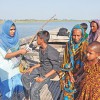
Stepping Out of the Cocoon
To encourage more young women into community media and journalism, and to work for the development of rural communities, in 2013, Bangladesh NGO's Network for Radio and Communication (BNNRC), in partnership with Free Press Unlimited (FPU), launched a three month fellowship programme entitled “Youth women in Media and Journalism”. In the programme, an experienced mentor trains the attendees how to produce news, reports, features, case study and human profiles.
Violence at Home
Amidst robust campaigning by liberal sections to activate the feminist lobby and strong criticism by clerics defending Islam’s endowment of women’s rights, there is a risk of overlooking the essence of what is a major human rights and public health issue — domestic violence.
Corruption Swallows a Huge Dose of Water
While the United Nations marked this year’s World Water Day on March 22 focusing on the connection between water and jobs, a new report has rung loud alarm bells about the heavy impact of corruption on the massive investments being made in the water sector.« Previous Page — Next Page »





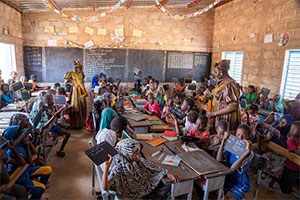 Two teachers work in a classroom in Forces Vives School in Dori, Burkina Faso. Credit: UNICEF/UNI978361
Safe and uninterrupted education is a fundamental right for all children. Education is paramount to global development, as it has been proven that investing in education – especially for girls and children – contributes significantly to economic growth and prosperity. Although more than 1 billion children go to school, many are subjected to conditions that are not conducive to a proper learning environment, including makeshift facilities, a lack of supplies, violence in classrooms, inadequate sanitation, untrained instructors, and widespread school closures. Since 2015, there have been immense gains in education with an increase of 109 million children in school. However, as of 2023, 272 million children are still out of school.
High poverty levels in developing countries also impede children’s access to a proper education. For example, from the early to mid 2000s, Sub-Saharan African nations witnessed a dramatic decline in trained teachers due to inadequate funding in the education sector. Furthermore, major cuts to United States international aid threaten an estimated 23 million additional children's access to education, as USAID‑funded school programmes across Africa and Asia face closure.
Various other factors contribute to the decline of education, notably hunger, which has increased as conflict and climate change interfere with global food production and dissemination. Meanwhile, certain social and cultural practices also impede children’s access to education, with gender inequality, discrimination, child labour, and child marriages preventing millions of children from attending school. Economic conditions such as the inaccessibility of higher education also affect disenfranchised communities across the world. In extreme situations, such as warfare where educational facilities are destroyed in their totality, notably in Gaza and Sudan, entire generations of children might grow up without access to education. Rebuilding educational infrastructure is a long and arduous process, especially when violence persists across generations, and this significantly stunts the development of societal prosperity and stability.
IPS is dedicated to telling the shocking truths about worldwide education through impassioned opinion pieces and comprehensive articles, highlighting global issues that impede worldwide education and the courses of action being taken by organizations such as UNICEF and Education Cannot Wait.

The Week with IPS

NEXT STOP - SDGs
Tracking global progress towards a sustainable world
Tracking global progress towards a sustainable world
