Languages
Sunday, October 18, 2026



News and Views from the Global South
Energy

In Zimbabwe, School Children Are Turning Waste Into Renewable Energy-Powered Lanterns
When going home after school, Monica Ben not only takes with her a pen and exercise books but also a lantern to light the dark room and completes her daily homework in Mashonaland East province.
Why the UN Environment Assembly is Essential to a Safer, More Resilient Planet
As geopolitical challenges and tensions escalate globally, one thing is clear: fragmented politics will not fix a fractured planet. This is why the United Nations Environment Assembly (UNEA) – the world’s highest decision-making body on the environment – is so critical to address our shared and emerging environmental threats.
Africa’s Critical Minerals Poised to Power Global Green Energy Transition
Although Africa holds more than 30 per cent of the world’s critical green minerals—including cobalt, lithium, manganese, and rare earth elements vital for building batteries, wind turbines and solar panels— this has not translated into prosperity for the continent.
COP30: Broken Promises, New Hope — A Call to Turn Words into Action
When the world gathered in Glasgow for COP26, the mantra was “building back better.” Two years later, in Sharm El Sheikh, COP27 promised “implementation.” This year, in Belém, Brazil, COP30 arrived with a heavier burden: to finally bridge the chasm between lofty rhetoric and the urgent, measurable steps needed to keep 1.5 °C alive.
Bonn to Belém: Three Decades of Promises, Half-Delivered Justice, and Rights-Based Governance Is Now Inevitable
COP30 in Belém is not just another annual climate meeting; it is the 32-year report card of the world governance architecture that was conceived at the Rio Earth Summit of 1992. And that is what report card says: delivery has been sporadic, cosmetic and perilously disconnected with the physics of climatic breakdown.
The Top Climate Leaders Are Now in The Global South
When world leaders now gather in Belém, Brazil for the UN climate conference, expectations will be modest. Few believe the meeting will produce any breakthroughs. The United States is retreating from climate engagement. Europe is distracted. The UN is struggling to keep relevant in the 21st century.
The Silent War Before COP30: How Corporations Are Weaponising the Law to Muzzle Climate Defenders
As the world prepares for the next COP30 summit, a quieter battle is raging in courtrooms. Strategic Lawsuits Against Public Participation (SLAPPs) are the fossil-fuel industry’s new favourite weapon, turning justice systems into instruments of intimidation.
Brazil’s Biofuels Push Undermines Environmental Integrity at COP30
President Prabowo Subianto welcomed his counterpart Luiz Inacio Lula da Silva of Brazil to Jakarta recently to strengthen ties between the fast-growing economies.
Hurricane Melissa Devastates The Caribbean As The UN Distributes Lifesaving Aid
In late October, Hurricane Melissa, a powerful Category 5 storm, made landfall in the Caribbean, causing catastrophic damage to civilian infrastructure and a devastating loss of life. Humanitarian agencies have mobilized on the ground to deliver urgent assistance to affected communities facing widespread destruction of homes, mass displacement, fatalities, and severe shortages of essential services, including food, water, medicine, shelter, and electricity.
The World’s Forests Cannot Wait: Why COP30 Must Center Indigenous Peoples’ and Local Communities’ Leadership
As world leaders prepare to gather in Brazil for COP30 next week, they will convene in the heart of the Amazon -- a fitting location for what must become a turning point in how the world addresses the intertwined crises of climate change and biodiversity loss.
COP30: New Faces, Old Issues: What Must Change if Global Climate Talks Are to Deliver Justice for Africa
Three decades after the first Climate COP, the multilateral climate process – which was intended to serve as an instrument of justice and a guardian of the planet’s atmosphere – has fallen far short of its goals.
COP30: The Real Solution to Climate Change Could be Through International Law
At COP15, the developing countries were calling for the temperature to not rise above 1.5 degrees and they ignored the Copenhagen Accord which agreed to 2.0 degrees
A Unified Oceanic Commitment to Tsunami Preparedness
On a quiet July morning in Severo-Kurilsk, a coastal town in the East of the Russian Federation, the sea began to retreat unnaturally fast. Within minutes, tsunami sirens blared and 2,700 residents evacuated to higher ground. Waves up to five meters inundated the port and fish factory, but no lives were lost. The town’s survival reflected years of investment in early warning systems, community drills, and resilient infrastructure. The 2025 Kamchatka tsunami demonstrated what preparedness can achieve when science, governance, and community action align.
As COP30 Nears, We Need All Effective Climate Solutions
A new global study has challenged a key assumption in climate planning: that the planet’s geological “carbon vault” is vast enough to hold all the carbon dioxide (CO₂) we might one day choose to bury underground after we remove it from the atmosphere. It isn’t.
Financing Tropical Forests now is a COP30 Solution that’s Already Working
As the world prepares for COP30 in Belém, all eyes are on Brazil’s proposed Tropical Forests Forever Facility (TFFF)—a bold plan to reward countries for keeping forests standing. It represents a vital part of the long-term vision we need for global forest protection.
Data Centre Investments Bad Deals
Opposition to data centres (DCs) has been rapidly spreading internationally due to their fast-growing resource demands. DCs have been proliferating quickly, driven by the popularity of artificial intelligence (AI).
The Time for a Decade of Island Resilience is Now
As biodiversity loss including ocean degradation, pollution and climate change threaten our planet, islands, and particularly global small island nations, often don't get the spotlight they deserve. Often labeled as vulnerable, the world’s small island nations are in fact powerful beacons of resilience.
The Dangers of Green Mining
Even amidst the regressive resistance of the current U.S. administration, the world is shifting toward a green energy future. As governments pledge to phase out fossil fuels, companies tout electric vehicles, and financiers pour billions into solar, wind and batteries, it seems the necessary transition from fossil fuels to clean energy is finally picking up pace.
New Climate Goal: To Quadruple Sustainable Fuels
Quadrupling the production and use of sustainable fuels by 2035 is the goal of a new international initiative to drive energy transition and mitigate the climate crisis, which will be launched during Brazil's climate summit in November.
Guiding Disaster Risk-Reduction Investments Through AI-Powered Tools
The theme of this year’s International Day for Disaster Risk Reduction, “Fund Resilience, Not Disasters,” called for the urgent need to shift from reactive spending on recovery to proactive investment in disaster risk reduction.
Moldova’s Democratic Defiance
Democracy was the winner and Russia the loser in Moldova’s 28 September election. The incumbent pro-Europe Party of Action and Solidarity (PAS) won a parliamentary majority on just over half of the vote, while support for a pro-Russia coalition collapsed to a record low. The result came in the face of Russia’s most intense attempt yet to influence an election, with a propaganda and disinformation operation allegedly orchestrated by Ilan Shor, a disgraced Moldovan oligarch who fled to Russia to escape jail time for his role in a massive fraud.« Previous Page — Next Page »





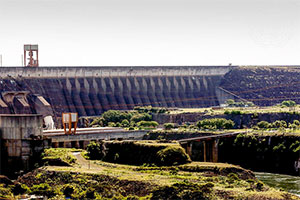 UN Power Plant, Paraguay. Credit: UN Photo/Evan Schneider
Energy has posed a great challenge for economies around the world. As global energy consumption skyrockets throughout the years, so does the need for sustainable solutions. The Sustainable Development Goals are essential in providing people with access to safe, affordable, and sustainable energy sources that minimize harm on the planet. Progress towards these goals opens the door for an advancement in modernization for communities on a global level and allows for a potential mitigation of tensions between nations.
The UN’s Summit of the Future in 2024 offered new initiatives that are being taken to achieve these goals, including a decreased reliance on fossil fuels, a switch to renewable energy sources, and improved climate financing.
IPS is well positioned to provide relevant, insightful, and compelling analysis of recent updates and measures being taken around the world to achieve a cleaner future.

The Week with IPS

NEXT STOP - SDGs
Tracking global progress towards a sustainable world
Tracking global progress towards a sustainable world
