Languages
Friday, October 16, 2026



News and Views from the Global South
Energy

Oil Shocks, Political Upheaval and the One Solution Governments Keep Ignoring
Once again, global oil prices are spiking, driven by the Israeli-US war against Iran. With Iran retaliating by attacking infrastructure and transport hubs and blocking the Strait of Hormuz, through which one-fifth of the world’s oil passes, oil supplies from the region are being choked, pushing up prices. The cost of a barrel of Brent crude – the international benchmark for oil prices – stood at US$73 before the conflict but has surged beyond US$100 since. It could go higher still as war continues.
The Implausible Regime Change in Iran and How the War Affects the World
The US/Israeli war on Iran might be like messing with a hornets’ nest, spreading fear and chaos all around. The Israeli government claimed that the war was a “preventive” measure to address an immediate threat of Iran constructing a nuclear bomb. However, this war has obviously been meticulously planned over a long period of time and it now seemed to be the right time to put this plan into action. The Iranian air defences had been weakened through earlier attacks, while recent Israeli strikes decapitated Hezbollah’s Lebanese leadership, Iran’s allies north of Israel. With Gaza destroyed and Syria’s unreliable Assad gone, Netanyahu had succeeded in securing his party’s coalition with the far-right and could continue to count upon the support of the Trump Administration, providing Israel with a free hand vis-à-vis the Palestinians and turning a blind eye to the massacre of civilians. The U.S. is continuously supporting Isreal with missile-defence systems, coordination, cooperation, and intelligence sharing.
VENEZUELA: ‘An Economically Stable Authoritarian Model Could Become Entrenched’
CIVICUS discusses the situation in Venezuela following US intervention and the ousting of President Nicolás Maduro with Verónica Zubillaga, a Venezuelan sociologist who specialises in urban violence, state repression and community responses to armed violence.
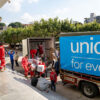
UN: Amid Security Risks in Middle East, Humanitarian Work is Underway
As military fighting breaks out across the Middle East with increasing frequency and intensity, the United Nations promises to ramp up its humanitarian response on the ground.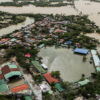
As La Niña Fades, WMO Experts Warn That El Niño Could Set New Global Heat Records
Earlier this week World Meteorological Organization (WMO) announced that the weakening conditions of La Niña conditions are beginning to fade, with climate conditions transitioning toward ENSO-neutral —a phase in which neither El Niño nor La Niña is present and oceanic and atmospheric conditions in the tropical Pacific remain near average. The agency noted that this shift could lead to the development of El Niño later in the year, a pattern typically associated with rising global temperatures and an increased risk of extreme weather events worldwide.
‘We Are Seeing an Economic Transition, but No Democratic Transition’
CIVICUS discusses the situation following the US intervention in Venezuela with Guillermo Miguelena Palacios, director of the Venezuelan Progressive Institute, a think tank that promotes spaces for dialogue and democratic leadership.

Protecting Africa’s Ocean Future and Why a Precautionary Pause on Deep-sea Mining Matters
The world is entering a decisive period for the future of the ocean. With the High Seas Treaty coming into force and meaningful progress being made on the World Trade Organization Agreement on Fisheries Subsidies, global momentum for stronger marine governance is building. Yet, new pressures linked to the push for deep-sea mining — the extraction of minerals from seabed thousands of meters below the ocean surface — threaten to undermine these gains. To safeguard progress, global decision-making will have to keep pace with such emerging risks. In this context, Africa will host several global discussions in 2026, including those that will shape the ocean's future, with a series of opportunities for leadership starting with the African Union Summit in February to the Our Ocean Conference in Mombasa, Kenya in June.
Venezuela at a Crossroads
When US special forces seized Nicolás Maduro and his wife from the presidential residence in Caracas on 3 January, killing at least 24 Venezuelan security officers and 32 Cuban intelligence operatives in the process, many in the Venezuelan opposition briefly dared hope.
U.S. Exit from Paris Agreement Deepens Climate Vulnerability for the Rest of the World
On January 27, the United States officially withdrew from the Paris Agreement, an international treaty adopted in 2015 aiming to reduce global warming and strengthen countries’ resilience to climate impacts. Following a year of regulatory rollbacks and sustained efforts by the Trump administration to dismantle federal climate policy, this move is expected to trigger wide ranging ripple effects—undermining international efforts to curb climate change, accelerating environmental degradation and biodiversity loss, and increasing risks to human health, safety, and long-term development.
Systemic Infrastructure Attacks Push Ukraine Into Its Deepest Humanitarian Emergency Yet
Nearly four years into Russia’s full-scale invasion, Ukraine faces another winter marked by widespread humanitarian suffering and continued indiscriminate attacks. The final months of 2025 were particularly volatile, characterized by routine bombardment of densely populated areas and repeated strikes on residential neighborhoods, critical civilian infrastructure, and humanitarian facilities. As hostilities expanded into new territories over the past year, humanitarian needs grew sharply, with many war-torn communities residing in uninhabitable areas.
Big Nature-Based Finance Turnaround Needed to Restore, Protect Ecosystems
The world is pouring trillions of dollars each year into activities that destroy nature while investing only a fraction of that amount in protecting and restoring the ecosystems on which economies depend, according to a new United Nations report released on January 22.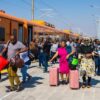
How Extreme Weather is Testing Tanzania’s $2 Billion Electric Railway Dream
On a rainy Wednesday morning, in Dodoma, the capital of Tanzania, the Standard Gauge Railway (SGR) terminal bustled with a steady flow of passengers. Women ushered toddlers along. Snack bags dangling on their hands. Tourists dragged wheeled suitcases across the floor. Students scrolled through smartphones as they returned to campus. Each had been attracted by the speed, reliability and comfort of the electric train.
‘Zambia Has Environmental Laws and Standards on Paper – the Problem Is Their Implementation’
CIVICUS discusses environmental accountability in Zambia with Christian-Geraud Neema, Africa editor at the China Global South Project, an independent journalism initiative that covers and follows China’s activities in global south countries.

Climate Justice Denied by Delays
Opinions have been divided over the annual UN climate conferences. While some see COP30 in Belém, Brazil, as confirming their irrelevance, others see it as a turning point in the struggle for climate justice.
Downward Spiral of Bangladesh Politics and Economy
Who Should be Blamed ?
Bangladesh in recent years started drawing global attention for its success in emerging out of poverty through economic growth and agricultural development. From early 2000 until 2023, while population growth continued to decline from 1.2 in 2013 to 1.03 in 2023, this growth has been the powerful driver of poverty reduction since 2000. Indeed, agriculture accounted for 90 percent of the reduction in poverty between 2005 and 2010 (World Bank).

Central Asia–Japan Leaders’ Summit in Tokyo Backs Trans-Caspian Corridor; Tokayev Warns Nuclear Risks Are Rising
Leaders of Japan and the five Central Asian states met in Tokyo on Dec. 20 and adopted the “Tokyo Declaration,” launching a new leaders-level format under the “Central Asia plus Japan Dialogue” (CA+JAD). The declaration places at the core of cooperation two priorities: strengthening supply-chain resilience for critical minerals, and supporting the Trans-Caspian Corridor (the Trans-Caspian International Transport Route), which links Central Asia with Europe without transiting Russia.
Rescued from Fire: the World in 2025
Our traditional “year-ender” usually kicks off with a grim litany of world disasters and crises over the past 12 months, highlights IPS partners and contributors and culminates in a more positive-sounding finale. This time I’d like to begin on a more personal note intended also as a metaphor.
Ahead of Brutal Winter Season, Intensified Attacks Cripple Basic Services Across Ukraine
In recent weeks, the Russo-Ukrainian War has taken a considerable turn for the worse, with armed hostilities escalating in both frequency and intensity, causing extensive damage to civilian infrastructure and a significant loss of life across Ukraine. Attacks on energy infrastructures and the resulting power outages are forcing the most vulnerable civilians to deal with a “cold, frightening ordeal” in the winter season, warned the United Nations (UN) human rights chief.
Trump Reboots US National Security Strategy, Foreign Policy
The new US National Security Strategy (NSS) repositions the superpower’s role in the world. Hence, foreign policy will be mainly driven by considerations of ‘making America great again’ (MAGA).
Cyclone Ditwah Leaves Millions Affected as Sri Lanka Faces Widespread Flooding, Displacement, and Rising Health Risks
In late November, Cyclone Ditwah made landfall in Sri Lanka and southern India, bringing heavy rainfall that triggered widespread flooding and devastating landslides. The storm caused extensive damage to civilian infrastructure and resulted in a significant loss of life. Communities have been severely impacted, with limited access to essential services, while humanitarian agencies face challenges in reaching the most vulnerable populations.
In Zimbabwe, School Children Are Turning Waste Into Renewable Energy-Powered Lanterns
When going home after school, Monica Ben not only takes with her a pen and exercise books but also a lantern to light the dark room and completes her daily homework in Mashonaland East province.« Previous Page — Next Page »





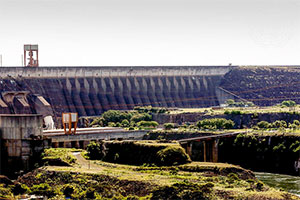 UN Power Plant, Paraguay. Credit: UN Photo/Evan Schneider
Energy has posed a great challenge for economies around the world. As global energy consumption skyrockets throughout the years, so does the need for sustainable solutions. The Sustainable Development Goals are essential in providing people with access to safe, affordable, and sustainable energy sources that minimize harm on the planet. Progress towards these goals opens the door for an advancement in modernization for communities on a global level and allows for a potential mitigation of tensions between nations.
The UN’s Summit of the Future in 2024 offered new initiatives that are being taken to achieve these goals, including a decreased reliance on fossil fuels, a switch to renewable energy sources, and improved climate financing.
IPS is well positioned to provide relevant, insightful, and compelling analysis of recent updates and measures being taken around the world to achieve a cleaner future.

The Week with IPS

NEXT STOP - SDGs
Tracking global progress towards a sustainable world
Tracking global progress towards a sustainable world
