Languages
Saturday, September 5, 2026



News and Views from the Global South
Health

How Stigma Undermines Contraceptive Use Among Women in Sierra Leone
Eunice Dumbuya, a young activist in Freetown, Sierra Leone, still remembers being called promiscuous after getting a contraceptive implant a few years ago. She knew the risks of an unplanned pregnancy in her conservative country, so she made a choice.
To Sanctify Bigotry: The Case of Charlie Kirk
On September 11, Charlie Weimers, a Swedish Member of the European Parliament and active within the European Conservatives and Reformists Group, rose up during a Parliamentary session and asked for a minute of silence to honour the memory of Charlie Kirk, who the day before had been shot and killed during a political meeting at the Utah Valley University in the U.S.
Frontline of a Planetary Emergency: Africa Demands Climate Justice and Action
The room at the Swiss Inn Nexus Hotel in Bole was silent but tense as Sunita Narain, one of the world’s most influential environmental voices, fixed her gaze on rows of African journalists, scientists, and policymakers. Her tone was gentle, but the words cut deep.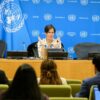
New Report Investigates Violence Against Women and Girls Through Surrogacy, Sparks Global Dialogue
A United Nations report calling for the global abolition of surrogacy has sparked intense debate among experts, with critics arguing that blanket bans could harm the very women the policy aims to protect.
UN Independent Commission Finds That Israeli Forces Have Committed Genocide in Gaza
On September 16, the Israeli military began its ground offensive in Gaza City, accompanied by intensified bombardment of residential areas and a surge in civilian displacement. Concurrently, the United Nations Independent International Commission of Inquiry on the Occupied Palestinian Territory, including East Jerusalem and Israel, issued a report in which it found that Israel is responsible for committing genocide in Gaza, citing deliberate efforts to destroy Palestinian life, carried out with near-total impunity.
‘The Authoritarian Regime Uses Collective Punishment to Discourage Any Challenge to Its Authority’
CIVICUS discusses the deaths of Indigenous activists in custody in Tajikistan with Khursand Khurramov, an independent journalist and political analyst.

Struggle For Water Continues Following Israeli Attacks on Lebanon
Just under a year into a fragile ceasefire, 150,000 people in southern Lebanon continue to deal with the potentially lethal aftermath of Israeli bombing, highlighting the devastating long-term effects of conflict.
Why Collective Healing is Central to Peacebuilding
 Wars and oppression leave behind not just rubble and graves. They leave behind invisible wounds, profound trauma carried by survivors. And most often, women carry the largest burden. They are targeted not only because of their gender, but because surviving and leading threaten structures based on patriarchy and domination.
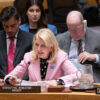
UN Warns of Escalating Humanitarian Emergency in Haiti As Armed Gang Violence and Aid Deepen Crisis
In recent months, the humanitarian crisis in Haiti has taken a considerable turn for the worse, with armed gangs continuing to exert dominance over nearly 90 percent of the capital, Port-Au-Prince. Rising violence, the collapse of essential services for millions, and severe cuts to humanitarian funding have left the international community struggling to provide immediate relief and find a sustainable, long-term solution.
Education Cannot Wait Interviews Tom Dannatt, Founder and CEO of Street Child
Tom Dannatt is a Founder and CEO of Street Child, an international non-government organization active in over 20 disaster-hit and lowest-income countries – working for a world where all children are ‘safe, in school and learning’. Tom founded Street Child in 2008 with his wife Lucinda and has led the organization since its inception. Street Child leads the civil society constituency within ECW’s governance and, accordingly, Dannatt represents the constituency on the Fund’s High-Level Steering Committee.
Experts Launch a Climate and Health Curriculum for African Negotiators Ahead of COP30
Despite climate change being a health risk multiplier, health is often underrepresented in climate negotiation processes. Experts attribute this to a lack of funding by the African governments and a lack of capacity building among climate negotiators.
Afghanistan’s Overlapping Crises Deepen Following 6.0 Magnitude Earthquake
Over the past week, Afghanistan’s humanitarian situation has deteriorated significantly following the August 31 earthquake, which measured over 6.0 in magnitude and caused an immense loss of life and widespread destruction of critical infrastructure. Compounded by the nation’s fragile economy, severe shortages of essential resources, and persistent access challenges, humanitarian organizations have found it increasingly difficult to reach vulnerable communities—especially women and children.
North Worsens Tropical Catastrophe
Greenhouse gas (GHG) emissions have risen over the last two centuries, with current and accumulated emissions per capita from rich nations greatly exceeding those of the Global South.
Japan Backs Africa’s Health Future at TICAD
At a time of great transformation for global health, solidarity is more important than ever. As other countries have retreated from their commitments, Japan has instead continued its steadfast investment in a shared future that prioritizes human dignity and security.
Rise of the Planet of the Aged
It is becoming increasingly apparent that planet Earth is evolving into the planet of the aged. In nearly every country around the world, the numbers and percentages of the aged, commonly defined as individuals aged 65 years or older, have increased rapidly.
Climate Change is Deepening Child Poverty in Latin America and Caribbean
2025 has been marked by a significant escalation of the climate crisis and its effects on vulnerable populations, as the World Meteorological Organization (WMO) warn that average global temperatures could exceed the 1.5°C threshold within the next five years. In Latin America and the Caribbean, rising temperatures and emissions continue to strain access to essential services and deepen poverty, particularly among children.
One in Four People Lack Access to Clean Drinking Water: UNICEF, WHO Warn of Deepening Disparities
Over the past decade, major strides have been made in expanding global access to water, sanitation, and hygiene (WASH) services, with billions of people around the world seeing improvements in overall health and well-being. Despite these gains, people largely from low-income countries and marginalized groups still lack access to clean water, leaving them vulnerable to disease and hindering social development and inclusion.
Youth Lead Global Call to Support Hibakusha on UN Day Against Nuclear Test
Marking the United Nations’ International Day Against Nuclear Tests, young activists and experts gathered at the UN University in Tokyo for an event titled “The Role of Youth in Supporting Global Hibakusha.” The forum underscored how youth solidarity can amplify the voices of survivors of nuclear testing and bombings, known collectively as the “Global Hibakusha” — communities scarred by the use, production, and testing of nuclear weapons, from Hiroshima to the Marshall Islands — and strengthen global momentum toward nuclear abolition.
The Right to Care: A Feminist Legal Victory That Could Change the Americas
On 7 August, the Inter-American Court of Human Rights delivered a groundbreaking decision that could transform women’s lives across the Americas. For the first time in international law, an international tribunal recognised care as an autonomous human right. Advisory Opinion 31/25, issued in response to a request from Argentina, elevates care – long invisible and relegated to the private sphere – to the level of a universal enforceable entitlement.
Hypertension and Diabetes Grows Among India’s Poor Communities
Generally thought to be diseases of the wealthier classes, non-communicable diseases (NCDs) like hypertension and diabetes are on the rise among India’s underprivileged working classes in semi-urban and rural sprawls.
The Asbestos Crisis Isn’t Over — Reversing the Ban Would Make It Worse
For more than a century, asbestos was an indispensable fixture in the American industry, particularly the military. This versatile natural mineral was widely utilized to line Navy ships and strengthen their installations. What many were unaware of was that once damaged, asbestos-containing materials (ACMs) can release toxic fibers that could lodge in tissues covering internal organs of those exposed, where they build up over time.« Previous Page — Next Page »


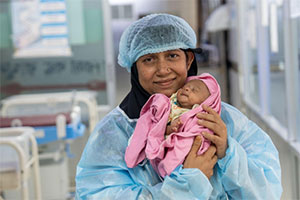 Bangladesh: Sarid, born one month early, receives specialized newborn care and grows stronger every day. Credit: UNICEF/UNI944397/Mojumder
Since the onset of the 2000s, global life expectancy has seen an overall rise, attributed to significant technological and scientific innovations in healthcare. Due to an increased understanding of different conditions as well as a rise in cooperation among healthcare experts around the world, there have been major strides made in ensuring that as few people die from chronic illnesses as possible. Despite the belief that healthcare is a fundamental human right, people from low- or middle-class backgrounds, marginalized groups, and underdeveloped countries have far more limited access to basic healthcare services.
The COVID-19 pandemic showed how marginalized communities are disproportionately affected by health crises, proving that we have much work to do in ensuring that no one dies of terminal conditions. While the global response to the coronavirus saw significant strides in immunization and vaccine development, the global outbreak of mpox in 2022 and its upsurge in parts of Africa in 2024 must remind us to remain vigilant.
Other major disease outbreaks in recent years have been linked to the destruction of infrastructure during warfare. Notably, in 2024, the Gaza Strip witnessed a return of the poliovirus since its eradication in the region 25 years ago. Israel’s blockade on Gaza has resulted in the collapse of the region’s sewage plants and desalination plants, and also destroyed healthcare capacities. The UN stated that this lack of clean water and sanitation would lead to an outbreak of cholera and other deadly infectious diseases. The 2026 OCHA Humanitarian Situation Report confirmed that the over two years of conflict in Gaza has produced a catastrophic health emergency, with millions remaining dependent on relief aid amid tight restrictions and no functioning public health system.
IPS is committed to providing full and comprehensive coverage on healthcare challenges around the world. IPS seeks to address the multifaceted causes of such challenges, including unprecedented pandemics, conflict-driven disease outbreaks, as well as socioeconomic barriers to equal healthcare access. IPS is also dedicated to reporting on innovations in the healthcare industry.

The Week with IPS

NEXT STOP - SDGs
Tracking global progress towards a sustainable world
Tracking global progress towards a sustainable world
