Languages
Friday, October 23, 2026



News and Views from the Global South
Health

‘Since the Coup, Factory Employers Have Increasingly Worked with the Military to Restrict Organising and Silence Workers’
CIVICUS speaks to the Business and Human Rights Centre (BHRC) about labour rights abuses in Myanmar’s garment industry since the 2021 military coup.
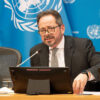
Haiti at a Crossroads: Political Uncertainty and Gang Control Push Nation Toward Collapse
As Haiti’s Transitional President Council (TPC) approaches its February 7 expiration date and the country remains without a newly elected president, humanitarian experts warn the nation risks further sliding into insecurity, raising fears of broader collapse.
Cuts Stall Clinical Trials, Scientists Warn US Risks Losing Its Research Edge
Scientists across the U.S., including me, are stressed after a year marked by several changes and challenges, including cuts to science funding that have stalled clinical trials and studies that could improve and save lives. Without funding, scientists worry about how they will support ongoing research and train America’s future workforce, including the next generation of innovators.
Systemic Infrastructure Attacks Push Ukraine Into Its Deepest Humanitarian Emergency Yet
Nearly four years into Russia’s full-scale invasion, Ukraine faces another winter marked by widespread humanitarian suffering and continued indiscriminate attacks. The final months of 2025 were particularly volatile, characterized by routine bombardment of densely populated areas and repeated strikes on residential neighborhoods, critical civilian infrastructure, and humanitarian facilities. As hostilities expanded into new territories over the past year, humanitarian needs grew sharply, with many war-torn communities residing in uninhabitable areas.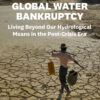
World Enters ‘Era of Global Water Bankruptcy’
The world is already in the state of “water bankruptcy”. In many basins and aquifers, long-term overuse and degradation mean that past hydrological and ecological baselines cannot realistically be restored.
Karatoya
 Once a lifeline of northern Bengal, Bangladesh’s Karatoya River now drifts through Bogura as a fragmented, polluted channel, where climate change and human neglect quietly reshape livelihoods, memory, and everyday life.
The UN’s Withering Vine: A US Retreat from Global Governance
The Trump administration’s recent announcement of its withdrawal from 66 international organisations has been met with a mixture of alarm and applause. While the headline number suggests a dramatic retreat from the world stage, a closer look reveals a more nuanced, and perhaps more insidious, strategy. The move is less a wholesale abandonment of the United Nations system and more a targeted pruning of the multilateral vine, aimed at withering specific branches of global cooperation that the administration deems contrary to its interests. While the immediate financial impact may be less than feared, the long-term consequences for the UN and the rules-based international order are profound.

Ageing and Shrinking Populations
Ageing and shrinking populations are becoming more prevalent in many countries around the world.
Gaza: Physicians Call For Unimpeded Aid To Restore Reproductive Healthcare
Israel must lift all restrictions on medicine, food and aid coming into Gaza, rights groups have demanded, as two reports released today (Jan 14) document how maternal and reproductive healthcare have been all but destroyed in the country.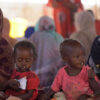
Sudan’s War Nears 1,000 Days as Violence and Hunger Reach Unprecedented Levels
As Sudan approaches 1,000 days of civil war, late December and early January saw a brutal escalation of violence, with drone strikes hitting areas at the center of the country’s deepening hunger crisis.
Maternal Deaths Spike in War-Torn Ukraine
“It was an emergency caesarean section when the life of the pregnant woman was at risk. We did the operation with just flashlights and no water, and against a backdrop of constant explosions,” says Dr Oleksandr Zhelezniakov, Director of the Obstetrics Department at Kharkiv Regional Clinical Hospital, in eastern Ukraine.
Skyrocketing Military Spending Undermines Development Aid to World’s Poor
The statistics are staggering: while military spending keeps skyrocketing, Official Development Assistance (ODA)-- from the rich to some of the world's poorer nations-- has been declining drastically.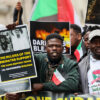
Sudan’s Crisis: Mass Killings Continue While the World Looks Away
Satellite images show corpses piled high in El Fasher, North Darfur, awaiting mass burial or cremation as the Rapid Support Forces (RSF) militia tries to cover up the scale of its crimes. Up to 150,000 El Fasher residents remain missing from the city, seized by the RSF in November. The lowest estimate is that 60,000 are dead. The Arab militia has ethnically cleansed the city of its non-Arab residents. The slaughter is the latest horrific episode in the war between the RSF and the Sudan Armed Forces, sparked by a power battle between military leaders in April 2023.
‘Zambia Has Environmental Laws and Standards on Paper – the Problem Is Their Implementation’
CIVICUS discusses environmental accountability in Zambia with Christian-Geraud Neema, Africa editor at the China Global South Project, an independent journalism initiative that covers and follows China’s activities in global south countries.
UN Warns Gaza’s Fragile Improvement Could Reverse Without Sustained Aid and Access
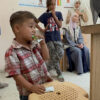
Despite notable improvements in the humanitarian conditions in the Gaza Strip following the October 10 ceasefire, progress remains critically fragile. With the enclave having averted famine across multiple regions, the United Nations (UN) and its partners warn that sustained humanitarian access, a steady flow of resources, and the restoration of critical civilian infrastructure are essential in preventing further deterioration, which could have long-lasting consequences for an already deeply traumatized population.
‘From the Moment They Enter Libya, Migrants Risk Being Arbitrarily Arrested, Tortured and Killed’
CIVICUS discusses migrants’ rights in Libya with Sarra Zidi, political scientist and researcher for HuMENA, an international civil society organisation (CSO) that advances democracy, human rights and social justice across the Middle East and North Africa.
A Global Movement for Nutrition Is Needed Now More than Ever
In my more than 30 years with the United Nations, I’ve seen enormous change, collaboration and progress towards improving human development. But I’ve also seen how history has a way of repeating itself to entrench some of the most intractable global challenges.
Escalating Food Insecurity in Asia-Pacific Undermines Health, Economic Growth, and Stability
2025 marked a notable year of progress in reducing global hunger; yet climate pressures, economic instability, and ongoing conflicts continue to push agri-food systems to their limits, undermining food availability. In a new report, UN agencies raise the alarm on how these factors are particularly pronounced in the Asia-Pacific region, which accounts for 40 percent of the world’s undernourished.
‘We Need a New Global Legal Framework That Rethinks Sovereignty in the Context of Climate Displacement’
CIVICUS discusses climate displacement and Tuvalu’s future with Kiali Molu, a former civil servant at Tuvalu’s Ministry of Foreign Affairs and currently a PhD candidate at the University of the South Pacific in Fiji and the University of Bergen in Norway. His research focuses on state sovereignty and climate change in the Pacific.

Ahead of Brutal Winter Season, Intensified Attacks Cripple Basic Services Across Ukraine
In recent weeks, the Russo-Ukrainian War has taken a considerable turn for the worse, with armed hostilities escalating in both frequency and intensity, causing extensive damage to civilian infrastructure and a significant loss of life across Ukraine. Attacks on energy infrastructures and the resulting power outages are forcing the most vulnerable civilians to deal with a “cold, frightening ordeal” in the winter season, warned the United Nations (UN) human rights chief.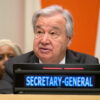
Millions at Risk in 2026 as Aid Budgets Hit Historic Lows
2025 has been an especially turbulent year for humanitarian aid operations as global aid budgets have experienced record declines in funding. As conflicts, environmental disasters, and economic crises intensify and disproportionately impact the world’s most vulnerable communities, the resources available in global emergency funds are falling far short of rapidly growing needs.« Previous Page — Next Page »





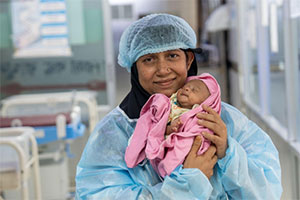 Bangladesh: Sarid, born one month early, receives specialized newborn care and grows stronger every day. Credit: UNICEF/UNI944397/Mojumder
Since the onset of the 2000s, global life expectancy has seen an overall rise, attributed to significant technological and scientific innovations in healthcare. Due to an increased understanding of different conditions as well as a rise in cooperation among healthcare experts around the world, there have been major strides made in ensuring that as few people die from chronic illnesses as possible. Despite the belief that healthcare is a fundamental human right, people from low- or middle-class backgrounds, marginalized groups, and underdeveloped countries have far more limited access to basic healthcare services.
The COVID-19 pandemic showed how marginalized communities are disproportionately affected by health crises, proving that we have much work to do in ensuring that no one dies of terminal conditions. While the global response to the coronavirus saw significant strides in immunization and vaccine development, the global outbreak of mpox in 2022 and its upsurge in parts of Africa in 2024 must remind us to remain vigilant.
Other major disease outbreaks in recent years have been linked to the destruction of infrastructure during warfare. Notably, in 2024, the Gaza Strip witnessed a return of the poliovirus since its eradication in the region 25 years ago. Israel’s blockade on Gaza has resulted in the collapse of the region’s sewage plants and desalination plants, and also destroyed healthcare capacities. The UN stated that this lack of clean water and sanitation would lead to an outbreak of cholera and other deadly infectious diseases. The 2026 OCHA Humanitarian Situation Report confirmed that the over two years of conflict in Gaza has produced a catastrophic health emergency, with millions remaining dependent on relief aid amid tight restrictions and no functioning public health system.
IPS is committed to providing full and comprehensive coverage on healthcare challenges around the world. IPS seeks to address the multifaceted causes of such challenges, including unprecedented pandemics, conflict-driven disease outbreaks, as well as socioeconomic barriers to equal healthcare access. IPS is also dedicated to reporting on innovations in the healthcare industry.

The Week with IPS

NEXT STOP - SDGs
Tracking global progress towards a sustainable world
Tracking global progress towards a sustainable world
