Languages
Saturday, October 24, 2026



News and Views from the Global South
Health
CSW70: Women’s Equality under Siege
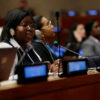
On 19 March, the Commission on the Status of Women (CSW) did something unprecedented in its eight-decade history: it held a vote. The Trump administration, having spent two weeks attempting to defer, amend and ultimately block the session’s main outcome document, known as the agreed conclusions, cast the only vote against its adoption. That dissenting vote said a lot, as it came from the world’s most powerful government, backed by financial leverage, bilateral reach and a network of anti-rights states and organisations that are making inroads at many levels.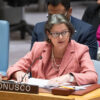
Escalating Violence and Influx of Returnees in DRC Fuel Regional Instability
In the month following the reopening of the Burundi-Democratic Republic of Congo (DRC) border, the humanitarian crisis in the DRC has deteriorated considerably, recently marked by an influx of Congolese refugees returning home, where they face overcrowded conditions and a severe shortage of essential services. This comes in the midst of escalating clashes between rebel groups AFC and M23, and forces affiliated with the Kinshasa government, with drone strikes causing widespread destruction and pushing violence closer to Burundi’s borders, where conditions are most dire.
Sudanese Civil War Escalates as Drone Strikes Deepen Civilian Toll and Regional Risks
The past two weeks have marked a significantly violent escalation in the Sudanese Civil War, with drone strikes and artillery shelling between the Rapid Support Forces (RSF) and the Sudanese Armed Forces (SAF) causing widespread destruction, casualties, and displacement. With humanitarian responses critically underfunded and the scale of needs, including the hunger crisis, continuing to grow, experts warn that millions in Sudan could be affected by famine, violence, or prolonged displacement.
TB Risk Should not Depend on Where We Are Born
In many high-income countries, even a small number of tuberculosis (TB) diagnoses can generate headlines and prompt a rapid public health response. Recent situations in U.S. cities such as Seattle and San Francisco illustrate this, where media coverage has focused on the number of children being tested after TB disease was identified in a school.
UN Launches 300 Million Dollar Humanitarian Appeal for Lebanon
During a solidarity visit to Lebanon, the UN chief announced a flash appeal of USD 308.3 million to support humanitarian operations there in the wake of escalated fighting.
The Most Appropriate Response to Falling Birthrates? Embrace Them
As birthrates continue to decline in many industrialized countries, anxious governments are running out of schemes to keep women procreating.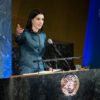
International Women’s Day 2026: Justice for Women and Girls Needs Action and Political Will
On International Women’s Day (March 8), global leaders and advocates gather around the rallying cry to strengthen justice systems for all women and girls in a time of increasing pushbacks on gender equality.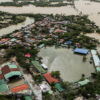
As La Niña Fades, WMO Experts Warn That El Niño Could Set New Global Heat Records
Earlier this week World Meteorological Organization (WMO) announced that the weakening conditions of La Niña conditions are beginning to fade, with climate conditions transitioning toward ENSO-neutral —a phase in which neither El Niño nor La Niña is present and oceanic and atmospheric conditions in the tropical Pacific remain near average. The agency noted that this shift could lead to the development of El Niño later in the year, a pattern typically associated with rising global temperatures and an increased risk of extreme weather events worldwide.
Sudan: World’s Worst Humanitarian Crisis
 The ordinary sounds of Nahid Ali's home in Khartoum were completely drowned out by the sound of war which began on April 15 2023. Her baby was just 21 days old. The morning started as any typical day for a mother who had just given birth to her baby and needed to nurse her newborn while she took care of her other children. The gunfire began to erupt. The fighting began when two groups started to battle each other in the streets. The fighting which began in her area developed into a destructive countrywide war in Sudan which spread to her street within moments.

Trachoma: What It Takes to Eliminate a Disease in the Pacific Islands
Two Pacific Island nations have been applauded for their successes in the global health campaign to eliminate the infectious eye disease, Trachoma.
Iran: A Regime with Nothing Left but Force
The Islamic Republic of Iran has put down another uprising, with a ferocity that makes previous crackdowns seem restrained. The theocratic regime has survived, but it has done so by substituting violence for the economic security it cannot provide and the political legitimacy it no longer has. Its show of force is also an admission of weakness.
Loneliness on Planet Earth
Loneliness is a significant health concern on planet Earth. It affects virtually every aspect of human wellbeing and development worldwide.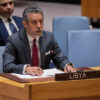
UN Report Warns of Escalating Human Rights Abuses Against Migrants and Refugees in Libya
A new UN report warns of the “brutal and normalized reality” for migrants, refugees and asylum seekers in Libya as they face exploitation and human rights violations.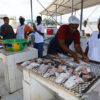
Turning the Tide: How West Africa Is Reasserting Its Food Sovereignty Through Aquaculture
It is an indictment on the global food system that, despite having some of the richest and most endowed natural resources in the world and a burgeoning youth population, West Africa spends more than $2 billion a year importing aquatic foods to feed its people, almost half of which is spent by Côte d’Ivoire alone.
Multilateralism Reaching Breaking Point
The latest World Economic Forum made clear the current crisis of multilateralism. Over 60 heads of state and 800 corporate executives assembled in Davos under a ‘Spirit of Dialogue’ theme aimed at strengthening global cooperation, but it was preceded by a series of events pointing to a further unravelling of the international system.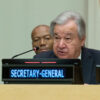
Fragile Progress in Gaza Humanitarian Response Undermined by Rampant Insecurity
Since the ceasefire agreement between Israel and Hamas in October of last year, humanitarian conditions in Gaza have notably improved — but aid agencies warn that progress is extremely fragile. Acute shortages of lifesaving medical care and psychosocial support persist, hunger remains widespread, with conditional cash assistance as the primary barrier preventing full-scale food insecurity, while Israeli attacks continue to undermine stability and humanitarian efforts.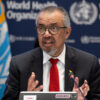
WHO Launches $1 Billion Appeal Amid Funding Shortfalls and Widening Gaps in Healthcare Access
On February 3, the World Health Organization (WHO) launched its 2026 global appeal to help millions of people living in protracted conflicts and humanitarian crises access lifesaving healthcare. Following a trend of sharply declining international funding, the agency warns that it is becoming increasingly difficult to respond to emerging health threats, including pandemics and drug-resistant infections.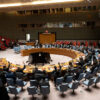
Humanitarian Access Collapses as Yemen’s Political and Security Crisis Deepens
In recent weeks, Yemen’s humanitarian crisis has sharply worsened, as escalating food insecurity and brutal clashes between armed actors have prompted United Nations (UN) officials to warn that the country is approaching a critical breaking point. Intensified violence has increasingly obstructed lifesaving humanitarian operations, while deepening economic and political instability continues to erode access to essential services. As a result, millions of Yemenis now face the growing risk of being left without the support they need to survive, with children being the hardest-hit.
Protecting Africa’s Ocean Future and Why a Precautionary Pause on Deep-sea Mining Matters
The world is entering a decisive period for the future of the ocean. With the High Seas Treaty coming into force and meaningful progress being made on the World Trade Organization Agreement on Fisheries Subsidies, global momentum for stronger marine governance is building. Yet, new pressures linked to the push for deep-sea mining — the extraction of minerals from seabed thousands of meters below the ocean surface — threaten to undermine these gains. To safeguard progress, global decision-making will have to keep pace with such emerging risks. In this context, Africa will host several global discussions in 2026, including those that will shape the ocean's future, with a series of opportunities for leadership starting with the African Union Summit in February to the Our Ocean Conference in Mombasa, Kenya in June.
U.S. Exit from Paris Agreement Deepens Climate Vulnerability for the Rest of the World
On January 27, the United States officially withdrew from the Paris Agreement, an international treaty adopted in 2015 aiming to reduce global warming and strengthen countries’ resilience to climate impacts. Following a year of regulatory rollbacks and sustained efforts by the Trump administration to dismantle federal climate policy, this move is expected to trigger wide ranging ripple effects—undermining international efforts to curb climate change, accelerating environmental degradation and biodiversity loss, and increasing risks to human health, safety, and long-term development.
‘Unfathomable But Avoidable’ Suffering in Gaza Hospitals, Says Volunteer Nurse
“I’d never encountered anything like it before. I had no idea that there could be a place that needed humanitarian aid and that a government entity wouldn’t allow physicians or health workers into [that place],” says Jane.*« Previous Page — Next Page »





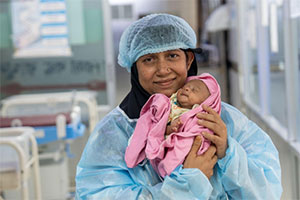 Bangladesh: Sarid, born one month early, receives specialized newborn care and grows stronger every day. Credit: UNICEF/UNI944397/Mojumder
Since the onset of the 2000s, global life expectancy has seen an overall rise, attributed to significant technological and scientific innovations in healthcare. Due to an increased understanding of different conditions as well as a rise in cooperation among healthcare experts around the world, there have been major strides made in ensuring that as few people die from chronic illnesses as possible. Despite the belief that healthcare is a fundamental human right, people from low- or middle-class backgrounds, marginalized groups, and underdeveloped countries have far more limited access to basic healthcare services.
The COVID-19 pandemic showed how marginalized communities are disproportionately affected by health crises, proving that we have much work to do in ensuring that no one dies of terminal conditions. While the global response to the coronavirus saw significant strides in immunization and vaccine development, the global outbreak of mpox in 2022 and its upsurge in parts of Africa in 2024 must remind us to remain vigilant.
Other major disease outbreaks in recent years have been linked to the destruction of infrastructure during warfare. Notably, in 2024, the Gaza Strip witnessed a return of the poliovirus since its eradication in the region 25 years ago. Israel’s blockade on Gaza has resulted in the collapse of the region’s sewage plants and desalination plants, and also destroyed healthcare capacities. The UN stated that this lack of clean water and sanitation would lead to an outbreak of cholera and other deadly infectious diseases. The 2026 OCHA Humanitarian Situation Report confirmed that the over two years of conflict in Gaza has produced a catastrophic health emergency, with millions remaining dependent on relief aid amid tight restrictions and no functioning public health system.
IPS is committed to providing full and comprehensive coverage on healthcare challenges around the world. IPS seeks to address the multifaceted causes of such challenges, including unprecedented pandemics, conflict-driven disease outbreaks, as well as socioeconomic barriers to equal healthcare access. IPS is also dedicated to reporting on innovations in the healthcare industry.

The Week with IPS

NEXT STOP - SDGs
Tracking global progress towards a sustainable world
Tracking global progress towards a sustainable world
