Languages
Friday, November 20, 2026



News and Views from the Global South
Health
U.S.: “We All Breathe the Same Air and Drink the Same Water”
Some 8,000 kilometres from the Climate Change Conference in Copenhagen, Native American environmental experts from 66 tribes came together at a summit here this week to address the most pressing needs in their communities - problems, all emphasised, that know no geographic boundaries.
RIGHTS-US: Panic Erupts in Wake of New Anti-Immigrant Law
Arizona community activists and religious leaders are trying to mitigate fears over a new law that would require state employees to denounce undocumented immigrants.
EAST AFRICA: No Laws to Fight HIV Stigma in Schools
Although he was born with the virus, it was only 15 years after his birth that Robert* and his family discovered he was HIV-positive.
EAST AFRICA: Move Towards Common HIV/AIDS Law
All HIV-positive east Africans could soon access free anti-retroviral treatment even as they move freely from country to country, if a new proposed law comes into effect.
RIGHTS-LAOS: Improved Roads Exact A Price – Part 3
Lao women express their equality by being as mobile as men. The numbers astride motorbikes in particular, are the same as those of men. But there is a cost.
HEALTH: Raising the Recommended CD4 Count for ART
Newborn babies in South Africa will now be treated for HIV, regardless of their CD4 count. President Jacob Zuma announced several new measures which focus on expanding the country’s anti-retroviral (ARV) programme, especially in terms of mother-to-child-transmission, and for those with both TB and HIV.
AUSTRALIA: Children, Youth Feel the Heat of the Financial Crisis
Once a week lunch order from the school canteen was something Emily and Damien’s children looked forward to, but since the global financial crisis began last year, little treats and outings are an absolute ‘No’.
AFRICA: Campaign to Unite Against Malaria Kicks Off
Growing up in Cameroon, Joseph-Antoine Bell and his friends used to think that by playing football they could get rid of malaria.HEALTH-ZIMBABWE: Lots of Drugs, No Takers
Martha* knows that her two young sisters and her need medicine. She also knows where to get it – a clinic a few yards away from her home in Glen Norah, a high-density suburb in the Zimbabwean capital.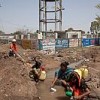
INDIA: Toxins Still Killing 25 Years After Bhopal Gas Leak
"When I saw the leaves on the trees curl and turn black and birds fall dead out of the sky, I knew that this was Death, come among us as foretold. My regret is that I survived," said a native of Bhopal, India after a gas leak at a pesticide plant killed 8,000-10,000 people in 1984.
JAPAN: Aging Population Needs More than Short-Term Solutions
Sachiko Yamada has been hoping to spend her retirement years traveling and living the good life. Today she devotes her time to taking care of her 90-year- old mother five days a week, leaving her with two days off while her mother goes to a care centre for the elderly.
HEALTH-BAHRAIN: Men Bring HIV Home
Umbassil* is unlike other engaged women. Instead of planning her wedding she is wondering where she will have her baby. She is not pregnant but she knows that Bahrain's maternity hospitals will not admit her because she is HIV positive.
WORLD AIDS DAY: Herdboys at Risk to Contract HIV
In the scorching heat of the midday summer sun, a teenage boy’s sharp voice can be heard vividly as he continuously summons his cattle. Glad in his shabby-looking rag that used to be a blanket and black gumboots, the only thing that occupies his mind is his herd, his everyday companions, nothing else.CUBA: World Class Pharma that Puts People First
Cuban biotechnology and pharmaceutical products are already among the country's major exports, and the industry is on course to continue developing while maintaining a firm focus on making a real difference to the health of all Cubans and of people in the numerous countries where Cuba provides medical assistance.INDIA: Towards an AIDS-Free Society, But at What Price?
As the global community observes World AIDS Day today, India is caught in a rancorous debate about a government scheme which mandates that all pregnant women in the country be tested for HIV so that its 1.2 billion people can have "an AIDS-free generation".
WORLD AIDS DAY: Growing Up with HIV
Sixteen-year-old Andela Milambo* wants a husband. She is not looking for love, but for someone to share the burden of living with HIV. She wants to be able to take her medicine without having to hide, to discuss the recurring herpes with someone who understands.
WORLD AIDS DAY: Children Still Falling Through the Cracks
While most HIV-positive people in the Western world can gain decades of good health thanks to increasingly effective drug regimens, in the developing world, nearly a third of children born with HIV are still dying before their first birthday.WORLD AIDS DAY: Groups Urge Repeal of “Antiquated Colonial Laws”
On the heels of a new report by UNAIDS that the HIV virus is now infecting Caribbean men and women at an equal rate, activist groups are urging regional leaders to eliminate laws that further the stigmatisation associated with the deadly virus.BALKANS: Apologising to Sterilised Roma Women – Slovakia’s Turn
Rights activists are hoping a landmark announcement by the Czech government regretting forced sterilisation of Roma women in the past will push politicians in neighbouring Slovakia to follow suit.ROMANIA: Business Crowds Out Bucharest Life
Competing with the destruction caused by former Romanian dictator Nicolae Ceausescu’s ‘systematisation’ plans might be hard. But an official report says that "the aggression on Bucharest’s architectural heritage, documented since 1989, exceeds Ceausescu’s acts.’’GUATEMALA: Sex Education, Family Planning Finally Available
Social organisations in Guatemala are celebrating the entry into effect of a family planning law that will usher sex education into the country's classrooms and facilitate access to birth control methods, as a victory in the fight against the country's high birth and maternal and infant mortality rates.« Previous Page — Next Page »


 Bangladesh: Sarid, born one month early, receives specialized newborn care and grows stronger every day. Credit: UNICEF/UNI944397/Mojumder
Since the onset of the 2000s, global life expectancy has seen an overall rise, attributed to significant technological and scientific innovations in healthcare. Due to an increased understanding of different conditions as well as a rise in cooperation among healthcare experts around the world, there have been major strides made in ensuring that as few people die from chronic illnesses as possible. Despite the belief that healthcare is a fundamental human right, people from low- or middle-class backgrounds, marginalized groups, and underdeveloped countries have far more limited access to basic healthcare services.
The COVID-19 pandemic showed how marginalized communities are disproportionately affected by health crises, proving that we have much work to do in ensuring that no one dies of terminal conditions. While the global response to the coronavirus saw significant strides in immunization and vaccine development, the global outbreak of mpox in 2022 and its upsurge in parts of Africa in 2024 must remind us to remain vigilant.
Other major disease outbreaks in recent years have been linked to the destruction of infrastructure during warfare. Notably, in 2024, the Gaza Strip witnessed a return of the poliovirus since its eradication in the region 25 years ago. Israel’s blockade on Gaza has resulted in the collapse of the region’s sewage plants and desalination plants, and also destroyed healthcare capacities. The UN stated that this lack of clean water and sanitation would lead to an outbreak of cholera and other deadly infectious diseases. The 2026 OCHA Humanitarian Situation Report confirmed that the over two years of conflict in Gaza has produced a catastrophic health emergency, with millions remaining dependent on relief aid amid tight restrictions and no functioning public health system.
IPS is committed to providing full and comprehensive coverage on healthcare challenges around the world. IPS seeks to address the multifaceted causes of such challenges, including unprecedented pandemics, conflict-driven disease outbreaks, as well as socioeconomic barriers to equal healthcare access. IPS is also dedicated to reporting on innovations in the healthcare industry.

The Week with IPS

NEXT STOP - SDGs
Tracking global progress towards a sustainable world
Tracking global progress towards a sustainable world
