Languages
Thursday, November 19, 2026



News and Views from the Global South
Development & Aid
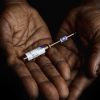
Managing an Epidemic Within a Pandemic
While COVID-19 has made the headlines every day over the past two months, services for tuberculosis (TB), one of the oldest diseases in the world, have been interrupted due to the lockdown. According to the World Health Organization’s (WHO) Global Tuberculosis Report 2019, India had an estimated 2.7 million new cases and 440,000 deaths due to TB in 2018—the highest in the world.
Put Climate at the Heart of COVID-19 Economic Recovery Plans
Cast your mind back. Six months ago—it seems like a lifetime—the world’s attention was on Madrid. The United Nations was meeting to take stock of international progress in fighting climate change. Headlines were dominated by young people pointing out—rightly—that governments were still not doing enough. They demanded urgent and ambitious action to cut emissions and help the most vulnerable.
Africa’s Post-pandemic Future Needs to Embrace Youth in Agriculture
Warnings at the early stages of the COVID-19 pandemic that Africa could be hit by a wave of up to 10 million cases within six months thankfully now seem unfounded, although it is still far too early to be over-confident.
COVID-19 Pandemic Could Widen Existing Inequalities for Kenya’s Women in Business
Pauline Akwacha’s popular chain of eateries, famously known as Kakwacha Hangover Hotels and situated at the heart of Kisumu City's lakeside in Kenya, is facing its most daunting challenge yet. Akwacha and other women in business across this East African nation are bracing themselves for the post-COVID-19 economy.
Indigenous Farmers Harvest Water with Small Dams in Peru’s Andes Highlands
A communally built small dam at almost 3,500 meters above sea level supplies water to small-scale farmer Cristina Azpur and her two young daughters in Peru's Andes highlands, where they face water shortages exacerbated by climate change.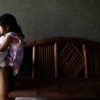
Safety of Children an Afterthought for Tech Companies
Global upheaval caused by the COVID-19 pandemic has left society’s most vulnerable exposed. Instances of child sexual exploitation material (CSEM) found online have increased at an alarming rate over past months.
Sudan’s Partners Pledge almost $2Bn but Is it Enough?
This week, when Sudan's Minister of Energy and Mining Adil Ibrahim addressed the country, stating that households will face power-cuts for up to seven hours a day, people had already been sitting on plastic chairs outside their homes, scouring the internet to purchase battery-operated fans. This Northeast African nation has seen temperature highs of up to 41 degrees Celsius recently.
Q&A: Post COVID-19 Pandemic Let’s Stop the Next Wave of Medicalisation over Mental Health
The current pandemic is not only heightening mental health concerns, but might also put many at risk of becoming institutionalised or being neglected by the system.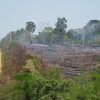
How Deforestation Helps Deadly Viruses Jump from Animals to Humans
The coronavirus pandemic, suspected of originating in bats and pangolins, has brought the risk of viruses that jump from wildlife to humans into stark focus.
African Governments Failing Survivors of Child Sexual Exploitation
In Malawi, Mary* was only 14 years old when she was recruited and trafficked to the city of Blantyre and sold for sex in a bar. A man had arrived in her village looking for girls to work as domestic helpers for families.
Field Connections- How technology is supporting Pacific agriculture
Standing in the middle of a field around a withered plant, the Pacific Community’s Plant Health Doctors conducted their first virtual meeting as they continue their work on the frontline by providing vital support for farmers in Fiji and the region.
The Best Law Capital Can Buy
Katharina Pistor’s recent book, The Code of Capital: How the law creates wealth and inequality shows how law has been crucial to the creation of capital, and how capital continues to survive, evolve and enhance its ability to ‘make money’, or secure wealth legally, i.e., through the law.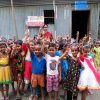
Looking Beyond the Lowest-common Denominator? DFID/FCO Merger
Nazia has a herd of 5 cows. She has two daughters in secondary education, a seat on the Village Council, a savings account and a permanent home. Nazia has dignity, security and prospects beyond poverty. This is Nazia’s story because alongside her commitment and conviction to create a better life, she benefited directly from the UK government, and its global leadership in the drive to end extreme poverty.
Lifting Livelihoods by Lifting Water
While growing up in Lele village in southern Lalitpur, Pratap Thapa watched his parents plant maize on their terrace farm and wait for the rains. He often wondered how much of their drudgery could be reduced if water could be brought up from a nearby river.
COVID-19 Increases Suffering of Children in Conflict
The current coronavirus pandemic is having a profound affect on children in conflict zones -- with girls especially being at higher risk of violence and sexual health concerns.
UNESCO Campaign – The next normal
 UNESCO launches a global campaign challenging our perception of normality. The 2’20” film relies on facts to prove its point – facts about the world before and during the Covid-19 pandemic. Put together, these facts make us question our ideas about what is “normal”, suggesting that we have accepted the unacceptable for far too long. Our previous reality cannot be considered normal any longer, now is the time to make a change. It all starts with Education, Science, Culture and Information.
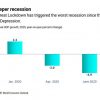
Reopening from the Great Lockdown: Uneven and Uncertain Recovery
The COVID-19 pandemic pushed economies into a Great Lockdown, which helped contain the virus and save lives, but also triggered the worst recession since the Great Depression. Over 75 percent of countries are now reopening at the same time as the pandemic is intensifying in many emerging market and developing economies. Several countries have started to recover. However, in the absence of a medical solution, the strength of the recovery is highly uncertain and the impact on sectors and countries uneven.
Sweden-Costa Rica: Same Paths on Climate Change, Different on COVID-19
The lack of a coordinated international response had led to varying results worldwide in dealing with the COVID-19 pandemic. Two countries that have long coordinated their response to global goals like promotion on democracy, human rights and environmental issues, Sweden and Costa Rica highlight how public policy matters. While with their similar approaches to climate change the two walk together, their different approaches to COVID-19 have reaped disparate results, and death tolls.
The Critical Role of Women in Avoiding a Covid-19 “Food Pandemic” in sub-Saharan Africa
As infections with Covid-19 appear to be intensifying in sub-Saharan Africa (SSA), fears of severe food shortages have prompted experts to warn that the region may be “on the brink of a hunger pandemic.” Efforts are intensifying to rally a major global response.
Senegalese Women’s Participation in Energy Sector equals Empowerment
Aïssata Ba, 45-year-old widow and mother of seven children, has been practising market gardening for the past 30 years in Lompoul Sur Mer village in the Niayes area of north-west Senegal. For many women in the village, endowed with fertile soil and favourable climate, it is the primary source of income throughout the year.
Guidance note: Addressing the impacts of the COVID-19 pandemic on women migrant workers
This guidance note highlights the emerging impacts of the COVID-19 pandemic on women migrant workers, focusing on the key challenges and risks they face. It makes recommendations in the context of the economic and social response and recovery packages that governments are putting forward, supported by examples of existing good practices from around the world.« Previous Page — Next Page »


 2026 High-level Political Forum on Sustainable Development. Credit: UN Photo/Eskinder Debebe
In 2015, the United Nations and its Member States adopted the Sustainable Development Goals (SDGs) in an effort to make the world a more sustainable and peaceful place for future generations. Progress on the 17 SDGs has been uneven, and inequality persists across the globe. 10 years after adoption, the 2025 UN SDGs Report revealed that only 35% of the SDG targets are on track, with more than half moving too slowly, and 18% moving backwards from the 2015 baseline. Poverty remains one of the world’s most pressing issues, with hunger, violence, and inequality impeding the opportunities for all people to achieve success. In September 2024, the United Nations Summit of the Future introduced a new goal: to eradicate global poverty by 2030, ensure universal rights to basic services, and increase the overall standard of living in terms of industrialization, economic well-being, citizen health, and literacy. Furthermore, recent shifts in United States foreign aid policy – notably, major budget cuts to USAID and the termination of thousands of development programmes– have severely threatened vital lifelines of financial aid to impoverished communities around the world. Additionally, the United States’ withdrawal from the Paris Climate Agreement has undercut international efforts at sustainable development. With the upcoming 2030 deadline, the UN Secretary-General has called for urgent multilateralism across six priority areas: food systems, energy, digital connectivity, education, jobs and social protection, and climate and biodiversity. IPS sheds light on marginalized communities that struggle on a daily basis to survive and have their stories heard and respected.
Updated by Yilan Batista and Shuli Wong August 2026

The Week with IPS

NEXT STOP - SDGs
Tracking global progress towards a sustainable world
Tracking global progress towards a sustainable world
