Languages
Thursday, November 19, 2026



News and Views from the Global South
Development & Aid

The Quiet Survivors of a Global Pandemic
The issue of women’s rights, feminism and gender is complex and ongoing in most countries including Bangladesh. When I was asked to write about impact of COVID-19 on women and girls, I found myself drawn towards writing about women’s situation in general as that automatically impacts COVID-19 response as well. Since I am a woman who has been a part of many different cultures, yet a Bangali at heart, I am not only a survivor within its ranks but also responsible for being a part of the solution to the problems we face.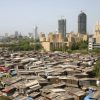
“Population Density Linked to COVID-19 Spread in India”
Indian health experts say the findings of a US study — which suggest that population density is unrelated to COVID-19 infection rates — to be completely contradictory to their experience of dealing with the pandemic in India, a country with 1.3 billion people.
UN Chief Warns of Deadly Germs as Potential Bioterrorist Weapons
The coronavirus—which has claimed the lives of over 538,000 people and infected more than 11.6 million worldwide—has destabilized virtually every facet of human life ever since its outbreak in late December.
Building Back Greener in Africa
COVID-19 continues to race across the African continent. People are dying, and even more are being pushed into hunger and poverty, in many cases risking to overturn years of development gains.
Innovative Financial Approaches Key to Unleash SIDS Economic Potential
Our world is transfixed by the great human toll and economic impact of the worst global pandemic in a century. For the 65 million inhabitants of small island developing states (SIDS), the impact of the novel coronavirus (COVID-19) is reminiscent of the worst forms of extreme weather events that SIDS contend with annually. Such events cost lives, undermine our hard-earned development gains, and hamper the aspirations and quality of life of our people. Our governments are routinely compelled to shift already scarce resources from social and economic investments to recovery and sustenance in the aftermath of disasters. For decades islands have been treading a development tightrope, which is increasingly precarious with the intensification of adverse climate impacts.
Online Education Moved to Top of Agenda by Indian State after IPS Reports Risks of Unequal Access
High up at an altitude of between 1,500 to 4,000 feet in India’s eastern Odisha state, live the Bonda people — one of this country’s most ancient tribes, who have barely altered their lifestyle in over a thousand years.
Non-formal Education Helps Senegalese Women Combat FGM and Harmful Practices
Growing up in Senegal’s southern Casamence region — a conflict zone — Fatou Ndiaye, now 43, often heard gunfire and watched fearfully as she saw people flee their villages. But what she dreaded more than a flying bullet was Female Genital Mutilation (FGM).
Donald Trump, Working Class Hero?
In his early February annual State of the Union address, US President Donald Trump typically hailed his own policies for increasing wages and jobs to achieve record low US unemployment. Directly appealing to labour for a second term, Trump claimed exclusive credit for the US “blue-collar boom”.
Impact of COVID-19 on Women and Children in South Asia
The onset of the coronavirus pandemic in early 2020 set off a series of health and economic crises that feed upon each other. The health crisis exacerbates the economic crisis by disrupting supply chains, throwing large number of people (particularly those working in the informal sector) out of work and closing down large numbers of enterprises – particularly micro, small and medium enterprises (MSME).
The Missing SDG: Ensure the Digital Age Supports People, Planet, Prosperity & Peace
As the nations of the world prepare to gather virtually to assess progress towards the Sustainable Development Goals (SDGs), society is just beginning to imagine what a post-COVID world might be like.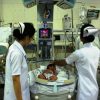
A Pathway to Universal Healthcare in India
Universal healthcare (UHC) is an important global goal because of its close links to poverty reduction and enhancement of the growth potential of countries. While several countries can now be said to be well on their way towards achieving this goal, several others, most notably large ones such as India and Nigeria, are decidedly not.
How do we get out of lockdown?

Dr David Nabarro is a Special Envoy of World Health Organization Director-General on COVID-19, Co-Director of the Imperial College Institute of Global Health Innovation at the Imperial College London and Strategic Director of 4SD. His Narratives are being written with the 4SD team to help readers to make sense of the fast-evolving pandemic and its multiple consequences and to identify the questions to consider when making decisions about measures to contain and suppress outbreaks. They provide readers with insight from David’s leadership and continuous learning, as a public health and development professional with over 40 years’ experience across many countries and contexts, as we navigate this complex, multi-faceted crisis.

Q&A: Child Marriage, FGM and Harmful Practices on Women’s Bodies to Increase Because of COVID-19
An additional 5.6 million child marriages can be expected because of the coronavirus pandemic, which resulted in a short-term increase in poverty and the shutdown of schools. The current pandemic is also expected to have a massive impact on the projected growth of harmful practices on women’s bodies.
Beyond Ending Conflict in Africa, We Must Tackle its Root Causes
Hanna Tetteh is the United Nations Under-Secretary-General and Special Representative of the Secretary-General to the African Union. As head of the UN Office to the African Union (UNOAU), she spoke with Africa Renewal’s Kingsley Ighobor on, among other issues, the current state of the UN-AU partnership and how women and young people can help resolve conflict.
Global E-waste Surging: Up 21% in 5 Years
A record 53.6 million metric tonnes (Mt) of electronic waste was generated worldwide in 2019, up 21 per cent in just five years, according to the UN's Global E-waste Monitor 2020.
Global Economic Recovery must Prioritise Restructuring of Debt for Developing Countries
Unless there is a restructuring of debt for developing countries, the servicing for this debt will take away valuable resources from these nations that are needed to prevent the further suffering of people during the coronavirus pandemic -- particularly with regards to safeguarding the health systems, and protecting the “integrity and resilience of economies”.
Rethink Food Security and Nutrition Following Covid-19 Pandemic
The Covid-19 crisis has had several unexpected effects, including renewed attention to food security concerns. Earlier understandings of food security in terms of production self-sufficiency have given way to importing supplies since late 20th century promotion of trade liberalization.
Why Accelerating Implementation of AfCFTA Must Remain a Top Priority
1 July 2020 was supposed to be the official date to start trading under the African Continental Free Trade Area (AfCFTA). It was a much-anticipated follow up to the 2019 African Union Summit, that launched the operational phase of the AfCFTA in a colorful ceremony in Niamey – Niger.
Sustainable Tourism and Fisheries Key to Growth in Post-COVID Pacific
Developing countries of Asia and the Pacific are experiencing unbalanced tolls of the COVID-19 pandemic. Grim milestones in infections and deaths have left countless devastated. Yet, we must look at the economic and social impacts in small island developing States (SIDS), where setbacks are likely to undo years of development gains and push many people back into poverty.
White House Fenced In: Trump, Within, Ploughs a Lonely Furrow
President Donald Trump has got himself a wall. But it is not the one of his choosing, as one on the Mexican border. It is on Pennsylvania Avenue, Washington DC, a high fence that now separates him from his people. But as polls for him keep dipping, and the prognosis for a victory in the upcoming November elections keep worsening, a prediction from an unlikely person should bring him cheer. The source is none other than the Foreign Minister of a country that Trump considers to be in the forefront of his list of foes: Javad Zareef of Iran. I have known Zareef and worked with him as a fellow diplomat for years and would rate him as a person of extraordinary intellect. Speaking at an interview on Instagram with an Iranian journalist Farid Modaressi, Zareef stated that despite all that is happening, Trump’s support base of 30 to 35 percent has not moved , and till that occurs, he still has over 50 percent chances of re-election. Zareef did not elaborate if he himself would prefer such an outcome, calculating that four more years of America with Trump at its helm , might eliminate that nation totally from the global power scene, which for Zareef and Iran, ought to be a consummation devoutly to be wished!
Managing an Epidemic Within a Pandemic
While COVID-19 has made the headlines every day over the past two months, services for tuberculosis (TB), one of the oldest diseases in the world, have been interrupted due to the lockdown. According to the World Health Organization’s (WHO) Global Tuberculosis Report 2019, India had an estimated 2.7 million new cases and 440,000 deaths due to TB in 2018—the highest in the world.« Previous Page — Next Page »


 2026 High-level Political Forum on Sustainable Development. Credit: UN Photo/Eskinder Debebe
In 2015, the United Nations and its Member States adopted the Sustainable Development Goals (SDGs) in an effort to make the world a more sustainable and peaceful place for future generations. Progress on the 17 SDGs has been uneven, and inequality persists across the globe. 10 years after adoption, the 2025 UN SDGs Report revealed that only 35% of the SDG targets are on track, with more than half moving too slowly, and 18% moving backwards from the 2015 baseline. Poverty remains one of the world’s most pressing issues, with hunger, violence, and inequality impeding the opportunities for all people to achieve success. In September 2024, the United Nations Summit of the Future introduced a new goal: to eradicate global poverty by 2030, ensure universal rights to basic services, and increase the overall standard of living in terms of industrialization, economic well-being, citizen health, and literacy. Furthermore, recent shifts in United States foreign aid policy – notably, major budget cuts to USAID and the termination of thousands of development programmes– have severely threatened vital lifelines of financial aid to impoverished communities around the world. Additionally, the United States’ withdrawal from the Paris Climate Agreement has undercut international efforts at sustainable development. With the upcoming 2030 deadline, the UN Secretary-General has called for urgent multilateralism across six priority areas: food systems, energy, digital connectivity, education, jobs and social protection, and climate and biodiversity. IPS sheds light on marginalized communities that struggle on a daily basis to survive and have their stories heard and respected.
Updated by Yilan Batista and Shuli Wong August 2026

The Week with IPS

NEXT STOP - SDGs
Tracking global progress towards a sustainable world
Tracking global progress towards a sustainable world
