Languages
Thursday, November 19, 2026



News and Views from the Global South
Development & Aid
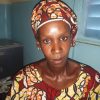
How Senegal is Providing Reproductive Health Services to those Who can Least Afford it
Pregnant with her second child, 30-year-old Ndiabou Niang was enduring pelvic pain, but couldn’t afford to access prenatal care in Diabe Salla, a village on the outskirts of the small town of Thilogne in north-east Senegal. Her husband was unemployed and her earnings of under CFAF 10,000 (17 USD) from selling seasonal fruits in the local market were insufficient to make ends meet.
Can Private Finance Really Serve Humanity?
The recent explosion of private finance has nursed the hope, dream or illusion that it can be mobilized for the public good, e.g., to achieve the Sustainable Development Goals, associated with Agenda 2030. However, such hopes ignore how changes in financial investing have deeply transformed corporations, national economies and prospects for the world economy and social progress.
Electrification of Transport: A Challenge for Urbanised Latin America
Electric transport, still limited in Latin America despite its urban benefits, could expand during the post-pandemic economic recovery, says Adalberto Maluf, president of the Brazilian Association of Electric Vehicles (ABVE).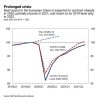
Toward a More Resilient Europe
Europe, like the rest of the world, faces an extended crisis. An element of social distancing—mandatory or voluntary—will be with us for as long as this pandemic persists. This, coupled with continued supply chain disruptions and other problems, is prolonging an already difficult situation. Based on updated IMF projections released last month, we now expect real GDP in the EU to contract by 9.3 percent in 2020 and then grow by 5.7 percent in 2021, returning to its 2019 level only in 2022. If an effective treatment or vaccine for COVID 19 is found, the recovery could be faster—but the opposite would hold true if there are large new waves of infection.
Providing an Education in Favour of Senegal’s Girls
When Fatima* became pregnant in the middle of the school year and dropped out, she was disowned by her parents. Hers is a story that could have ended as another statistic of dropout rates among female learners in Senegal.
The Fuzia Story: Empowering Women Through the Fusion of Cultures and Ideas
A young and dynamic digital platform, named Fuzia, has attracted millions of women social media followers and 100,000 active global users with its eclectic mix of content. The platform showcases women’s talent and provides a support network.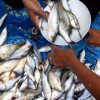
India’s Fisheries: Past, Present, and Future
Fisheries and aquaculture are an important source of food production, nutritional security, employment, and income in India. The fisheries sector is a direct source of livelihoods for more than 20 million fishers and fish farmers; contributes INR 1.75 trillion annually to the gross value added to India’s economy; and is a major export earner, with fish being one of the most important agricultural commodities to be exported from India.
On World Youth Skills Day, Don’t Forget the Importance of Soft Skills
It’s no secret that under pandemic lockdown for so many months, young people around the world have coped in tremendous ways. They have found new outlets for learning and creative channels for developing and using their skills.
Heifer Nepal Farmers Persevere During COVID-19 Pandemic
For nearly three months, the government of Nepal implemented a strict lockdown to combat the spread of COVID-19. And while it slowed the spread of the virus, it also put a tremendous economic burden on many families nationwide. As of June 15, the country transitioned to a “soft lockdown,” easing some restrictions such as allowing private vehicles to operate on an odd/even-day scheme. But the economic effect is already being seen.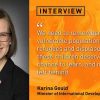
Education Cannot Wait Interviews Karina Gould, Canada’s Minister of International Development
The Honourable Karina Gould was first elected as the Member of Parliament for Burlington in 2015. A graduate of McGill University and the University of Oxford, Minister Gould is passionate about public service and international development. Before her election as the Member of Parliament for Burlington, she worked as a trade and investment specialist for the Mexican Trade Commission in Toronto, a consultant for the Migration and Development Program at the Organization of American States in Washington, D.C., and spent a year volunteering at an orphanage in Mexico.
Women and Girls with Disabilities: Planning for Periods During a Pandemic
The Coronavirus pandemic and the resulting lockdown has intensified most inequities in society- specifically those that affect vulnerable communities, including persons with disabilities, particularly young girls. As an aftermath of recent media attention, many government organizations, nonprofits and philanthropies have come together to ensure girls and women in remote communities have access to menstrual care products.
Q&A: How Kazakhstan’s Transgender and Lesbian Women are Being Impacted by COVID-19
The coronavirus lockdown in Kazakhstan, and the resultant limited public oversight and limited publication engagement, has paved the way for the government to propose amendments to the country's laws around gender that could see the exclusion of the rights of the Lesbian, Gay, Bisexual, Transgender, and Queer (LGBTQ) community.
World Population Day 2020 – ‘The Time is Now to Accelerate the Promise for Women and Girls’
Fulfilling women’s and girls’ rights through promoting sexual and reproductive health and rights (SRHR) is an essential prerequisite for reaching national development goals as well as the Sustainable Development Goals (SDGs).
COVID-19 & Why We Care
Among the many compelling points made by Dr. Anthony Fauci in our “Rethinking Health” webinar this week was the absolute essentiality of global collaboration and transparency to contain the pandemic with which we are faced.Covid-19 And Migrant Workers: Planning the return and reintegration of forced returnees
During the pandemic, forced return of migrants has become a major issue of concern for intergovernmental bodies and the global civil society engaged in migration issues. The United Nations Network on Migration (UNNM) has urged states "to suspend forced returns during the pandemic, in order to protect the health of migrants and communities, and uphold the human rights of all migrants, regardless of status". UNNM has called for a halt to arbitrary expulsions and reiterated that their "protection needs must be individually assessed; and that the rule of law and due process must be observed". It reminded the states that these obligations under international law "can never be put on hold and are vital to any successful approach to combatting Covid-19 for the benefit of all".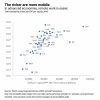
Teleworking Is Not Working for the Poor, the Young and the Women
The COVID-19 pandemic is devastating labor markets across the world. Tens of millions of workers lost their jobs, millions more out of the labor force altogether, and many occupations face an uncertain future. Social distancing measures threaten jobs requiring physical presence at the workplace or face-to-face interactions. Those unable to work remotely, unless deemed essential, face a significantly higher risk of reductions in hours or pay, temporary furloughs, or permanent layoffs. What types of jobs and workers are most at risk? Not surprisingly, the costs have fallen most heavily on those who are least able to bear them: the poor and the young in the lowest-paid jobs.
Beware the ‘Hunger’ to Access Indigenous Peoples’ Land and Resources for Post-COVID-19 Recovery
When governments and states begin their recovery journey from the economic downturn caused by the coronavirus pandemic, there might be a heightened threat to indigenous peoples, their land and resources. “The fear is [that] the economic recovery is based on access to land and natural resources,” Lola García-Alix, senior advisor on Global Governance at the International Work Group for Indigenous Affairs (IWGIA), told IPS.
Digital Agriculture Linking Indian Farmers to Consumers Can Impact Food Security
Digital technologies in agriculture are helping address the twin problems of food security and supply chain disruptions triggered by COVID-19 in India, while augmenting the income of smallholder farmers. Leveraging technology to match supply and demand of resources and food is key to overcoming the issues of starvation and food supply interruptions, Anshul Sushil, CEO and co-founder at Wizikey, a software that allows businesses to reach media directly, eliminating the middlemen, tells IPS.
Financialization: Tackling the Other Virus
The 1971 Bretton Woods (BW) system collapse opened the way for financial globalization and transnational financialization. Before the 1980s, most economies had similar shares of trade and financial openness, but cross-border financial transactions have been increasingly unrelated to trade since then.
In India, Climate Change is Increasing Refugees & Human Trafficking
In India the impacts of climate change induced extreme weather events on the lives and livelihood of people, particularly belonging to the poor and vulnerable sections of the society, are increasing alarmingly with each passing year.
How We Can Ensure the Safety of Our Health Workers
Recently, Barcelona's Liceu opera opened its 2020-2021 season by serenading a full house of plants with classical music. The plants will then be given to over 2,200 health workers who serve at the frontlines to battle the pandemic. The performance was both an appreciation for the workers and it also celebrated the return to normalcy following the devastations caused by COVID-19.« Previous Page — Next Page »


 2026 High-level Political Forum on Sustainable Development. Credit: UN Photo/Eskinder Debebe
In 2015, the United Nations and its Member States adopted the Sustainable Development Goals (SDGs) in an effort to make the world a more sustainable and peaceful place for future generations. Progress on the 17 SDGs has been uneven, and inequality persists across the globe. 10 years after adoption, the 2025 UN SDGs Report revealed that only 35% of the SDG targets are on track, with more than half moving too slowly, and 18% moving backwards from the 2015 baseline. Poverty remains one of the world’s most pressing issues, with hunger, violence, and inequality impeding the opportunities for all people to achieve success. In September 2024, the United Nations Summit of the Future introduced a new goal: to eradicate global poverty by 2030, ensure universal rights to basic services, and increase the overall standard of living in terms of industrialization, economic well-being, citizen health, and literacy. Furthermore, recent shifts in United States foreign aid policy – notably, major budget cuts to USAID and the termination of thousands of development programmes– have severely threatened vital lifelines of financial aid to impoverished communities around the world. Additionally, the United States’ withdrawal from the Paris Climate Agreement has undercut international efforts at sustainable development. With the upcoming 2030 deadline, the UN Secretary-General has called for urgent multilateralism across six priority areas: food systems, energy, digital connectivity, education, jobs and social protection, and climate and biodiversity. IPS sheds light on marginalized communities that struggle on a daily basis to survive and have their stories heard and respected.
Updated by Yilan Batista and Shuli Wong August 2026

The Week with IPS

NEXT STOP - SDGs
Tracking global progress towards a sustainable world
Tracking global progress towards a sustainable world
