Languages
Monday, November 9, 2026



News and Views from the Global South
Population
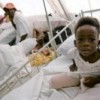
HAITI: Tensions Put on Hold as Dominican Republic Reaches Out
Despite a history of often tense relations, the first nation to render assistance to Haiti after last month's devastating earthquake was its island neighbour, the Dominican Republic.US-HAITI: Civil Rights Delegation Calls for Reparations
A U.S. delegation to Haiti led by civil rights veteran Joe Beasley is calling for a 30-billion-dollar restitution payment by France to help Haiti rebuild after the devastating Jan. 12 earthquake, and the end of what Beasley refers to as an unofficial blockade of Haiti.
JAPAN: Calls Rising for Stop to Discriminatory Work Laws
A chorus of calls for changes in discriminatory work laws is spreading across Japan in the aftermath of waves of lawsuits filed by short-contract workers.CHINA: Hard Times Expose Migrants’ Worries about Children
Life for China’s 130 million migrant workers has never been easy. In recent years, however, family life for the ‘liudong renkou’ (floating population) was showing signs of improving – until the financial crisis.
EDUCATION-INDONESIA: Mobile Classes a Lifeline to Dropouts
Two years after the economic recession forced her out of school, 20-year-old Nurul Kumala is now back in classes – mobile classes, that is.INDIA: Lay-offs from Recession-hit Gulf Lead to New Lives at Home
Domestic worker Beena Joy, 35, came back empty-handed after losing her job in recession-hit United Arab Emirates, but soon found that getting laid-off has given her a happier life back home here in this southern Indian city.GREECE: New Migrant Law Tough But Respects Rights
The newly elected Pan-Hellenic Socialist Movement (PASOK) government's plans to move legislation, that will greatly affect migrants and refugees, have been both welcomed and criticised by rights organisations and activists.HAITI: U.S. Lawmakers, NGOs Call for Debt Cancellation
Three weeks after Haiti's devastating earthquake, nearly 100 U.S. lawmakers joined with key civil society groups here Thursday to urge the Group of Seven (G7) leading western nations to commit to cancelling all of the Caribbean country's multilateral debt.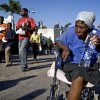
HAITI: Displaced Women Face Double Jeopardy
Women's rights and development activists working in Haiti say that greater attention must be paid to the immediate needs of women and girls, as well as their role in the long-term reconstruction of the devastated country.JORDAN: Palestinians Unfairly Stripped of Citizenship – Report
The Jordanian government should halt the arbitrary revocation of nationality from its citizens of Palestinian origin, according to a Human Rights Watch (HRW) report released Monday.HAITI: Universities Feel Strain After Earthquake
Astride Auguste was late for an exam at Quiskeya University on that fateful Tuesday, Jan. 12, when the earthquake - or "the event", as Haitians have come to call it - struck this capital city.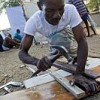
HAITI: Time to Build a Just Society, Rights Groups Urge
In the wake of last month's catastrophic earthquake in Haiti, prominent advocacy groups are calling on the U.S. and the international community to reverse decades of racial and political discrimination and build relief and reconstruction efforts on human rights principles, transparency, and respect for the dignity of all Haitians.BALKANS: Moderate Patriarch Sets New Course for Serb Church
The enthronement of a moderate as patriarch of the influential Serbian Orthodox Church (SPC) has raised hopes for the planned integration of the country with the European Union (EU) and for Serbs coming to terms with the bloody Balkans wars of the 1990s.MIGRATION: Fortress Europe Starts With Greece
When Michalis Chrisohoidis, Greek minister of citizens' protection announced that FRONTEX, the European Agency for Border Control and Protection, would double its representation in this country in spring, it was clear that Greece is being charged with special responsibilities to apprehend and repatriate illegal migrants into Europe.
Q&A: "Being Poor and White Is Not the Same as Being Poor and Black" in Cuba
The elimination of racism remains unfinished business in Cuba today. "We have to admit that the problem exists, determine its impact on the social model that we defend, and tackle it in depth," says Esteban Morales, an Afro-Cuban economist, political scientist and author of numerous articles and essays on the subject.INDIA: Mobilised by Old Clothes, Poor Folk Stand Up, Take Action
Salidhana village, a mere blip on the vast and arid landscape of India’s central state of Madhya Pradesh, was devoid of life’s most basic necessity – water. Until last year, there was no well in this hamlet of about a hundred families. Women would trudge hours daily to fetch water from distant areas, often losing their balance on the hilly village’s treacherous slopes.
HAITI: Local Leaders Shut Out of Military-Run Relief Efforts
Two gray 23-million-dollar hovercrafts sitting in the middle of a sandy tropical beach look like they are from another world. A pair of 15-foot-wide propeller fans sticks out from the back of each behemoth.PARAGUAY: Afro-Descendants Affirm Their Identity
Black communities have for the most part remained out of sight and out of mind in Paraguay, but now they are organising and claiming equal economic and social rights, while building an Afro-Paraguayan identity.AFGHANISTAN: Officials’ Optimism on Economy Belies Deep Poverty
Afghanistan may be one of the poorest countries in the world, but official figures do not quite paint a picture of a country deep in the throes of poverty and underdevelopment.MIGRATION: Haitians in U.S. See Chance for Better Life
More than a decade ago, Marie Elisemonde left Haiti, fleeing threats of rape and murder by thugs, or zengledo in Creole, who could only be appeased with money. She paid 700 dollars for her seat on a boat to the United States, without any guarantees of a safe arrival or entry.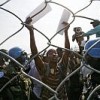
HAITI: Military Playing Large Role in Relief Efforts
As international attention turns to the long-term reconstruction of earthquake-stricken Haiti, U.N. officials pledged that the Haitian government would have full involvement and authority over the process.« Previous Page — Next Page »





 One Thousand Internally Displaced Persons (IDPs) Relocated from Tomping Camp in South Sudan. Credit: UN Photo/Isaac Billy
It took hundreds of thousands of years for the world’s human population to cross one billion in 1804. Approximately 200 years later, the population has multiplied sevenfold. In 2023, the global population crossed 8 billion, and is expected to reach 9 billion before 2050. With the planet more crowded than ever, it is essential to keep track of population trends, urbanization, migration, and reproduction across the world.
Life expectancy has seen significant strides in the past century, largely due to economic development and increased standards of living. On the contrary, trends in global fertility are shifting, with certain regions in Africa and Asia reporting higher rates, while parts of Europe and North America report stagnant or lower rates. This is in part due to differences in sexual and reproductive healthcare, as well as societal and economic conditions around the world. For example, child marriage is prevalent in certain societies, where childbearing is also considered a familial duty. Meanwhile, stagnating economies frequently experience lower marriage and childbearing rates.
The increase in migration and urban development around the world is also linked to global population trends. By 2050, it is expected that approximately 66 percent of all people will live in cities. Furthermore, global crises such as warfare and natural disasters also prompt transnational migration. Transnational migration is linked to a variety of socioeconomic issues in both host and receiving countries: migrants often leave developing countries with less access to educational and economic opportunities and arrive in developed countries where they are frequently the targets of ethnic, racial, and cultural discrimination, and economic exploitation. Recent crises in Europe and the United States demonstrate the importance of advocating for migrants worldwide. As migrants from the Global South are increasingly stripped of their legal and civic rights in unlawful deportations, or targeted in acts of identity-based violence, it is essential to keep track of population trends and protect the human rights of migrant populations. Climate-related disasters are now a major driver of displacement, with nearly half of all new internal displacements in 2025 being disaster-related.
IPS is devoted to covering issues surrounding population trends, migration, and reproduction through its compelling articles, which use both statistics and human stories to provide readers with robust and informative viewpoints.

The Week with IPS

NEXT STOP - SDGs
Tracking global progress towards a sustainable world
Tracking global progress towards a sustainable world
