Languages
Sunday, November 22, 2026



News and Views from the Global South
Poverty & SDGs
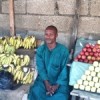
NIGERIA: Ramadan Marred By High Food Prices
As the holy month of Ramadan draws to a close, residents of the northern Nigerian city of Kano have endured double pain: already high food prices have been driven through the roof.DEVELOPMENT: No "Bailout" for the World's Poorest
As a spreading financial crisis threatens to deepen the economic recession in the United States, the news of an unprecedented 700-billion-dollar bailout package reverberated through the corridors of the United Nations last week as over 100 world leaders gathered in New York for the annual talk-fest: the 63rd session of the General Assembly.
SPAIN: Some Retailers Have Still Not Caught Up With Fair Trade Boom
Fair trade has grown in leaps and bounds since the mid-1990s but retailers such as El Corte Ingles, the department store chain with the most sales in Europe, are still not giving consumers the choice to buy these products.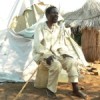
SWAZILAND: Torn Social Fabric Leaves Many Exposed
An abandoned straw hut slumps amidst overgrown bushes on a somewhat deserted homestead. Only a foot path leading past it indicates that the place is still occupied. Beside it is the mis-shapen tent that is Joseph Mathe's new home.
DEVELOPMENT-TANZANIA: Lighting Up Women’s Lives
Anneth Laizer shoved her kerosene lantern onto the top shelf and switched on the lights after her home in Tanzania's third-largest city, Arusha, was connected to electricity earlier this year.DEVELOPMENT: Presidents Boost Maternal and Child Health
As world leaders gather at the United Nations to discuss progress toward achieving the Millennium Development Goals (MDGs), Presidents Michelle Bachelet of Chile, Tarja Halonen of Finland, and Jakaya Mrisho Kikwete of Tanzania are calling for more attention to be paid to maternal and child health.
EDUCATION-ZAMBIA: Food Insecurity Hits Schools
"Sometimes there is barely any food at home, so I only eat at school, at lunch," said Justin Banda, a 12 year old student, at Chikumboso school in Lusaka’s Ngombe township.DEVELOPMENT: Food Security Hostage to Climate Trends
More than 50 African leaders meeting at the United Nations this week focused on strategies to overcome a myriad of interrelated problems - food shortages, droughts, HIV/AIDS, an energy crisis, climate change and military conflicts - on the troubled continent.
DEVELOPMENT: Poverty Hearings Show People Behind the Numbers
Benjamine Agbodjan Ablavi of Togo says she scraped together the money to pay her own school fees by selling fruit.
Q&A: "Violence Is Part of the History of El Salvador"
He says he has read the Bible three times and that gang members are "not only victimisers but victims of the system of violence" in El Salvador.ECONOMY-CUBA: No Calm After the Storm
Contrary to the saying that after a storm comes a calm, in Cuba the shockwaves left by hurricanes Gustav and Ike will prevent any peace of mind for people living not only in the most affected areas but in the whole country for a long time to come, as they ask themselves if the worst is really over yet.WORLD: Fair Trade – An Old Idea That’s Become a Fashion Statement?
The idea of making trade fair is as old as ethics itself.DEVELOPMENT: Home Stretch for MDGs Looks Bumpier Than Ever
At a time when the world's cash-strapped developing nations, particularly in Africa, have admitted their inability to meet most of the U.N.'s eight Millennium Development Goals (MDGs), one Latin American country stands apart - confident it could even beat the deadline set by the United Nations.EUROPE: Failing to Step Up Medical Support to Africa
Almost two years after the European Union resolved to step up its efforts to address the shortage of doctors and nurses in poor countries, its progress has been found unsatisfactory by the bloc's own officials.DEVELOPMENT: Matching Struggling Farmers with the World’s Hungry
In a significant policy shift, the Rome-based World Food Programme (WFP) announced Wednesday that it will start buying food directly from local farmers' associations in developing countries.CENTRAL AMERICA: Violence Exacts Increasingly Heavy Toll
Violent crime costs Central America an estimated 6.5 billion dollars a year, equivalent to 7.7 percent of gross domestic product in the region, where the two least violent countries are the wealthiest - Costa Rica - and the poorest - Nicaragua, according to a study carried out in El Salvador.
TRADE-AFRICA: Art Creating Hope in the Midst of Death and Disease
Zulu artists working at the Ardmore Ceramic Studio in South Africa’s coastal province of KwaZulu Natal have gone from poverty to international acclaim.
ENVIRONMENT: No Hope for MDGs Without Climate Plan
With 2.6 billion of the world's poor affected daily by climate change, the linkages between environment, health and poverty cannot be questioned any longer, U.N. experts say.
SOUTH AFRICA: Nurse Shortage Cripples Health System
In the impoverished informal settlement of Du Noon, 20 kilometres north of Cape Town, sick residents rely on a single clinic staffed by six nurses to meet their health needs.
Q&A: 'Corruption Nourishes Poverty'
A new report by Transparency International (TI) lashes out at some of the world's poorest countries for an "ongoing humanitarian disaster", and deplores the wealthiest for not doing enough to stem graft.ECONOMY-SOUTH AFRICA: Manuel, Mbeki Resignations Welcomed by Some
Minutes after the news broke today that Trevor Manuel, South African minister of finance, resigned from his post, the South African currency lost ground against international currencies, falling 20 cents against the dollar within less than an hour.« Previous Page — Next Page »


 Romani people in Cairo, Egypt, forage through trash. Credit: UN Photo/Armineh Johannes
In 2015, the United Nations adopted the Sustainable Development Goals (SDGs) in an effort to promote “peace and prosperity for people and the planet.” To achieve that goal, it is essential to provide equal opportunities and access to basic services to all people. The 2025 UN SDG Report found that 35% of the 169 SDG targets are on track or making moderate progress, while 18% have reversed compared to the 2025 baseline. One in ten people still live in extreme poverty, one in eleven experience food insecurity, and over 1.1 billion people live in slums without access to clean water and sanitation. It is imperative to acknowledge the societal, technological, economic, and political issues that sustain poverty in countries around the world. Eradicating poverty will require significant frameworks in policy and governance on a national and international scale to ensure that all people will have equal access to basic services and economic opportunities by 2030. Furthermore, a dramatic reduction of United States foreign aid in 2025, including the termination of 83% of USAID programmes, threatens to erode years of fragile development gains.
Throughout the world, violent conflict and natural disasters also contribute to extreme poverty. The complete destruction of infrastructure and blockage of aid has significantly impoverished Palestine since October 7th. The destructive impact of Hurricane Maria in Puerto Rico left $91 billion in damage. An inadequate US government response also revealed significant and enduring questions within the issue of mitigating poverty: how do we rebuild infrastructure after its destruction? How do we restimulate economic development and bring in financial aid after disasters? Similar questions have been raised in the realm of regional cooperation, as devastating floods have wrecked hundreds of thousands of homes across multiple Southeast Asian nations in the past few years. Furthermore, the COVID-19 pandemic has greatly exacerbated the global poverty crisis, particularly in developing countries, setting back the United Nations goal of eradicating poverty by 2030.
IPS is committed to providing comprehensive features that focus on the persisting environmental, sociopolitical, and systemic issues that sustain poverty, and the steps taken worldwide towards poverty eradication.

The Week with IPS

NEXT STOP - SDGs
Tracking global progress towards a sustainable world
Tracking global progress towards a sustainable world

