Languages
Sunday, November 22, 2026



News and Views from the Global South
Poverty & SDGs
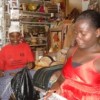
UGANDA: Women Wield Fair Trade Tools to Beat Poverty
Producing baskets and mats in central Uganda has traditionally been women’s work. Women made these items for use in homes. The National Association of Women Organisations in Uganda (NAWOU) has changed this practice into a powerful force fighting poverty.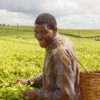
KENYA: Tea Market Tumultuous as Trading Partners Change
Tea used to be Kenya’s major cash crop earner but ever since the world’s largest consumer of tea, Pakistan, entered into a free trade agreement with seven of its Asian neighbours, the local tea industry has been haemorrhaging.
MEDIA: Lula a "Tireless Advocate" for the Poor and Landless
Brazilian President Luiz Inacio Lula da Silva, who rose from a poor childhood to lead a growing economic powerhouse that has placed the ideal of inclusive prosperity at the centre of its development policies, received the Inter Press Service (IPS) International Achievement Award 2008 Monday.
RIGHTS-SENEGAL: Street Children at Risk of Exploitation
The Senegalese capital, Dakar, is filled with street children from villages in Guinea Bissau. These boys from Senegal's southern neighbour - aged anywhere between four and twelve - have been sent by their families to study the Koran, but many are getting very little education.CARIBBEAN: The Stormy Face of Climate Change
The devastation wrought by hurricanes Gustav, Hanna and Ike in the Caribbean has fuelled concern about the effects of global warming on the formation and intensity of tropical storms, an issue that has divided the scientific community and is causing alarm among island nations and coastal communities.DEVELOPMENT: Poverty Reduction Claims Under Scrutiny
The World Bank's recent estimates on global poverty, particularly in relation to China, are being challenged by an international non-governmental organisation (NGO) which monitors poverty eradication and gender equality.
AFGHANISTAN: Severe Hunger Can Help Taliban
If 11-year old Zayainullah doesn't bring home enough money today, he says he will get beaten. "We don't have food and my aunt threatened me, saying I have to bring back enough money to buy bread," he says.ARGENTINA: Soup Kitchens Feel Impact of Rising Food Prices
"It breaks my heart because I know these kids don't have anything to eat, but I can’t serve any more people," says Estela Esquivel, talking about children who have been turned away at dinnertime from the La Casita de la Virgen soup kitchen in La Cava, a slum neighbourhood on the north side of the Argentine capital.DEVELOPMENT: Ending Africa's Food Crisis
Africa's food crisis can be alleviated by modernising agriculture and reforming supply chains so that small-scale farmers get cheaper fertiliser and high-yield seeds, experts and officials at a conference in Oslo have argued. But so far, they say, funding is lacking.DEVELOPMENT: Huge Gender Gap Between Rhetoric and Reality
When over 150 world leaders attend a summit meeting next week to discuss the status of the U.N.'s eight Millennium Development Goals (MDGs), one of the primary issues on the agenda will be goal number 3: promoting gender equality and gender empowerment.
DEVELOPMENT: Global Fund Puts Spotlight on Sanitation
The Global Sanitation Fund (GSF), created last March with a 100-million-dollar target per year, is being billed as a key financing mechanism aimed at meeting one of the eight U.N. Millennium Development Goals (MDGs).ECONOMY-KENYA: Shady Deals and Intrigues Haunt Privatisation
The Kenya Railways Corporation was more than a national utility. It was a repository of Kenya’s history, beginning in the 19th century when indentured Indian labourers were brought to the East African region to build the Kenya-Uganda railway line.WEST AFRICA: Cotton Symbolises Global Trade System’s 'Iniquity'
The international cotton trade has been a sad tale for West African countries. The region produces five percent of the world’s cotton and 15 percent of the global cotton fibre trade. Yet West African cotton farmers are among the poorest in the world.
AGRICULTURE-SWAZILAND: Young Farmers Improving Food Security
When her friends go out to play with skipping rope during break, 12 year old Noncedo Masina takes her watering can and goes to work on her plot at the school vegetable garden.
RIGHTS: Women Fight to Put Violence on Global Agenda
Joyce and Tanya - two women of different ages, nationalities, cultures and religions - share something: both became victims of a missing goal.
Q&A: "The Notion that Water Is Forever Is Wrong"
Venality, greed, corruption - the documentary film "Flow: For Love of Water" could just as easily be subtitled "The Evil That Men Do."DEVELOPMENT: Millions More Children Attending School
Despite the world not being on track to meet the Millennium Development Goals (MDGs), there has been real progress - even in some of the world's poorest countries.KENYA: Ready For New Abortion Law?
In May 2008, a group of civil society activists launched a campaign to reform Kenya's archaic abortion laws, sparking a countrywide debate. Now, as a new draft bill on women's reproductive health and rights seeking to decriminalise abortions is set to be tabled in parliament, the battle lines between opponents and advocates of abortion are clearly drawn.HEALTH: Goal to Halt AIDS by 2015 Recedes Further
What if HIV/AIDS was just another chronic disease instead of a widespread epidemic? This could be the case if the world community takes serious action, according to Human Rights Watch and other activists. But today, the Millennium Development Goal (MDG) on HIV/AIDS is nowhere near being realised.DEVELOPMENT: Less Than Half of EU Aid Tackles Poverty
Less than half of development aid approved by the European Commission is explicitly linked to international objectives on reducing poverty, a new study has found.
ANNOUNCEMENT: Brazilian President Wins IPS Award
President Luiz Inacio Lula da Silva of Brazil, who has successfully championed the cause of fair trade, social justice and economic equity for the developing world, has been named the winner of the Inter Press Service (IPS) International Achievement Award 2008.« Previous Page — Next Page »


 Romani people in Cairo, Egypt, forage through trash. Credit: UN Photo/Armineh Johannes
In 2015, the United Nations adopted the Sustainable Development Goals (SDGs) in an effort to promote “peace and prosperity for people and the planet.” To achieve that goal, it is essential to provide equal opportunities and access to basic services to all people. The 2025 UN SDG Report found that 35% of the 169 SDG targets are on track or making moderate progress, while 18% have reversed compared to the 2025 baseline. One in ten people still live in extreme poverty, one in eleven experience food insecurity, and over 1.1 billion people live in slums without access to clean water and sanitation. It is imperative to acknowledge the societal, technological, economic, and political issues that sustain poverty in countries around the world. Eradicating poverty will require significant frameworks in policy and governance on a national and international scale to ensure that all people will have equal access to basic services and economic opportunities by 2030. Furthermore, a dramatic reduction of United States foreign aid in 2025, including the termination of 83% of USAID programmes, threatens to erode years of fragile development gains.
Throughout the world, violent conflict and natural disasters also contribute to extreme poverty. The complete destruction of infrastructure and blockage of aid has significantly impoverished Palestine since October 7th. The destructive impact of Hurricane Maria in Puerto Rico left $91 billion in damage. An inadequate US government response also revealed significant and enduring questions within the issue of mitigating poverty: how do we rebuild infrastructure after its destruction? How do we restimulate economic development and bring in financial aid after disasters? Similar questions have been raised in the realm of regional cooperation, as devastating floods have wrecked hundreds of thousands of homes across multiple Southeast Asian nations in the past few years. Furthermore, the COVID-19 pandemic has greatly exacerbated the global poverty crisis, particularly in developing countries, setting back the United Nations goal of eradicating poverty by 2030.
IPS is committed to providing comprehensive features that focus on the persisting environmental, sociopolitical, and systemic issues that sustain poverty, and the steps taken worldwide towards poverty eradication.

The Week with IPS

NEXT STOP - SDGs
Tracking global progress towards a sustainable world
Tracking global progress towards a sustainable world

