Languages
Saturday, October 17, 2026



News and Views from the Global South
Financial Crisis

Ecuador Focuses on New UN Tax Body to Fight Illicit Financial Flows
The time is now to work together to fight illicit financial flows, according to Ecuador’s Foreign Minister Guillaume Long.
Unlocking the Diaspora Development Potential
 ‘Diaspora is the biggest development community that exists in the world’, according to Pedro De Vasconcelos, manager of IFAD‘s Financial Facility for Remittances. However, its potential is still largely untapped.

World Bank fudges on inequality
The 17 Sustainable Development Goals (SDGs) – collectively drafted and then officially agreed to, at the highest level, by all Member States of the United Nations in September 2015 – involves specific targets to be achieved mainly by 2030. The Agenda seeks to “leave no-one behind” and claims roots in universal human rights. Thus, addressing inequalities and discrimination is central to the SDGs. Poverty and Shared Prosperity 2016: Taking on Inequality is the World Bank’s first annual report tracking progress towards the two key SDGs on poverty and inequality.
Growing Inequality under Global Capitalism
Income and wealth inequality has increased in recent decades, but recognition of the role of economic liberalization and globalization in exacerbating inequality has never been so widespread. The guardians of global capitalism are nervous, yet little has been done to check, let alone reverse the underlying forces.
World Bank Must Stop Encouraging Harmful Tax Competition
One of the 11 areas that the World Bank’s Doing Business (DB) report includes in ranking a country’s business environment is paying taxes. The background study for DB 2017, Paying Taxes 2016 claims that its emphasis is “on efficient tax compliance and straightforward tax regimes”.
Dispute Settlement Becomes Speculative Financial Asset
Investor-state dispute settlement (ISDS) provisions in bilateral investment treaties (BITs) and free trade agreements (FTAs) have effectively created a powerful and privileged system of protections for foreign investors that undermines national law and institutions.
Economic Recovery Crucial to Sustainable Development
More than eight years after the global financial crisis exploded in late 2008, economic growth remains generally tepid, while ostensible recovery measures appear to have exacerbated income and other inequalities. Yet, despite the G-20 group of the world’s largest economies raising the level, frequency and profile of its meetings, effective multilateral cooperation and coordination remains a distant dream.
Secret Tax Deals Increased Dramatically After Luxleaks
Despite the LuxLeaks scandal, the number of secret tax deals is skyrocketing. Such deals between companies and governments across Europe increased by almost 50 percent the year after the scandal broke.
Most Financial Inflows Not Developmental
Recent disturbing trends in international finance have particularly problematic implications, especially for developing countries. The recently released United Nations report, World Economic Situation and Prospects 2017 (WESP 2017) is the only recent report of a multilateral inter-governmental organization to recognize these problems, especially as they are relevant to the financing requirements for achieving the Sustainable Development Goals (SDGs).
Stemming Illicit Financial Outflows
International capital flows are now more than 60 times the value of trade flows. The Bank of International Settlements (BIS) is now of the view that large international financial transactions do not facilitate trade, and that excessive financial ‘elasticity’ has been a major cause of recent financial crises.
Trump Marks the End of a Cycle
Let us stop debating what newly-elected US President Trump is doing or might do and look at him in terms of historical importance. Put simply, Trump marks the end of an American cycle!
Tax Evasion Lessons From Panama
Unlike Wikileaks and other exposes, the Panama revelations were carefully managed, if not edited, quite selective, and hence targeted, at least initially. Most observers attribute this to the political agendas of its main sponsors. Nevertheless, the revelations have highlighted some problems associated with illicit financial flows, as well as tax evasion and avoidance, including the role of enabling governments, legislation, legal and accounting firms as well as shell companies.
Washington Rules Change, Again
Over the last four decades, the Washington Consensus, promoting economic liberalization, globalization and privatization, reversed four decades of an earlier period of active state intervention to accelerate and stabilize more inclusive economic growth, associated with Franklin Delano Roosevelt and John Maynard Keynes.
Mistrust Hindering Global Solutions, says Secretary General
The global lack of confidence and trust is undermining the ability to solve the world’s complex problems, said UN Secretary-General during an international conference.
Major Crisis, Minor Reforms
The 2008-2009 financial breakdown, precipitated by the US housing mortgage crisis, has triggered an extended stagnation in the developed economies, initially postponed in much of the developing world by high primary commodity prices until 2014. Yet, the financial crisis and protracted economic slowdown since has not led to profound changes in the conventional wisdom or policy prescriptions, especially at the international level, despite global economic integration since the 1980s.
Trade War Threat Grows
New American President Donald Trump has long insisted that the United States has been suffering from poor trade deals made by his predecessors. Renegotiating or withdrawing from these deals will be top priority for his administration which views trade policy as key to US economic revival under Trump. What will that mean?
Trump Trade Strategy Unclear
US President-elect Donald Trump has announced that he will take the US out of the Trans-Pacific Partnership (TPP) Agreement on the first day of his presidency in January 2017. Now, it is widely expected that Trump’s presidency will increase US trade protectionism, and consequently by others in retaliation, possibly triggering serious trade conflicts with difficult to predict consequences.
Free Trade Agreements Promote Corporate Interests
So-called free-trade agreements (FTAs) are generally presumed to promote trade liberalization, but in fact, they do much more to strengthen the power of the most influential transnational corporations of the dominant partner involved. While FTAs typically reduce some barriers to the international trade in goods and services, some provisions strengthen private monopolies and corporate power.
Looting and Unrest Spread in Mexico Over Gas Price Hike
“We are absolutely fed up with the government’s plundering and arbitrary decisions. We don´t deserve what they’re doing to us,“ said Marisela Campos during one of the many demonstrations against the government´s decision to raise fuel prices.
Lessons from the Demise of the TPP
President-elect Donald Trump has promised that he will take the US out of the Trans-Pacific Partnership Agreement (TPPA) on the first day of his presidency. The TPP may now be dead, thanks to Trump and opposition by all major US presidential candidates. With its imminent demise almost certain, it is important to draw on some lessons before it is buried.
Stop worrying about ‘Doing Business’ ranking
Without any hint of irony, the World Bank’s most recent Doing Business Report 2017 promises ‘Equal Opportunity for All’. Bangladesh ranked 176th among 190 economies, below civil war-ravaged Iraq and Syria! Bangladesh even slipped two places from 174 in the 2016 ranking and is three places below its 2015 ranking.« Previous Page — Next Page »





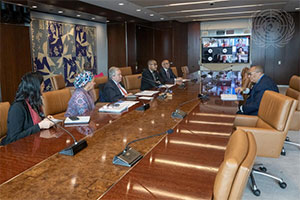 Secretary-General Meets with Members of Debt Expert Group. Credit: UN Photo/Eskinder Debeb
Financial crises are often defined by banking panics, recession, loss of market value, and deflation. Various financial crises at the turn of the 20th century, such as the Asian Crisis of 1997-1998 and the 2007-2008 Global Financial Crisis, have had immense impacts on the world economy. The COVID-19 pandemic also caused a financial crisis when mass lockdowns triggered staggering unemployment rates, a stagnation of economic growth, and led to the 2020 stock market crash. With the Russian invasion of Ukraine, the world has also witnessed a global energy crisis with shortages and increased prices in oil, gas, and electricity markets. According to UNCTAD’s World of Debt 2025, global public debt surpassed $100 trillion in 2024, with developing country debt growing twice as fast as developed economies since 2010. Burdens of debt servicing come with economic slowdowns and demands of austerity from lenders, with some economists arguing that this will lead to a new “lost decade” for the Global South. IPS brings you worldwide coverage of these financial developments and how we should manage these crises.

The Week with IPS

NEXT STOP - SDGs
Tracking global progress towards a sustainable world
Tracking global progress towards a sustainable world
