Languages
Sunday, October 18, 2026



News and Views from the Global South
Financial Crisis

Thinking Global? Act Provincial
The least populated, northernmost province in North America even its own citizens dread to go has a per capita GDP of C$58,452 compared with C$3,439.28 for the entire Philippines.
Poverty, Vulnerability and Social Protection
According to the World Bank, the MDG target of halving the share of the poor was achieved by 2008, well in advance of 2015, the target year. However, increased unemployment and lower incomes in recent times remind us that poverty is not an unchanging attribute of a shrinking group, but rather, a condition that billions of vulnerable persons risk experiencing.
Olympic Games End Decade of Giant Mega-projects in Brazil
An era of mega-events and mega-projects is coming to a close in Brazil with the Olympic Games to be hosted Aug. 5-21 by Rio de Janeiro. But the country’s taste for massive construction undertakings helped fuel the economic and political crisis that has it in its grip.
Preventing the Next Panic
The hostility toward Wall Street remains so great that both political parties say, in their platforms, that they’d like to break up America’s biggest banks. But before engaging in this drastic economic surgery, it’s worth examining whether Dodd-Frank is working. Recall that the law, named after its congressional sponsors, former Sen. Senator Christopher Dodd and former Rep. Barney Frank, overhauled the financial system to make it more panic proof. Is it? The answer may surprise.
The -Sad- US Nominations
The US mountain, so rich in human talent, labored and produced the two dwarfs for the huge job. A radical Republican strongman[i] and a conventional Democrat, disliked by 62% and 67%–bad for electing the president of a country that still puts some stamp on the world.
Mainstream Media Are Betraying Humanity
Physicians have a sacred duty to their patients, whose lives are in their hands. The practice of medicine is not a business like any other business. There are questions of trust and duty involved. The physician’s goal must not be to make as much money as possible, but rather to save lives.
US Government Report Exposes Exaggerated TPPA Growth Claims
A US government agency acknowledges that the Trans-Pacific Partnership (TPP) will not deliver many economic benefits promised by its cheerleaders. The 2016 report by the United States International Trade Commission (ITC) acknowledges that the TPP will not deliver many gains claimed by the US Trade Representative (USTR) and the Peterson Institute of International Economics (PIIE) although it uses similar methodology and assumes that the TPP will not change the US trade deficit as a share of GDP.
How Did We Arrive at This Chaos?
A Chinese curse is “May you live in interesting times”. That meant that too many events would disrupt the essential elements of harmony, on which the Chinese pantheon is based. We certainly live in very interesting times where every day dramatic events pile on us, from terrorism to coup d’etat, from climate disaster to the decline of institutions and ever increasing social turmoil. It would be important, even if very difficult, to look in a nutshell why we are in this situation now - "lack of harmony" . So here goes a dramatically compressed explanation.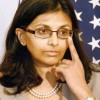
Biswal’s Dreams Just Pretentious Prattle
So Nisha Biswal, the US State Department’s point person on Sri Lanka, says that Sri Lanka could be another Singapore. That will be the day. If after six visits to the country in 20 months she has still not grasped the basics of Sri Lanka’s socio-political culture and mores, the lack of respect for law and order and the rule of law infused by political interference and intimidation, she could hardly be a messenger of hope and good sense.
Economic Recovery Needed To Enhance Food Security
After a half century of decline, agricultural commodity prices rose with oil prices in the 1970s, and again for a decade until 2014. Food prices rose sharply from the middle of the last decade, but have been declining since 2012, and especially since last year, triggering concerns of declining investments by farmers.
Ramifications of Terror Attacks in Bangladesh
At a time when Bangladesh has broken the 6 percent growth trap and has begun its journey towards achieving a faster growth of about 7 percent, and at a time when Bangladesh has achieved the status of a lower middle income country with a per capita income of USD1314 in 2015, it experiences the greatest shock in recent times. This has suddenly changed the perspective on Bangladesh. The ruthless killing of 20 lives, including 17 foreigners at the Holey Artisan Bakery of Gulshan in Dhaka on July 1, 2016, by terrorists has brought new realities for Bangladesh. A country which boasts to be a moderately Islamic country, holding the values of Islam yet being tolerant to other religions and a country that is reputed for its warmth and hospitality towards foreign nationals, has come under the global radar due to the brutality of recent terror attacks. While the grief for the lost lives is going to make a permanent place in our hearts, the implications of this painful episode on other spheres of lives cannot be ignored either.Increased Adb Aid Will Help Cushion Economic Blows
The Philippines faces prospects of slower growth this year because of external factors. One such factor is the effect of Brexit on the world economy. With Brexit causing the European Union’s already sluggish economy to shrink further, Philippine exports to EU countries in 2016 may end up being less than half of last year’s.
Is Sustainable Development Hindering Economic Recovery?
The global economic and employment situation is alarmingly protracted, with recovery not expected any time soon. In October 2012, then IMF chief economist Olivier Blanchard indicated he did not see a global economic recovery before 2016.
Is Federalism Pro-poor?
Poverty, according to the United Nations, is “a denial of choices and opportunities, a violation of human dignity. It means lack of basic capacity to participate effectively in society. It means not having enough to feed and clothe a family, not having a school or clinic to go to, not having the land on which to grow one’s food or a job to earn one’s living, not having access to credit. It means insecurity, powerlessness and exclusion of individuals, households and communities. It means susceptibility to violence, and it often implies living in marginal or fragile environments, without access to clean water or sanitation.”
The UN and Global Economic Stagnation
When the financial crisis preceding the Great Recession broke out in late 2008, attention to the previously ignored UN Secretariat’s analytical work was greatly enhanced. This happened as the UN and the Bank of International Settlements (BIS) had been almost alone in warning, for some years, of the macroeconomic dangers posed by poorly regulated financial sector developments.How Russia Will Use Brexit to Fight Sanctions
FORECAST EU sanctions against Russia are all but guaranteed to remain in place through 2016, but Moscow will work in the second half of the year to get them eased in 2017. Russia will capitalize on divisions in the European Union, which will only widen in the wake of Brexit, to oppose sanctions. Moscow will step lightly, however, to avoid provoking its European rivals ahead of the next sanctions vote.
Post-Brexit blues
AGITATED markets, a tumbling pound-sterling, a downgraded credit rating: none of these should have been an unexpected outcome of the British electorate’s decision last weekend to opt out of the European Union.
Little England
Sometimes you just have to lie back and think of England. But how can one think of England without thinking of Shakespeare? And when you think of Shakespeare, how can you ignore Macbeth, his most Scottish of plays, and in particular the line: “we but teach bloody instructions, which being taught, return to plague the inventor”.From Grexit to Brexit: Eurosceptics Claim their -Exit
AFP - It started with “Grexit” -- the long trumpeted but never realised axing of Greece from the European Union. It was then reborn as “Brexit” as Britain started down the -- this time voluntary -- path of leaving the bloc.
The Brexit Shock – Now All Is Up in the Air!
The UK, Europe and the rest of the world will be affected. But there has been no planning for this anywhere. It’s now all up in the air what this Brexit vote will be the starting point of. All we can safely predict is that we are in for interesting times!
Brex’it, So Be’it; And Then What?
The vote turned out like the two referenda held in Norway in 1972 and 1994. And much for the same reason: Protestant break with Rome–Catholic, imperial–Henry VIII made himself head of the Anglican Church in 1534.« Previous Page — Next Page »





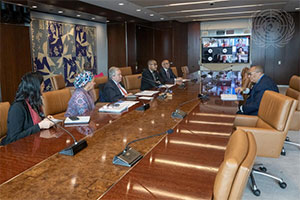 Secretary-General Meets with Members of Debt Expert Group. Credit: UN Photo/Eskinder Debeb
Financial crises are often defined by banking panics, recession, loss of market value, and deflation. Various financial crises at the turn of the 20th century, such as the Asian Crisis of 1997-1998 and the 2007-2008 Global Financial Crisis, have had immense impacts on the world economy. The COVID-19 pandemic also caused a financial crisis when mass lockdowns triggered staggering unemployment rates, a stagnation of economic growth, and led to the 2020 stock market crash. With the Russian invasion of Ukraine, the world has also witnessed a global energy crisis with shortages and increased prices in oil, gas, and electricity markets. According to UNCTAD’s World of Debt 2025, global public debt surpassed $100 trillion in 2024, with developing country debt growing twice as fast as developed economies since 2010. Burdens of debt servicing come with economic slowdowns and demands of austerity from lenders, with some economists arguing that this will lead to a new “lost decade” for the Global South. IPS brings you worldwide coverage of these financial developments and how we should manage these crises.

The Week with IPS

NEXT STOP - SDGs
Tracking global progress towards a sustainable world
Tracking global progress towards a sustainable world
