Languages
Tuesday, November 17, 2026



News and Views from the Global South
Labour
SOUTH KOREA: Migrant Workers’ Rights Clouded by Race, Class
Since August, rights activists in South Korea have been fighting a crackdown on illegal migrant workers. But South Asian and South-east Asians are resentful that Westerners, particularly those in the country’s booming English language teaching industry, are seen differently.US-MEXICO: Bad Year for Immigrants
More than one Mexican a day died this year while attempting to cross the U.S. border, and there are no prospects for that number to drop over the next year. In the last three years alone, nearly 1,500 people have died this way.
Q&A: "Sex Work Is Work"
Katrina Pacey is a lawyer with the Pivot Legal Society in Vancouver. Pivot is engaged in social justice work through legal reform in the inner city of Vancouver. Pacey is currently taking a case to the British Columbia Supreme Court, and eventually, the Supreme Court of Canada, arguing that the country's prostitution laws violate the Canadian Charter of Rights and Freedoms.RIGHTS-MALAYSIA: 'Neo-Liberal Policies Fuelling Protests, Not Race'
After a series of street demonstrations in recent weeks top analysts and activists say the government is not tackling the economic roots of grievances among marginalised Malaysians, but appears stuck in its old mould of race-based thinking.
LABOUR-US: Under Siege, Unions Seek Int’l Support
In the face of globalisation, the U.S. labour movement is striving to reinvent - and reinvigorate - itself by establishing closer ties with the world's network of international unions.LATIN AMERICA: The Hand that Rocks the Cradle… Forfeits Equal Pay
To avoid reproducing gender inequality, governments should implement integrated policies that recognise, for instance, the unpaid work done by women, according to an ECLAC report on the fulfilment of the third Millennium Development Goal (MDG).RIGHTS-US: A Double Standard on Migrants?
Just beyond the horizon of the immigration reform controversy in the United States, a storm is brewing over exactly what rights are guaranteed to non-citizens under international human rights agreements.RIGHTS-US: The Long, Hard Road Across el Norte
"It's a mighty hard row that my poor hands have hoed. My poor feet have traveled a hot, dusty road. Out of your dust bowls and westward we rode. Your deserts were hot and your mountains were cold." So sang troubadour Woody Guthrie of Great Depression-era refugees fleeing the Dust Bowl for California.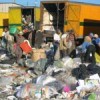
RIGHTS: For Some, Childhood Is Rubbish
"When I thought of my future, I saw my whole life picking through this rubbish dump," says 20-year-old Julia Castillo. "I never thought I'd get away."RIGHTS: Anti-Immigrant Surge Tramples Int’l Norms
Fifty years ago in the southern United States, a system called "Jim Crow" denied African-Americans their civil rights. Now, some immigrant advocates are using the term "Juan Crow" for nativist ideologies that deny human rights to undocumented immigrants, most of whom are from Latin America.RIGHTS-CHILE: Workers’ Massacre More Relevant Than Ever 100 Years On
Dec. 21 will be the 100th anniversary of a massacre of thousands of striking workers of the then-flourishing saltpetre industry in northern Chile, carried out by military troops on the order of the government, an event known as the massacre of the Santa María de Iquique school.DEVELOPMENT-LATIN AMERICA: Local Innovation – Fresh and Fair
This is no ordinary contest. The participants are from the most vulnerable areas of Latin America, and they are already winners because they have been selected out of 900 projects applying for the Social Innovation Fair organised by ECLAC in this southern Brazilian city.BRAZIL: Modelling Change in the Favelas
When police in Brazil discovered an enormous detailed scale model of the Pereirão favela, they were going to destroy it because they thought it was part of a drug trafficking gang’s plan to invade a nearby neighbourhood. Ten years later, portions of the miniature reproduction built by children have travelled around the world to art exhibits and festivals.CANADA: Gov't Urged to Rein in Mining Sector
Canadian mining companies continue to come under scrutiny from civil society organisations for international human rights violations and environmental damage that critics say the Canadian government has done little to check.AGRICULTURE-CUBA: Waiting for Announced Reforms
While saving up for the extra expenses of the year-end holidays, Cubans are hoping that 2008 will bring reforms, at least in agriculture, that will result in a more varied supply of food, at affordable prices.AGRICULTURE-ARGENTINA: Using Internet and Bicycles to Search Out Markets
Just 45 kilometres outside of Buenos Aires, a group of 20 families have set up a farming operation where they work in harmony with nature and without bosses, selling their products through a small network of consumers who appreciate the benefits of organic food and cooperative labour.WORLD AIDS DAY-KENYA: Many Firms Still Ignoring the Bottom Line on HIV
HIV/AIDS cuts workers down in their prime, taking to the grave a wealth of training and experience that companies can ill afford to lose. Lower productivity, absenteeism from work and increased medical bills exact a further toll on the private sector - all of which begs the question: are employers being sufficiently active in helping to fight AIDS?FRANCE: Troubled Suburbs Erupt Again
The police station is a smouldering abandoned ruin, its roof gone, its walls charred black, and tiles scattered about its courtyard. From behind its locked gates the pungent stench of burned wood and plastic is carried on the wind into the street.LABOUR: Decent Work Scarcer Than Ever
The world has the resources, wealth and knowledge to make economic, social and cultural well-being universal, according to the biennial U.N. report on the World Social Situation (RWSS) released here Monday.MIGRATION: More Women Toiling Far From Home
The stereotype of the male migrant toiling in a foreign land on behalf of an impoverished wife and children needs updating as half the time the migrant is a woman, says a new report.« Previous Page — Next Page »


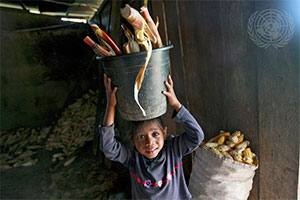 Timorese Girl with Fresh-Picked Corn. Credit: UN Photo/Martine Perret
A global common denominator is the need for a decent job. The economic realities of each country determine just how difficult it is to find one. Despite the labour movement's achievements, serious challenges persist: gender discrimination, child labour, worker migration, the digital divide and AI automation, evaporating pensions, unsafe workplaces, corporate pressure against union organising, negative impacts of trade agreements, and the precariousness of informal employment. The 2025 UN SDG Report identifies jobs and social protections as one of the six priority areas requiring urgent action, with progress either stalled or reversing in many developing nations.
In recent years, the fight to protect labour equality has taken on new dimensions with the rise of Environmental, Social and Governance standards. With the Social aspect aiming to promote equality and human rights, ESG principles have strengthened labour advocacy within corporate and governmental regulatory landscapes. In particular, ESG has become much more institutionalized in emerging economies such as Brazil and China. IPS follows the world’s workers as they confront these challenges - their setbacks and their successes.

The Week with IPS

NEXT STOP - SDGs
Tracking global progress towards a sustainable world
Tracking global progress towards a sustainable world
