
Friday, November 20, 2026



News and Views from the Global South
Climate Change
U.S.: States Steam Ahead on Climate Change
The signs are subtle, but ominous. The spring thaw arrives in much of the United States about two weeks earlier than it did 50 years ago. Exotic tropical birds are nesting in Florida, and butterflies on the west coast are fleeing north to escape the heat.ENVIRONMENT: World’s Water Towers Need Protection – Scientists
Mountains are the world's water towers and they need urgent protection if planet Earth's future life-sustaining water supply is to be guaranteed, in the midst of disturbing climate changes, scientists told a major conservation conference Thursday.ENVIRONMENT: Blair Will Try to Green This Bush
British Prime Minister Tony Blair will attempt the near impossible next year: he wants to persuade U.S. President George W. Bush to become more environment-friendly.ENVIRONMENT: Guess Who Extreme Weather Hits Hardest?
When it rains, it really pours on the world's poorest.ENVIRONMENT: Global Warming Chills Arctic Hearts
Global warming threatens to devastate the Arctic, which is already facing temperature increases up to 10 times greater than other parts of the world, says a study co-sponsored by eight governments and scheduled to be released one week after Tuesday's U.S. election.ENVIRONMENT-EUROPE: Britain, Germany Seek Lead on Climate Change
Britain and Germany will seek to take joint lead on initiatives to contain climate change at a conference in Berlin this week.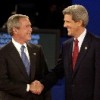
U.S. ELECTION: Africa Barely on the Candidates’ Radars
With U.S. voters anxiously contemplating the body count arising from the United States' deployment in Iraq - as well as the associated threat of terrorism - it was probably to be expected that Africa would get little "face time" in the presidential election.ENVIRONMENT: Russia Eyes the Kyoto Market
Nobody stands to gain more than Russia through its move to ratify the Kyoto Protocol, an agreement to cut atmosphere-warming emissions and through that to contain climate change.ENVIRONMENT: A Footprint About a Fifth Too Large
An average European draws about four times as much of the earth's resources as the average Asian, a new report says. The 'ecological footprint' of a North American is eight times the size of the average African's.ENVIRONMENT: A New Marriage with Development
Environmental and development groups have come together to warn that global warming threatens the Millennium Development Goals.U.S. ELECTION: Faith Versus Facts – The Revolt of the Experts
Increasingly concerned about a ''faith-based presidency'' under President George W Bush, normally Republican or non-partisan experts on a range of national and international issues have decided to either publicly endorse his challenger, Senator John Kerry, or make clear their opposition to the incumbent.ENVIRONMENT: Global Warming Becomes Hot News
New fears have arisen over global warming after some measurements pointed to an unusual rise in carbon dioxide levels over the past two years.ELECTIONS-U.S.: Environmental and Latino Votes for Candidate Kerry
U.S. environmental groups are rallying behind presidential contender John Kerry, whose environmental record they say is much greener than that of President George W. Bush. The two will face off in the Nov. 2 national election.AUSTRALIA: Climate Changes Buffet Howard’s Election Campaign
In the last week of the federal election campaign Australian Prime Minister John Howard's efforts to woo environmental voters suffered a setback with the revelation that the government promised an oil company financial assistance but only on condition that it sue the environmental group Greenpeace.ENVIRONMENT: Development Mechanism Far from Clean
It is called the Clean Development Mechanism, and is one of the principal tools to turn the Kyoto Protocol into reality on the ground - or in the air.ENVIRONMENT: U.S. Isolated as Kremlin Endorses Kyoto
Thursday's decision by the Russian government to endorse ratification of the Kyoto Protocol to curb greenhouse gas emissions has thrown a particularly stark spotlight on the degree to which President George W Bush has isolated the United States on the issue of global warming, as well as other transnational problems.ENVIRONMENT: Only the Business Climate Might Change
Business climate may change more than world climate when the Kyoto Protocol comes into effect by the year-end following ratification by Russia.ENVIRONMENT: Forward to 1997 At Last
The Russian move to ratify the Kyoto Protocol is set to bring a major change to industrial economies across the developed world.AUSTRALIA: Plans to Bury Greenhouse Gases a Fantasy – Report
A report by leading energy consultants has dismissed plans by the Australian government to promote the burying of greenhouse gases as the solution to climate change and has labelled the idea as an expensive and technologically uncertain strategy.SCIENCE: Warming Trend Will Decimate Arctic Peoples, Report Warns
Climate change will soon make the Arctic regions of the world nearly unrecognisable, dramatically disrupting traditional Inuit and other northern native peoples' way of life, according to a new report that has yet to be publicly released.LATIN AMERICA: Small Companies Far from Meeting ‘Green’ Standards
Slowly, the biggest companies in Latin America are adopting environmental regulations to measure and reduce emissions of greenhouse gases, which contribute to global climate change.« Previous Page — Next Page »


As unsustainable human consumption and production systems are driving changes in average temperatures and weather patterns, "abnormal" is increasingly becoming the norm. So far, a lack of financing has been standing in the way of a comprehensive global plan for climate adaptation, and a global financial crisis has contributed to an increasing reliance on public-private partnerships. Our Climate Change page provides you with the latest news about international and local efforts to address what's frequently been called "the challenge of our time", the forces behind the climate change and the impact it has on the world's most vulnerable populations. Along the way, we bring you stories on growing citizen awareness, new scientific data, and emerging climate policies towards sustainable development.

The Week with IPS

Tracking global progress towards a sustainable world

