
Monday, November 23, 2026



News and Views from the Global South
Environment
WORLD WATER DAY: Wars, No, Conflicts, Yes
The idea of water wars to follow soon in the wake of oil wars has been around as another doomsday scenario for a while. But a dismissal of the scenario as something that has not materialised, and will not, has meant also an under-rating of the potential for conflict that continues to float around water sharing.WORLD WATER DAY: Nile Bounty Not Enough to Supply Egypt
Over the course of the 1990s, grave warnings were occasionally aired about the role of water in Middle Eastern power politics. In 1991, former Egyptian foreign minister Boutros Boutros- Ghali, shortly before he was appointed UN secretary-general, ominously predicted that "the next war in the region will be over water."TRADE: Support Builds for Labour, Environment Standards
Strong majorities in both developing and developed countries believe that international trade agreements should require governments to abide by minimum labour and environmental standards, according to a new survey of public opinion in 10 countries.ENVIRONMENT: Biofuels Boom Spurring Deforestation
Nearly 40,000 hectares of forest vanish every day, driven by the world's growing hunger for timber, pulp and paper, and ironically, new biofuels and carbon credits designed to protect the environment.ECUADOR: Pressure to Make Water a Public Good
World Water Day will be marked Thursday in Ecuador by protests against the privatisation of water, the construction of dams, and the mining industry, and by demands for the new constitution to recognise access to water as a basic human right.IRAQ: Environmental Nightmare Drags On
Four years after the U.S.-led invasion of Iraq and despite 22 billion dollars spent on recovery and reconstruction, Iraq's environment remains in disastrous shape.WATER DAY: The Danube May Never Be Blue Again
Austrian composer Johann Strauss wrote the Blue Danube waltz in 1867, but 140 years later the waters of the river are not quite blue, and no one is sure they will be again.WATER DAY-GULF: Forced to Look Beyond Desalination Plants
The holy month of Ramadan is a time when Muslims retreat into fasting and prayer. Last September though, devotees near the Saudi port city of Jeddah had violence on their minds as they broke a day-long fast. Fists flew when told that water brought them in tankers had run out.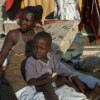
DEVELOPMENT-MOZAMBIQUE: What To Do When a Cyclone Hits
Sandra Alberto (picture) was heavily pregnant when Cyclone Favio struck Mozambique earlier this month on 2 March, ripping the zinc roof off the house she and her two children had taken refuge in.SOUTH AMERICA: Climate Change Fuels Spread of Dengue Fever
Climate change, which has resulted, for example, in heavier and more persistent rains in South America, is forcing countries to take more proactive measures to prevent the spread of diseases like dengue fever.WATER DAY: Key Development Goals Stagnating
Halfway to 2015, the year when the globally agreed Millennium Development Goals (MDGs) are supposed to be reached, the crisis in water and sanitation as well as in water resources management remains among the great human development and environmental challenges.CLIMATE CHANGE: Russia Eyes the Clean Way
Foreign institutions are stepping in to help Russia cut emissions within its commitments to the Kyoto Protocol.DEVELOPMENT-BURKINA FASO: Small is Beautiful, But Big Has Its Place
An impressive crop of sweet potatoes, yams, cabbages, cucumbers, carrots and tomatoes has spelt a good season for Burkinabé farmer Amadou Diallo, who attributes his success to a nearby water storage tank.CLIMATE CHANGE: Ministers Meet Generates Only Hot Air
Renewed U.S. opposition to an international deal to cut greenhouse gas emissions meant that an environment ministers meeting on the weekend produced nothing more than hot air.ENVIRONMENT: German Car Industry Not Doing Its Part, Say Critics
The German automotive industry, which exported 3.9 million cars in 2006 - a large portion to Latin America - is coming under criticism for its inability to produce engines with lower carbon dioxide emissions and for its refusal to accept ambitious environmental targets.El Niño Has Bigger Bite with Climate Change
Bolivia must prepare for more intense visits from El Niño, the cyclical climate phenomenon that has been given a boost from global warming, say experts.Ecobreves – LATIN AMERICA: Greater Effort Needed Against Desertification
Non-governmental organizations have called for more effective action to halt desertification in Latin America.Ecobreves – MEXICO: Green Living Begins at Home
An environmental clean-up project that since 2006 has been implemented at Mexico's Environment Ministry building could be applied to all of the government's environment offices beginning in May.Ecobreves – BRAZIL: Use the Internet to Protect Forests
The Network of Forest Peoples set up antennas and equipment to connect eight isolated Brazilian communities and 30 offices to the Internet with the aim of making them agents of environmental defense.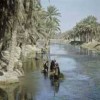
Iraq Yet to Escape Environmental Nightmare
At the four-year mark under U.S.-led military occupation, Iraq's environmental outlook is dark, despite the vast quantities of money spent on recovery and conservation efforts.WATER DAY: Thirstier World Likely to See More Violence
A strong link between droughts and violent civil conflicts in the developing world bodes ill for an increasingly thirsty world, say scientists, who warn that drought-related conflicts are expected to multiply with advancing climate change.« Previous Page — Next Page »


Through our global network of local writers, we are continuing our award-winning coverage of global and local environmental challenges, with a focus on the people for whom the ecosphere matters in a direct way: rural dwellers who have little means to protect themselves against adverse conditions; communities that need to switch to sustainable development in order to survive; poor women and children, who are the most vulnerable in natural disasters. Sponsored by the United Nations Environment Program (UNEP), the United Nations Development Program (UNDP) and The World Bank (WB), IPS also maintains the award-winning Tierramérica, a specialised information service on environment and development.

The Week with IPS

Tracking global progress towards a sustainable world


