
Tuesday, November 24, 2026



News and Views from the Global South
Environment
DEVELOPMENT-SOUTHERN AFRICA: Zambezi Stakeholders to Take Action
Stakeholders in the Zambezi River Basin are holding their annual meeting this week with the aim of matching their needs with a commitment to action.CLIMATE CHANGE: Will Forests Adapt to a Warmer World?
Deforestation remains the greatest current threat to the world's forests, claiming 10 to 15 million hectares of tree-covered areas every year, but climate change may represent a bigger challenge in the long term, scientists say.DEVELOPMENT: UN Chief’s Scorecard of Success and Failure
Less than six weeks before he steps down as secretary-general of the United Nations, Kofi Annan has come up with a political scorecard on the successes and failures of the UN's much-touted development agenda.HEALTH: Scientists Propose More Curbs on Hazardous Chemicals
A group of scientists, including several Nobel laureates in medicine, are urging international institutions and governments in the industrialised world to adopt a radical policy against chemical pollution in order to protect human health.ENVIRONMENT-AFRICA: Greenhouse Gas Targets Elusive After Climate Talks
International talks on climate change held at a conference in the Kenyan capital, Nairobi, ended Friday without having established a solid timetable for cuts in greenhouse gas emissions after the Kyoto Protocol expires.Ecobreves – ARGENTINA: Designing Eco-Friendly Heaters
Argentine researchers will present a project this month in innovations of gas heater design in order to double their efficiency and reduce their emissions of greenhouse gases.Ecobreves – BRAZIL: Growing Freshwater Pearls
In a pioneering initiative in Brazil, the University of Sao Paulo is studying the viability of in vitro cultivation of two threatened bivalve mollusk species in order to use some of them for producing freshwater pearls.Ecobreves – COLOMBIA: Protecting Bats Can Be Profitable
Researchers at the National University of Colombia are working to raise awareness in local communities about the importance of preserving the caves where bats (Miniopterus schreibersii) seek refuge, and that bat guano is useful as organic fertilizer.Ecobreves – HONDURAS: Training for “Servants of the Environment”
In December the first 30 youths will graduate from a Honduran education project that for the past two years has been teaching children of farming families about environmentally friendly farming techniques.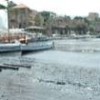
Lebanese Waters Still Stained Black
Four months after the oil spill caused by Israeli bombing, Lebanon continues to struggle to clean up its coastline. Thousands of marine species are in danger and the coming winter brings a new urgency to the problem.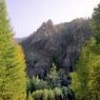
Climate Measurements Better from Siberia
The data collected at a tall tower in a remote, virgin forest in Russia will expand knowledge about the effects of greenhouse gases worldwide.Will Forests Adapt to a Warmer World?
Some scientists believe that a warmer planet means forests will grow more quickly. But others say forested areas will dry up or become disease ridden.Ecobreves – MEXICO: Controversy Over Registry of Pollutants
Environmental groups say they will prevent the Mexican government from making good on its intention to release local industries from having to measure eight of the greenhouse gases they emit.Ecobreves – BOLIVIA: Protection for Isolated Peoples
At a conference Nov. 20-22 in the Bolivian city of Santa Cruz, experts, indigenous communities and government officials will propose public policies to protect isolated populations in South America's tropical jungles.ENVIRONMENT: Polar Bears Go Hungry as Icy Habitat Melts Away
The iconic animal of the frozen north, the polar bear, is starving to death because climate change is melting the Arctic Ocean sea ice.ECONOMY-ALGERIA: What is the Best Week End for the Weekend?
Many Algerian employers are lobbying for a return to having their country's weekends over Saturdays and Sundays, rather than Thursdays and Fridays, saying the current policy is cutting into foreign trade revenues.BALKANS: A Nuclear Light Goes Out
Two reactors at the Kozloduy nuclear power plant in Bulgaria that are considered dangerous will shut down Dec. 31. And just in time, as Bulgaria joins the European Union the next day, together with neighbour Romania.DEVELOPMENT-AFRICA: If You Can’t Escape Climate Change, Adapt to It
A conference on climate change, about to wrap up in the Kenyan capital of Nairobi, has heard that adaptation to the effects of shifting weather patterns can play a key role in efforts to address climate change - alongside the bid to lessen greenhouse gas emissions.ARGENTINA: Residents Say “Stop the Spraying!”
Cultivation of genetically modified soybeans is expanding in Argentina, and with it, the use of herbicides. The "Paren de fumigar" (Stop the Fumigation) campaign warns against agro-chemical spraying in urban areas, as activists collect information about its impacts in order to denounce it.POLITICS-JAPAN: Peace Vote Will Decide ‘Battle of Okinawa’
Over the past month, Ayano Takaesu, 52, and her husband, Jiro, have allowed the income from the fair-trade shop they run in Okinawa to drop drastically as they devote much of their time campaigning in the run up to the Okinawa gubernatorial election on Sunday.LATIN AMERICA: Kids Pay Dearly for Lack of Clean Water
In Latin America and the Caribbean, one-third of childhood deaths are the result of diarrhoea. The problem could be resolved with clean water and appropriate sanitation systems, but millions of people, especially the indigenous and Afro-descendant populations, lack access to either.« Previous Page — Next Page »


Through our global network of local writers, we are continuing our award-winning coverage of global and local environmental challenges, with a focus on the people for whom the ecosphere matters in a direct way: rural dwellers who have little means to protect themselves against adverse conditions; communities that need to switch to sustainable development in order to survive; poor women and children, who are the most vulnerable in natural disasters. Sponsored by the United Nations Environment Program (UNEP), the United Nations Development Program (UNDP) and The World Bank (WB), IPS also maintains the award-winning Tierramérica, a specialised information service on environment and development.

The Week with IPS

Tracking global progress towards a sustainable world


