
Wednesday, November 25, 2026



News and Views from the Global South
Environment
CHINA: Race to Improve Air Quality for 2008 Olympics
With just two years left for the 2008 Olympics, this city is struggling to live up to its pledge of hosting the 'green games' while also meeting the demands of its increasingly affluent residents and their consumerist ways.TRADE: WTO Biotech Ruling Reveals Special Interests, Say Critics
A World Trade Organisation decision that called European safety bans on genetically modified food illegal under its global trade rules could usher in a new phase of potentially hazardous "Frankenfoods" worldwide and further erosion of local protections, say environmental and advocacy groups.ENVIRONMENT-U.S.: Evangelical Leaders Call for Government Action on Warming
Breaking with some of their colleagues in the Christian Right, a group of more than 85 U.S. evangelical Christian leaders called on Congress Wednesday to enact legislation that would reduce emissions of greenhouse gases, which most scientists believe contribute to global warming.ENVIRONMENT: EU Wants Biofuel, Not Sugar
The European Union says increased use of biofuels in developing countries could bring huge benefits, especially to those affected by the bloc's sugar reform.ENVIRONMENT: Rains No Longer a Blessing in Java
Indonesians, used to welcoming the rains as a sign of better and more fertile times, are increasingly dreading them for fear of the floods they bring.POLITICS: Snags Surface in India-US Nuclear Deal
The chairman of India's Atomic Energy Commission (AEC) has sent shock waves through the Indian establishment by accusing the United States of ''changing the goalpost'' while finalising a far-reaching, one-of-its-kind nuclear cooperation deal with India, initialled last July.ARGENTINA: The Power of Informal Garbage Collectors
"Cartoneros" - informal garbage collectors - were the pioneers in recycling waste in the Argentine capital, an activity that helped them escape indigence. Now they are an essential piece towards meeting the ambitious goal of "zero garbage" in the city by 2020.Ecobreves – HONDURAS: Ecologists Demand Forest Law
Civil society organizations in the Coalition for Environmental Justice have asked the Honduran government of president-elect Manuel Zelaya Rosales to immediately pass a forest law, which has been frozen in the files of the National Congress for four yearsEcobreves – CHILE: Copper Cages for Salmon Farming
The Chilean government's copper agency, Codelco, has an agreement with the Salmon Institute of Technology to manufacture cages for raising these fish with a special copper alloy that is more resistant to contamination than traditional cages, made from synthetic fibers and galvanized steel.Ecobreves – VENEZUELA: Photos in the Subway
The photography exhibition "Mega-Diverse Venezuela" can be viewed on the walls of the central Caracas subway station Bellas Artes.Ecobreves – BRAZIL: Green Light for Water Management Plan
Brazil recently became the first Latin American country to approve its National Plan for Water Resources for the sustainable use, which will be presented at the 4th World Water Forum, in Mexico Mar. 16-22.Ecobreves – CUBA: Peasant Farmers Go Solar
- More than 40 farming families in Valle de Viñales, in the western Cuban province of Pinar del Río, have been illuminating their homes with solar panels since the end of January.The Difficult Rescue of La Macarena
Operation "Green Colombia" aims to destroy 4,600 hectares of illicit drug crops in one of the country's most important national parks. But NGOs doubt the effort will be able so save this nature reserve.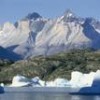
Cell Phone Tower Threatens Park
The construction of a 36-meter telephone tower would harm the majestic scenic beauty of Torres del Paine Park, in the extreme south of Chile, says Greenpeace.Few Takers for “Green” Homes
There are an estimated 1,500 ecological homes in Italy, a relatively low number in a new market, despite the fact that these "green" properties can represent savings of up to 43 percent annually in utilities.
Ecobreves – GUATEMALA: Promoting Artisanal Fishing
Some 15,000 small scale fisherfolk along Guatemala's Pacific and Atlantic coasts will benefit from a project "with incentives and aimed at supplying the national market," says Erick Villagrán, coordinator of the government fishing and fisheries agency, Unipesca.Ecobreves – ARGENTINA: Buenos Aires Bets on Recycling
"Buenos Aires Recylces" is a new environmental program designed by the capital's government to process a progressively greater amount of the waste its residents produce.ENVIRONMENT-SPAIN: Drink the Water, or Recycle It
Drastic restrictions and recycling plans for water that is not for human consumption will begin to be implemented in the Spanish capital, as the country faces another year of drought.ENVIRONMENT-ARGENTINA: The Neglected Sea
Unlike forests and mountains inhabited by indigenous people or small farmers who watch over natural resources, the sea has no one to defend it, at least not in Argentina. Although this South American nation has 4,000 km of coastline, no ocean reserves have been set up to protect the waters in its exclusive economic zone.POLITICS-US: Green for Danger?
As the George W. Bush administration ratchets up its domestic spying capabilities, the Federal Bureau of Investigation (FBI) is collecting "research" reports on direct-action environmental groups produced by right-wing think tanks.SCIENCE-BRAZIL: An Astronaut Opens a Door to Space
When the first Brazilian astronaut, Marcos Cesar Pontes, leaves for outer space in March, he will be opening the doors to the heavens not only for some renowned scientists in his country, but also for dozens of children at 39 municipal schools.« Previous Page — Next Page »


Through our global network of local writers, we are continuing our award-winning coverage of global and local environmental challenges, with a focus on the people for whom the ecosphere matters in a direct way: rural dwellers who have little means to protect themselves against adverse conditions; communities that need to switch to sustainable development in order to survive; poor women and children, who are the most vulnerable in natural disasters. Sponsored by the United Nations Environment Program (UNEP), the United Nations Development Program (UNDP) and The World Bank (WB), IPS also maintains the award-winning Tierramérica, a specialised information service on environment and development.

The Week with IPS

Tracking global progress towards a sustainable world


