
Thursday, November 26, 2026



News and Views from the Global South
Environment
ARGENTINA: New Observatory Measures Ozone Layer
An observatory to measure the thinning of the ozone layer, the first of its kind in Latin America, has begun to operate in southern Argentina.
Natural Gas Drilling Takes Toll in Bolivian Sierra
Environmentalists denounce threats to the Aguaragüe mountain region in Bolivia, the second leading South American country in natural gas reserves.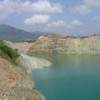
Centuries-Old Mine Struggles to Save Its Surroundings
Experts are working to rehabilitate the ecosystem damaged by a mine that operated in Cuba for nearly five centuries.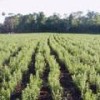
The Rich Herb of the Guaraní
Small farmers in Paraguay make the most of a sweet herb used by the Tupí Guaraní indigenous community. They hope to plant 5,000 hectares of this naturally powerful sweetener in 2007.Ecobreves – MEXICO: Taking the Planet's Pulse
A high altitude climate observation center will begin operating in 2006 in Mexico, the first of its type in the Mesoamerican and Caribbean regions. Located at more than 4,000 meters above sea level, it will measure, among other things, levels of ozone and carbon dioxide, gases that are altering the planet's health.Ecobreves – ARGENTINA: Alarm over Uranium Accident
Residents of the mountain resort city of San Carlos de Bariloche, in Argentina's southern Patagonia, expressed to Tierramérica their concern about an accident involving uranium at a plant near the city.Ecobreves – GUATEMALA: Pollution Persists in Lake Atitlán
Guatemala's Lake Atitlán, located 140 km west of the capital and considered the country's most beautiful, is contaminated with agrochemicals and human waste from nearby towns, restaurants and hotels.Ecobreves – AMAZON: Agro-Forest Management Agreement
The promotion of agroforestry will be the economic strategy to improve the living standards of the population and protect the biodiversity of the Amazon and three other regions with rain forests, according to an agreement signed Jun. 24 in Washington by the World Agroforestry Center (ICRAF) and Conservation International.ENVIRONMENT-FRANCE: Dangerous Summer for Nuclear Power Plants
The northern hemisphere's summer began officially just a few weeks ago, but the high temperatures already recorded in France could prompt the shutdown of some of the 58 nuclear reactors that supply 80 percent of the country's energy.G8 SUMMIT: No Solutions Here to ‘Climate Chaos’ – Activists
Around 500 activists in Glasgow said goodbye to the G8 Summit with a street party against climate change Friday, rejecting "any market-led techno-fixes to the climate crisis by an unelected global elite".G8 SUMMIT: U.S. Trips Up Climate Agreement
The G8 countries remained divided over how to tackle global climate change at the end of their three-day summit here.ENVIRONMENT: Indonesians Caught Between Poverty and High Water
For several weeks now, Soesi Trisnosiswoyo, 63, has been anxiously calling up officers manning floodgates at Manggarai, South Jakarta and at Depok, West Java daily to check on water levels.G8 SUMMIT: Developing Countries Stand Firm by Kyoto Protocol
Leading developing countries delivered an open challenge to the G8 nations Thursday over proposals to abandon the Kyoto Protocol as the means to contain global climate change.G8 SUMMIT: Blasts Derail Trains, and Talks
Four bomb blasts in London Thursday morning killed dozens and injured hundreds of people, and brought the city's public transport system to a halt. These terrorist attacks also derailed a long and sustained campaign to get Group of Eight leaders to deliver on the environment and on poverty.VENEZUELA: Plastic Hailed as Solution to Housing Crisis
Venezuela, suffering a severe housing shortage, plans to build hundreds of thousands of new homes with plastic walls in the coming years, made possible by a major expansion of the country's petrochemical industry.SOUTH AMERICA: Biotech Opens Doors to Andean Development
The aid of the sweet potato for fighting vitamin A deficiency in Africa, and a biological agent that fights moulds which attack roses and bean crops are just two examples of how biotechnology is being used to make the most - socially and economically - of the biodiversity in South America's Andean region.ENVIRONMENT-EU: Car Tax Will Not Solve Emissions Problem, Groups Warn
New European proposals to reform car taxation will not result in reduced car emissions, warn environment and transport activists, but could instead have the undesired outcome of more pollution, road accidents and congestion.
G8 SUMMIT: What if They Disagree to Disagree?
Every now and then helicopters have been flying towards the Gleneagles Hotel, carrying one or another of the G8 leaders whose three-day summit begins Wednesday.EGYPT: Gas Deal Cements Rapprochement With Israel
A recent deal to sell Egyptian natural gas to Israel, while unpopular with the general public here, marks steadily improving diplomatic relations between the historical antagonists.
G8 SUMMIT: Bush Increasingly Isolated on Warming
As U.S. President George W. Bush arrives at Gleneagles, Scotland for this year's Group of Eight (G8) Summit, he finds himself more isolated on the question of global warming than ever, at home as well as abroad.POLITICS-US: The Christian Left Strikes Back
As prodigiously funded groups on the religious right prepare to square off against the equally well-endowed but largely sectarian left in a take-no-prisoners battle over the replacement for retiring Supreme Court Justice Sandra Day O'Conner, there are signs that a new progressive religious movement may be emerging.« Previous Page — Next Page »


Through our global network of local writers, we are continuing our award-winning coverage of global and local environmental challenges, with a focus on the people for whom the ecosphere matters in a direct way: rural dwellers who have little means to protect themselves against adverse conditions; communities that need to switch to sustainable development in order to survive; poor women and children, who are the most vulnerable in natural disasters. Sponsored by the United Nations Environment Program (UNEP), the United Nations Development Program (UNDP) and The World Bank (WB), IPS also maintains the award-winning Tierramérica, a specialised information service on environment and development.

The Week with IPS

Tracking global progress towards a sustainable world


