
Thursday, November 26, 2026



News and Views from the Global South
Environment
ENVIRONMENT: Global Warming Killing Oceans’ Life Centres
Roughly 70 percent of the world's coral reefs are effectively destroyed or threatened with destruction, according to a major assessment released here Monday by the Global Coral Reef Monitoring Network.CLIMATE CHANGE: Brazil Seeks Clean Energy – in the Garbage
Making it economically feasible to generate energy from garbage could be one of the first concrete results of the Kyoto Protocol, which goes into effect on Feb. 16.ENVIRONMENT: U.S. Companies See Advantages in Carbon Emissions Market
With 127 countries poised to take action on global warming, many companies in the United States - a world leader in greenhouse gas production - are moving to cut their own emissions, even in the absence of federal regulations.
U.S. Companies See Practical Benefits in Carbon Emissions Market
Dozens of U.S. corporations are already trading emissions credits, even though the Bush administration has rejected the Kyoto Protocol on Climate Change. The international treaty, designed to curb emissions of greenhouse gases like carbon dioxide, enters into force Feb. 16, 2005.Who Killed the Swans?
Ecologists argue that a cellulose factory caused the mass die-off of black-necked swans (Cygnus melancoryphus) in southern Chile. But the accused respond that the activists lack proof.Ecobreves – GUATEMALA:: More Royalties from Mining
The Guatemalan Congress aims to increase from one to 10 percent the royalties that more than 400 mines of precious minerals must pay the government.Ecobreves – ARGENTINA: Activists Demand Cleaner Air
On the eve of the 10th Conference of Parties to the Convention on Climate Change, Dec. 6-17 in the Argentine capital, hundreds of the country's environmental groups demanded that the government take concrete steps towards curbing greenhouse gas emissions.Ecobreves – COLOMBIA: Devastating Rains
Heavy rains falling in Colombia since September have claimed the lives of some 30 people and left more than 250,000 homeless, according to reports presented by local emergency committees.Ecobreves – PERU: Decentralizing Environmental Programs
The Metropolitan Municipal Council of Lima will ask Congress to decentralize environmental protection programs that are currently handled by the Ministry of Production.AUSTRALIA: Conservative Think Tank Mulls Anti-Environment Rebellion
While Australia commemorated the 150th anniversary of the Eureka stockade this weekend, where 30 miners protesting against colonial authorities were killed, a conservative think tank was launching its own rebellion against what it refers to as ''environmental fundamentalism''.ENVIRONMENT-BALKANS: Power Battles Nature Again
The parliament of the tiny republic of Montenegro began a long awaited debate this week on building a hydropower plant on the Tara river, one of the most attractive tourist and nature reserves in former Yugoslavia.ENVIRONMENT: Expedition Pursues Secrets of Clipperton Island
To compare him to Charles Darwin or Alexander von Humboldt might be too much. But French explorer Jean-Louis Etienne is proposing an effort similar to these giants as he heads to Clipperton, a tiny Pacific island 1,300 km southwest of the Mexican resort of Acapulco.UAE: Oil-rich But In Renewable Energy Mode
A country that produces nearly 2.5 million barrels of crude oil per day has little reason to look anywhere else. However, regard for the environment and the realisation that fossil fuel reserves may not last forever have induced authorities in the United Arab Emirates (UAE) to consider renewable energy options.CLIMATE CHANGE: Conference Expected to Make Strides
Unlike its lacklustre predecessors, the conference of the parties to the Climate Change Convention, to be held this month in Argentina, is expected to produce heated debates and significant advances, largely because of Russia's recent ratification of the Kyoto Protocol, but also due to a new format.ENVIRONMENT-SLOVAKIA: More Devastation Looms After the Storm
Environmentalists have attacked the government over plans for redevelopment of the country's largest national park after one of the biggest ecological catastrophes in the area in the last hundred years./ARTS WEEKLY/CUBA: The Ever New Old Havana
For anyone, whether they are foreign nationals, people who live on the other side of Cuba, or natives and residents of the capital,taking a walk through Old Havana these days is like discovering a new city.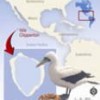
Expedition Pursues Secrets of Clipperton Island
French scientists are slated to arrive in early December on the tiny atoll located 1,300 km southwest of the Mexican resort of Acapulco. Their findings could help the world to understand climate phenomena like El Niño, the research team's chief Jean-Louis Etienne told Tierramérica.
Business and Biodiversity – Risk of 'Greenwash'?
Corporations returned to the center of debate at the third World Conservation Congress, which ended Nov. 25 in Bangkok. Skeptics say partnerships between environmental groups and transnational corporations only serve to ''greenwash'' the sullied image of some companies, reports Tierramérica from Thailand.Ecobreves – BRAZIL: Behind Soybeans Comes Transgenic Cotton
Brazil is experiencing new transgenic confusion. Environmentalists and the Environment Ministry challenge the National Biosecurity Technical Commission's decision to authorize sales of cottonseed that contains no more than one percent genetically modified seeds.Ecobreves – CUBA: Hotel Applauded for Protecting Ozone Layer
The Cuban Ministry of Science, Technology and Environment created a prize for institutions that work to protect the Earth's atmospheric ozone layer, and the first went to the Hotel Meliá Cayo Santa María, in the central province of Villa Clara.Ecobreves – VENEZUELA: A Proposal for Crocodile Trade
Commercial exploitation of the Orinoco crocodile (Crocodylus intermedius), an endangered species native to Venezuela and Colombia, could help prevent its extinction, says the Venezuelan Foundation of Sciences Development (FUDECI).« Previous Page — Next Page »


Through our global network of local writers, we are continuing our award-winning coverage of global and local environmental challenges, with a focus on the people for whom the ecosphere matters in a direct way: rural dwellers who have little means to protect themselves against adverse conditions; communities that need to switch to sustainable development in order to survive; poor women and children, who are the most vulnerable in natural disasters. Sponsored by the United Nations Environment Program (UNEP), the United Nations Development Program (UNDP) and The World Bank (WB), IPS also maintains the award-winning Tierramérica, a specialised information service on environment and development.

The Week with IPS

Tracking global progress towards a sustainable world


