
Saturday, November 28, 2026



News and Views from the Global South
Environment
SUSTAINABILITY: Do ‘Water Wars’ Still Loom in Africa?
When water affairs ministers from countries along the Nile met recently to discuss the fate of the river, Boutros Boutros-Ghali was not in the room with them. But the lingering memory of his comment that future wars would be fought over water probably was.COLOMBIA: Traditional and Biotech Efforts to Save National Flower
In a space of 250 square metres in the garden of his home in the city of Medellín, Carlos Sánchez, a retired industrial engineer, enjoys the daily pleasure of seeing several hundred cattleya trianae orchids grow.SUSTAINABILITY: More Rehabilitated Wetlands in South Africa, More Water Supply
As South Africa's new government braces itself for the task of extending clean water supplies to more people, environmentalists are warning there may soon be little water to distribute if conservation efforts are not stepped up.HEALTH: Anti-Pesticide Campaigns Get Boost from Worrisome New Studies
New data proving that an array of pesticides have reached alarming levels in the general population are galvanising calls for a ban on the most harmful chemicals and greater investment in sustainable farming strategies.ENVIRONMENT-EUROPE: Swallows Arrive in Winter
The staff at Marquenterre nature park in northern France began noting a decade ago that the springtime arrival of migrating swallows and other birds was occurring weeks earlier than normal, a change that experts attribute to global warming.ENVIRONMENT: Technology, Green Concerns to Mix at Key Meeting
When the world's largest gathering of environmentalists meet in the Thai capital in November, they are to embrace advances in technology as a vital ally in protecting the earth's biodiversity.ENVIRONMENT: Bamboo Needs Begin to Stick Out
In this whole debate about forests and deforestations, you would have thought bamboos might stand out. But neglect in discussion has matched neglect of bamboos on the ground, a new report points out.ENVIRONMENT-CENTRAL AMERICA: Unrestricted Zone for Paraquat Herbicide
Environmental groups are waging war on the herbicide paraquat, considered toxic to the environment and human health, and banned in several countries. But this synthetic chemical continues to be sold and used, largely unregulated, in Central America.HIMALAYAS: Endangered Snow Leopards a Peril to Yak Herders
It's a blustery morning here at Khicho Lake, four hours' steep climb from the village of Manang in the Himalayan rain shadow in north-western Nepal. The sky is blue, sunrays bright, and the Himalayan peaks are glistening.Ecobreves – HONDURAS: Green News in Mosquitia
In the Mosquitia region of Honduras, in the northeast, a group of rural communicators is promoting a radio news program focused on sustainable development and cultural preservation among the Misquita, Tawakhas and Pech indigenous communities.Ecobreves – COSTA RICA:: Still No Compensation for Poisoning Victims
There are 2,800 Costa Rican farm workers affected by the insecticide nemagon (dibromochloropropane) are demanding payment of the compensation that was agreed with the National Insurance Institute (INS), which so far has failed to issue checks on time.Ecobreves – GUATEMALA: NASA Backs Satellite Monitoring of Resources
Guatemala will soon have a satellite monitoring system for its natural resources as part of a program of the U.S. National Aeronautics and Space Administration (NASA), which in two year will provide 350,000 dollars in infrastructure and training.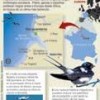
Swallows Arrive in European Winter
Many bird species are migrating early to Europe from Africa. Ornithologists believe climate change is the cause behind the new travel habits of swallows, ducks, storks and geese, and could be a threat to their reproductive cycles.
Colombia's Bid to Save Its National Flower
The cattleya trianae orchid is in danger of extinction. But using both traditional and modern techniques, experts are fighting to keep this emblematic flower from disappearing.Free Zone for Paraquat
Paraquat is used without restrictions in Central America, where the herbicide is believed to cause some 400,000 poisonings each year. Each country of the region spends an estimated seven million dollars annually on medical treatment for those affected.Ecobreves – NORTH AMERICA: Dangerous Air for Kids
The 12o million children living in Canada, Mexico and United States are exposed to the annual emissions of more than four million tons of dangerous substances that are proven or suspected to be carcinogens, toxic to fetal development or neurotoxins.Ecobreves – PERU: Coca Growers Deforest the Amazon
Illegal coca plantations have caused environmental damage to the Peruvian Amazon of an estimated 1.5 billion dollars, due to clearing of forest and logging, says an official report from the Peruvian government.Ecobreves – ANTARCTICA: Fish and Birds in Danger
The bird and fish species of Antarctica are threatened by excessive fishing, says a study by Argentine scientists.Ecobreves – COLOMBIA: Medicinal Plants to Fight Malaria
Some 160 plants used to treat malaria by black healers and indigenous shamans in Colombia have been targeted by the Malaria Research Group at the local University of Antioquia with the intention of developing new medications.ENVIRONMENT-U.S.: Plan Points Way to Greenhouse Gas Cuts
As a five-year drought threatens water supplies in America's west, a new report sets out how the United States could do its part to curb global warming.ENVIRONMENT-BRAZIL: Beans May Neutralise Transgenic Debate
The heated debate about genetically modified organisms in Brazil just might escape the dead end it had entered with the transgenic soybean controversy, that is, if all goes well with a genetically modified version of a kidney-type bean that is currently undergoing field tests.« Previous Page — Next Page »


Through our global network of local writers, we are continuing our award-winning coverage of global and local environmental challenges, with a focus on the people for whom the ecosphere matters in a direct way: rural dwellers who have little means to protect themselves against adverse conditions; communities that need to switch to sustainable development in order to survive; poor women and children, who are the most vulnerable in natural disasters. Sponsored by the United Nations Environment Program (UNEP), the United Nations Development Program (UNDP) and The World Bank (WB), IPS also maintains the award-winning Tierramérica, a specialised information service on environment and development.

The Week with IPS

Tracking global progress towards a sustainable world


