
Saturday, November 28, 2026



News and Views from the Global South
Environment
Ecobreves – GUATEMALA: Anti-Rabies Campaign Under Way
The Guatemalan Ministry of Health launched a campaign on Mar. 20 to vaccinate 1.6 million dogs and 30,000 cats in rural areas to prevent rabies in the wake of a prolonged drought.
A Step Backwards for the Ozone Layer
Washington won an exemption allowing its farmers to use more methyl bromide, a pesticide banned by an international treaty because it depletes the atmospheric ozone layer. But the exemption lasts only one year.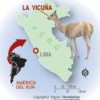
Peruvian Indians Save the Once-Endangered Vicuña
In the 1960s, there were just 25,000 of these camelids left. Now the vicuña population in Peru is growing eight percent a year and the species is no longer in danger of extinction, thanks to their protection in the hands of local indigenous communities.Law on Assisted Reproduction Divides Italy
A new Italian law, which bans experiments involving human embryos, is a violation of the rights of infertile couples and of scientific freedom, say critics. The fate of the 24,000 frozen embryos that exist in Italy is uncertain.Ecobreves – ARGENTINA: Latin American Environmental Observatory
Argentina's National Ecological Action Network (RENACE), an umbrella for more than 70 non-governmental organizations, in May will launch the Latin American Environmental Observatory to unite groups that are dealing with similar challenges.Ecobreves – NORTH AMERICA: Protection for Three Marine Species
Canada, Mexico and the United States will seek a common strategy to protect the humpbacked whale (Megaptera novaeangliae), the pink-footed shearwater (Puffinus creatopus) and the leatherback turtle (Dermochelys coriacea) as part of an ambitious plan to ensure the survival of migratory species.Ecobreves – COSTA RICA: National Parks in Crisis
Costa Rica's national parks are in an distressing state of abandon due to lack of money to hire the 300 park rangers necessary to protect areas' biodiversity from hunters, charged Carlos Manuel Rodríguez, the national environment minister.Ecobreves – PERU:: New Anti-Desertification Center Announced
Peru's National Human Resources Institute (INRENA) is working with Brazil to set up a Regional Anti-Desertification Center, which will include the other countries that share the tropical forests of the Amazon.ENVIRONMENT-INDIA: Polluter Pays Principle May Yet Gain Ground
If the Indian government carries out a threat to disconnect electricity and water supplies to 16,500 polluting industrial units in Delhi, it will be the first major attempt to enforce the ''polluter pays principle'' in this country.ENVIRONMENT-VIETNAM: Measures Sought to Shield Rare Species
Environmentalists have urged the government to ramp up efforts to protect rare and endangered animals, warning that failure to do so could result in extinction for some species within a decade.AUSTRALIA-EAST TIMOR: Critics Hit ‘Unjust’ Sharing of Oil Revenues
East Timor's government, Australian political leaders and community groups are condemning the Australian government for what has been described as an attempt to steal billions of dollars of revenues from oil and gas projects in the sea between the two countries.SUSTAINABILITY: ‘Conspiracy’ Looms Over South American Aquifer – NGOs
The placid waters of the Guaraní Aquifer, an enormous underground reservoir beneath 1.2 million square km of Argentina, Brazil, Paraguay and Uruguay, are at the centre of turbulent debate.ENVIRONMENT: EU Urged to Reject GM Rice
Leading environmental groups are urging the EU to reject a new strain of genetically modified rice.ENVIRONMENT-INDIA: Elections Bad News for Forests
Legitimising encroachments into forest lands before the elections is a cheap way to win votes, but one that could prove costly for India's rapidly dwindling green cover, as well the country's tribal communities.ENVIRONMENT: Mexico to Host 4th World Water Forum
Millions of dollars have been invested since the 1970s in conferences and projects for ensuring universal access to clean water, but 1.2 billion people still do not have access to this vital liquid - and their numbers could reach four billion in 2025. To confront this ongoing problem, another global forum is to take place in Mexico in 2006.ENERGY-SOUTHERN AFRICA: The Challenges of Getting Malawi Wired
It's a tale of delays, missed deadlines and the grinding problems that can dog large-scale infrastructure projects. Work to connect electricity lines between Malawi and neighbouring Mozambique was scheduled to have been completed by 2002. The deadline has now been shifted to 2005, however - and officials aren't ruling out 2006.ENVIRONMENT-UAE: Falling Levels, Wastage Make Water Scarce
Water consumption in the United Arab Emirates (UAE) is the highest in the world, but here and elsewhere in the Gulf, it may soon become a very scarce commodity.Ecobreves – BRAZIL:: Engineers Seek Better Waves for Surfing
Increasing the height of ocean waves by 80 percent and improving their dynamic to benefit surfers is the goal of a project of the post-graduate engineering program at the Federal University of Rio de JaneiroEcobreves – CHILE: Advances in Cleaning Up Santiago
The Chilean government is creating a Transantiago Financial Administration System to reorganize public transportation and to build bikeways, among other measures intended to reduce pollution in the capital, home to five million people.Ecobreves – HONDURAS: Fighting Desertification and Drought
An initiative to mitigate the effects of drought and to prevent desertification in 10 of the 18 departments of Honduras began two weeks ago with public hearings and the identification of productive projects.Ecobreves – GUATEMALA: Protest Against Puebla-Panama Plan
Guatemalan Indians and peasant farmers planned to stage a protest against the Puebla-Panama Plan on Mar. 23, during a visit by Mexican President Vicente Fox, the promoter of the initiative.« Previous Page — Next Page »


Through our global network of local writers, we are continuing our award-winning coverage of global and local environmental challenges, with a focus on the people for whom the ecosphere matters in a direct way: rural dwellers who have little means to protect themselves against adverse conditions; communities that need to switch to sustainable development in order to survive; poor women and children, who are the most vulnerable in natural disasters. Sponsored by the United Nations Environment Program (UNEP), the United Nations Development Program (UNDP) and The World Bank (WB), IPS also maintains the award-winning Tierramérica, a specialised information service on environment and development.

The Week with IPS

Tracking global progress towards a sustainable world


