
Saturday, November 28, 2026



News and Views from the Global South
Environment
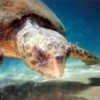
Sea Turtles Face Deadly Beaches
Thousands of sea turtles continue to be hacked or beaten to death in Latin America. The seven species that lay their eggs on the region's beaches all face extinction.A Nation Runs on Natural Gas
Brazil is beginning construction of a 5,000-km pipeline to transport natural gas imported from Bolivia. By the end of the decade, this fossil fuel will cover 15 percent of the country's energy consumption.
A Passport to the Universe
The Papalote Children's Museum in Mexico will inaugurate the world's largest digital dome on Feb. 3, with an interactive spectacle that will transport audiences to the farthest reaches of the cosmos, 15 billion light-years away.World Economic Forum
Amidst criticisms from civil society groups, more than a thousand executives from the world's biggest corporations, national leaders and economists gathered in Davos, Switzerland for the annual meeting of the World Economic Forum, a defender of the current globalization process. Just days early, in Mumbai, India, some 100,000 people gathered to assert that "another world is possible."Ecobreves – GUATEMALA: Dam Threatens Dozens of Families
The inundation caused by a dam in Guatemala has already claimed the life of one local resident, and threatens 58 families, who fear floods in the village of Los Cerritos, 125 km south of the capital.Ecobreves – HONDURAS: Effort for Air Quality Control
The municipal government has installed four air quality control boxes throughout the Honduran capital, the city with highest rates of air pollution in Central America.Ecobreves – BRAZIL: Forest Fires Here Hurt the Environment Elsewhere
The gases and particulates generated by forest fires in the Brazilian Amazon cause climate changes more than 4,000 km away, says Paulo Eduardo Artaxo Neto, physics professor at the University of Sao Paulo.Ecobreves – VENEZUELA: Free Maggie?
Venezuelan authorities are preparing to release Maggie the dolphin, a young female of the Delphinus capensis family, who beached on the coast of Margarita Island in May 2003.Ecobreves – CHILE: Warning: Fake Sunscreens
Chile's Institute of Public Health (ISP) has appealed to consumers to help detect sunscreen lotions sold in the capital that do not meet skin protection requirements.Ecobreves – CUBA: Recovering Ecosystem Hurt by Copper Mining
Cuban experts are working a project to recuperate an ecosystem damaged by several centuries of copper exploitation in Santiago de Cuba, 900 km east of Havana.ENVIRONMENT-NAMIBIA: Heavy Rains Spark Fears of Flooding
While large parts of Southern Africa labour under the effects of a drought, Namibians - especially those in the north-east of the country - are bracing for floods.ENVIRONMENT-LATAM: Demands for Piece of Biodiversity Pie
The developing South needs more transfers of resources and technology from the industrialised North and an equal distribution of the benefits derived from biological wealth, according to the Latin American and Caribbean environmental officials meeting Friday in the Argentine capital.HEALTH-CHILE: Salmon Producers Go on the Offensive
As in war, or a championship football match, Chilean salmon farmers believe the best defence is offence, and have launched a campaign to disqualify a scientific report that reveals the presence of cancer-causing compounds in the fish they raise and sell.FINANCE: Citigroup Succumbs to ‘Green’ Campaign
The world's largest private financial institution, Citigroup, has signed on to a comprehensive environmental policy that sets a new industry standard, says the grassroots group that ran a two-year campaign against the banking giant.POLITICS: Small Island States Hope to Resurface on World Stage
The world's small island developing countries are preparing to launch sustainable development for a second time.ENERGY: Europeans Urged to Help Themselves and the Poor
An international conference has urged European nations to boost the share of renewables in their energy consumption and to assist developing countries in energy strategies.ECONOMY-NIGERIA: Nationwide Strike Suspended
The Nigeria Labour Congress announced Wednesday that it was suspending a nationwide stay away that had been called to protest against a fuel price increase.HONDURAS: Mining Expansion Triggers Protests
The concession of environmental licenses to expand mining operations in Honduras has prompted local communities, environmental groups and municipal governments to take action against what they see as the weaknesses of the national Law on Mining./UPDATE/ECONOMY-NIGERIA: Emergency Stockpiling as Fuel Strike Looms
A court of appeal in Nigeria's capital, Abuja, has ordered the Nigeria Labour Congress to suspend a proposed strike that had been scheduled to start on Wednesday. It has also ordered authorities to reverse the one cent petrol tax that is at the heart of the labour dispute.ENVIRONMENT-CHILE: Sovereignty Debate Surrounds Nature Park
Chilean politicians say the declaration of protection for Pumalín Park, in the southern region of the country, is a violation of national security. The park is the property of U.S. millionaire Douglas Tompkins.Anti-nuclear Treaties
Under suspicion of violating international rules against the proliferation of nuclear weapons, in late 2003 Iran signed a protocol that opens the doors to unrestricted inspections of its national territory. The apparently innumerable efforts to stop the global arms race have proved insufficient.« Previous Page — Next Page »


Through our global network of local writers, we are continuing our award-winning coverage of global and local environmental challenges, with a focus on the people for whom the ecosphere matters in a direct way: rural dwellers who have little means to protect themselves against adverse conditions; communities that need to switch to sustainable development in order to survive; poor women and children, who are the most vulnerable in natural disasters. Sponsored by the United Nations Environment Program (UNEP), the United Nations Development Program (UNDP) and The World Bank (WB), IPS also maintains the award-winning Tierramérica, a specialised information service on environment and development.

The Week with IPS

Tracking global progress towards a sustainable world


