
Sunday, November 29, 2026



News and Views from the Global South
Environment
ENVIRONMENT-GUATEMALA: Logging and Fire Lay Siege to Forests
Guatemala's forests, which include the Maya Biosphere Reserve - the most closely protected tropical jungle in this Central American country - may be living on borrowed time.ENVIRONMENT-ITALY: Mafia Dominates Garbage Industry
An estimated 158 families in organised crime rings in Italy are piling up wealth from the trafficking of 35 million tons of garbage a year.AGRICULTURE-BRAZIL: The Battle Over Transgenic Seeds
Besides questions of human health and the environment, the battle over genetically modified (GM) crops involves a global market of seeds that moves around 30 billion dollars a year.Mafia Dominates Garbage Industry
An estimated 158 families in organized crime rings in Italy are getting rich off the trafficking of 35 million tons of garbage a year.Whales in Search of Safe Seas
Ecologists are celebrating the approval of the International Whaling Commission’s so-called "Berlin Initiative", which could go a long way towards saving whales, large and small, from extinction.Methyl Bromide on Its Way Out in Brazil and Cuba
Pioneers in Latin America, the two countries have reduced consumption of this ozone-depleting substance by hundreds of thousands of tons.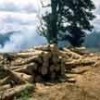
Logging and Fire Lay Siege to Guatemalan Forests
Conservationists say they are faced with an environmental tragedy, as 95,000 hectares of Guatemalan forests are lost each year.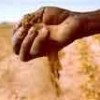
Desertification
Desertification and drought leave in their wake severe economic, environmental and socio-political troubles around the world. Every year, six million hectares of productive land disappear and millions of dollars in income are lost due to land degradation and declining agricultural yields.Ecobreves – VENEZUELA: Weather Radars Installed
Venezuela will set up the first of eight meteorological radars by the end of June, the initial step to enable the Environment Ministry to collect data on precipitation and weather throughout the countryEcobreves – BRAZIL: New Environmental Policy Drafted
The Brazilian government is preparing its first National Conference on the Environment, Nov. 28-30 in Brasilia, where a "new environmental policy" will be designed, with input from all sectors of society.Ecobreves – CHILE: More 'Unleaded' Cars
The portion of automobiles with unleaded gas catalytic converters expanded in the Chilean capital from 36 percent of the total in 1992 to 59 percent last year, says the National Institute of Statistics.Ecobreves – CUBA: El Niño the Culprit for Drought?
The prolonged drought affecting the eastern Cuban provinces of Las Tunas and Holguín is due to weather fluctuations caused by the phenomenon of El Niño-Southern Oscillations (ENSO), say meteorologists.Ecobreves – NICARAGUA:: Search for Origins of DDT Found in Breast Milk
Nicaraguan scientists are testing ground water in a northwestern area of the country to determine if aquifers contaminated with pesticides are related to the presence of DDT found in breast milk.Ecobreves – HONDURAS: Protecting Forests in Aguán
The governmental Honduran Foundation for Agricultural Research (FHIA) began a program this month in sustainable forest management aimed at preserving 10,000 hectares in the eastern region of Aguán, along the Atlantic coast.Ecobreves – GUATEMALA AND MEXICO: Final Touches to Bilateral Environmental Agenda
Some 100 officials from the ministries of the environment and natural resources of Mexico and Guatemala sat down for the first time on Jun. 19 in the Guatemalan capital to outline a binational agenda on environmental protection.ENVIRONMENT-HONDURAS: A Bid to Save Most-Endangered Hummingbird
The Honduran emerald, or Amazilia luciae, is a hummingbird native to this country and is the most endangered bird of Central America, but the Honduran Congress will soon be discussing a new bill that could turn out to be this tiny flyer's passport to the future.ENVIRONMENT-ANTARCTICA: New Secretariat to Improve Protection
The announcement of the creation of a permanent secretariat to enforce environmental protection goals in the Antarctic, which will be based in Buenos Aires, culminated the 26th Consultative Meeting of the Antarctic Treaty, which ended Friday in Spain.ENVIRONMENT-AFRICA: A Struggle for Survival, as Man Engages Hungry Animals
A battle is raging throughout the African sub-continent between subsistence farmers, usually the poorest villagers of the region, and game parks over crop destruction wrought by hungry wild animals.ENVIRONMENT: When You See a Whale, Just Watch It
The International Whaling Commission has taken on a new role as a conservation body following alarming reports that as many as 300,000 whales, dolphins and porpoises are drowning after getting entangled in fishing nets every year.ENVIRONMENT: Caribbean Calls on World to Help Save Conch Fishery
Caribbean fisheries experts are urgently calling for more international regulations to protect one of the world's largest conch reserves from relentless assaults by poachers.ENVIRONMENT: Doubts on Whether 20th Century the Hottest Ever
Assertions that the 20th century was the warmest of the millennium and that within a hundred years the earth's average temperatures could rise 3.5 degrees centigrade are two of the most publicised hypotheses in the battle to curb climate change.« Previous Page — Next Page »


Through our global network of local writers, we are continuing our award-winning coverage of global and local environmental challenges, with a focus on the people for whom the ecosphere matters in a direct way: rural dwellers who have little means to protect themselves against adverse conditions; communities that need to switch to sustainable development in order to survive; poor women and children, who are the most vulnerable in natural disasters. Sponsored by the United Nations Environment Program (UNEP), the United Nations Development Program (UNDP) and The World Bank (WB), IPS also maintains the award-winning Tierramérica, a specialised information service on environment and development.

The Week with IPS

Tracking global progress towards a sustainable world


