Languages
Wednesday, November 11, 2026



News and Views from the Global South
Water & Sanitation
DEVELOPMENT-AFRICA: Water and Improved Livelihoods
"Sanitation may hold the key to success or failure of the MDGs. It is really a time bomb in terms of health and the environment, waiting to be detonated," Professor Damas Mashauri told participants at a seminar on water and sustainable development taking place in Johannesburg, South Africa.DEVELOPMENT: Cell Phone Service, But No Toilets
It is a fact of the 21st century that some of the poorest regions of the world have good mobile phone coverage but no toilets or safe drinking water.
HEALTH-ZIMBABWE: Activists Say Cholera Due to Failed Leadership
"In my nine years as a nurse, I have never been so devastated. You know how discouraging it is to see people dying before your eyes. And you know very well there is nothing you can do to help them."POVERTY: Water Wars Hit Rural Zimbabwe
When water experts warned at the turn of the millennium that soon wars will be fought not over oil anymore but over water, little did Zimbabweans know that they would be some of the first people affected by this dire prediction.
DEVELOPMENT: Global Fund Puts Spotlight on Sanitation
The Global Sanitation Fund (GSF), created last March with a 100-million-dollar target per year, is being billed as a key financing mechanism aimed at meeting one of the eight U.N. Millennium Development Goals (MDGs).ENVIRONMENT-SOUTHERN AFRICA: Ministers to meet over Zambezi Commission
Water ministers of countries that share the Zambezi River will finally launch a long-standing initiative to promote sustainable utilisation of water resources at a meeting in Tanzania in November 2008.
DEVELOPMENT-MALAWI: Irrigation Promises to Increase Food Security
Wyson Chandanga, a small-holder Malawian farmer from the northern district of Mzimba, does not care if the country receives enough rain this year. He is also not concerned on whether the rains come on time or not.DEVELOPMENT: Food, Fuel and Water Crises Converging
A spectre is haunting the cities and villages of most developing nations, warns a senior official of a World Bank-affiliated organisation.HEALTH: Global Agenda Increasingly Disease-Driven
At the end of last month, U.S. President George W. Bush signed a global health package that effectively tripled U.S. spending over the next five years to fight HIV/AIDS, malaria and tuberculosis in poor countries, to 48 billion dollars.DEVELOPMENT: South Africa Beats Deadline on Water, Sanitation
South Africa and Madagascar, two African nations participating in the Stockholm International Water Conference currently underway in the Swedish capital, provide a contrasting picture of where they stand - or fall - in achieving the U.N.'s heavily-trumpeted Millennium Development Goals (MDGs).DEVELOPMENT: Wastewater Crops Feeding Millions
Vegetables, rice and other cereals in at least 53 cities in Asia, Africa and Latin America may someday come with warning labels that read "this is a byproduct of raw sewage".
DEVELOPMENT: Water Progresses, Sanitation Regresses
The world's poorest nations are making halting progress in water, but little or no tangible improvement in sanitation - two of the basic necessities of life.Q&A: 'We Need Policies That Address Climate Change'
Last year, Zimbabwe's second largest city of Bulawayo faced a crippling water crisis, after three of its five supply dams went dry. Some high density suburbs went for over three months without water.Q&A: Shared Water Resources – Source of Conflict or Cooperation?
Over the past decade, numerous media and research reports have have anticipated wars over water in Africa. As far back as 1998, the Institute for Security Studies presented a research paper stating that water is "recognized as a fundamental political weapon in the Southern African region. Water will increasingly shape the international relations and security arrangements of Southern Africa."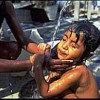
DEVELOPMENT: Progress on Water, Less on Sanitation
The number of people globally who lack access to an improved drinking water source has fallen below one billion for the first time since data was compiled in 1990, according to a report released Thursday by the World Health Organisation and UNICEF.DEVELOPMENT-MADAGASCAR: Not Enough Money for Basic Water
Safe drinking water is a scarce resource in Madagascar. Considerable financial investment is needed to improve sanitation and water treatment and distribution for the population of this large island.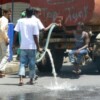
DEVELOPMENT-MAURITIUS: Water – Waste Not, Want Not
The 1.2 million-strong population of Mauritius presently enjoys plentiful piped potable water from the 2000 mm average annual rainfall that falls over the island annually. But large amounts of water are wasted, and with growing demand from new development, the island's water security may come under pressure in the near future.
Q&A: "A Silent Housing Crisis Is Unfolding"
With a billion people living in slums, and thousands more joining them every day, the world faces yet another looming challenge - the rise of an impoverished urban underclass, says Anna Tibaijuka of the United Nations Human Settlements Programme (U.N. Habitat).POLITICS-AFRICA: Mixed Reviews From Civil Society
Civil society organisations (CSOs) have mixed feelings about the outcomes of the latest African Union Summit, which concluded in the Egyptian resort of Sharm El Sheikh earlier this week. The summit meeting of African heads of state and officials was largely dominated by debate – or lack thereof – over the crisis in Zimbabwe and the participation of the controversial president, Robert Mugabe.HEALTH-SOUTH AFRICA: Bleak Future For the Country's Water
Earlier this month, a private pilot reported to a Johannesburg radio station that while flying over the Kruger National Park, in the far eastern reaches of the country, he had spotted the carcasses of several large crocodiles floating in the Olifants River. This was unusual because the crocodiles within the country's largest game reserve are protected from hunting.
HEALTH-MALAWI: Water Woes in Model Hospital
Gladys Mawera's face is contorted with pain -– both she and her newborn baby survived a complicated birth three days ago - but she has not been able to take the painkillers and antibiotics prescribed to her by the medical personnel at the Chiradzulu District Hospital in southern Malawi. The hospital has been without water for five days.« Previous Page — Next Page »





The Week with IPS

NEXT STOP - SDGs
Tracking global progress towards a sustainable world
Tracking global progress towards a sustainable world
