
Friday, October 9, 2026



News and Views from the Global South
Gender Violence

Lawmakers Work to Build Women’s Representation in Politics and the Workplace
Jelena Pekić, MP of the Federation of Bosnia and Herzegovina (House of People) and Deputy Speaker of the Canton Sarajevo Assembly, Lana Prlić, MP of the Federation of Bosnia and Herzegovina (House of Representatives) and Marina Riđić, Assistant Representative, UNFPA Bosnia and Herzegovina, spoke to IPS ahead of the Study Tour on Gender Equality and Women's Empowerment in Bosnia and Herzegovina.
HeForShe Campaign Tackles ‘Sex for Fish’ Abuse Malawi’s Lakeshore Communities
Women in fishing communities in Malawi's lakeshore districts of Nkhotakota and Mangochi are frequently targets of sexual exploitation for fish, a practice commonly known as 'sex for fish.' A recent report by the Malawi Human Rights Commission (MHRC) has unearthed disturbing accounts of women being coerced into transactional sex to access fish from male boat owners, exposing a widespread violation of their rights.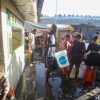
Armed Gangs Expand Their Control in the Centre Department of Haiti
Following a series of brutal altercations in the communes of Mirebalais and Saut d’Eau in Haiti back in late March, local gangs have taken over both communes, spurring heightened displacement and insecurity. This is indicative of the continuing deterioration of the humanitarian situation in Haiti as these armed gangs expand their control beyond Port-au-Prince.
Lawyer-Turned-Activist Bhuwan Ribhu Honored for Leading a Campaign to End Child Marriage
Bhuwan Ribhu didn’t plan to become a child rights activist. But when he saw how many children in India were being trafficked, abused, and forced into marriage, he knew he couldn’t stay silent.
‘The International Response Should Follow the Principle of ‘Nothing about Us, Without Us’’
CIVICUS speaks with Ukrainian gender rights activist Maryna Rudenko about the gendered impacts of the war in Ukraine and the importance of including women in peacebuilding efforts. Russia’s full-scale invasion of Ukraine has profoundly impacted on women and girls. Many have been displaced and are struggling with poverty and unemployment. Those who’ve stayed endure daily missile attacks, damaged infrastructure, lack of basic services and sexual violence from Russian forces if they live in occupied territories. Women activists, caregivers and journalists are particularly vulnerable. The international community must increase support to ensure justice for victims and women’s inclusion in peace efforts.
The Disappeared: Mexico’s Industrial-Scale Human Rights Crisis
They found shoes, hundreds of them, scattered across the dirt floor of an extermination camp in Jalisco state. These abandoned shoes, once belonging to someone’s child, parent or spouse, stand as silent witnesses to Mexico’s deepest national trauma. Alongside charred human remains and makeshift crematoria meant to erase all evidence of humanity, they tell the story of a crisis that has reached industrial-scale proportions.
UN Warns of an Imminent Collapse in Haiti
As gang violence in Haiti continues to target civilians and critical infrastructures, humanitarian organizations and the Haitian National Police (HNP) have found it increasingly difficult to manage the growing scale of needs. The United Nations (UN) and its partners fear that Haiti will approach a nationwide collapse due to numerous shortfalls in funding, a widespread lack of essential resources, and rampant insecurity.
Rohingya Refugees Are Not Safe in Bangladesh or Myanmar
On April 4, it was confirmed by Myanmar authorities that there were approximately 180,000 Rohingya refugees residing in Bangladesh that are eligible to return. Following numerous cuts in funding as a result of President Donald Trump’s reduction of USAID, as well as the increasingly volatile humanitarian crisis in Myanmar, it is uncertain if repatriation will best serve Rohingya refugee communities.
Trapped by Tradition: The Widows of Ukerewe and the Ritual They Cannot Escape
The night after her husband was laid to rest, 24-year-old Vivian Magesa sat in the dimly lit brick-walled house, surrounded by women from her late husband’s family. She had spent the past few days in mourning, wrapped in a white shroud, her head shaved as custom dictated. But as the hushed voices of her in-laws filled the room, Magesa realized her grief was far from over.
The Toll of Mental Health in Conflict Areas
Over the past two decades, conversations surrounding mental wellness have entered the cultural consciousness in the western world. Despite this, these topics receive far less media exposure in the Global South, particularly in areas that have been entrenched in warfare, where the onset of harmful mental health conditions are prevalent.
When Ethnic Violence Turns Women Against Women
For Kikim*, it was the ides of May, instead of March, that was, in one sense, her undoing. She was looking forward to welcoming her baby, her first. But life took an unexpected turn, and things changed within a split second.
Surges in Violence in Haiti Push Basic Services to the Brink of Collapse
In 2025, the humanitarian crisis in Haiti has grown increasingly dire amid the ongoing gang wars. With rates of displacement, child recruitment, food insecurity, physical violence, and sexual violence having skyrocketed in the past year alone, the national police have found it difficult to keep gang activity under control.
Women in the World: Making the Invisible Visible with Crowdsourced Data
Despite a push in the past ten years for more female representation and #MeToo movements highlighting the abuse that women have faced for centuries, women’s struggles continue to remain invisible—dismissed, denied, and buried under patriarchal bureaucracy.
Addressing the Scars of Abuse: A Global Call to Protect Girls and Secure Their Futures
In March 2000, 15-year-old Binta Manneh was eager to test her skills at an out-of-town interschool sports competition. That night, as she stepped out to buy biscuits from a nearby shop, she encountered paramilitary officers – men sworn to protect the nation.
The Gates to Paradise Are Closing
In 2020, a historic announcement emerged from the Global Trafficking in Persons Report, an annual assessment that evaluates human exploitation in 129 countries. For the first time, the world witnessed a 13% decrease in the number of victims. For those of us who fight against this heinous crime, it felt as if a door to paradise had opened—an Eden where no human being is for sale.
U.S. Passes on UN Ukraine Resolution amid the Humanitarian Crisis
From late 2024 to early 2025, the humanitarian situation in Ukraine has taken a turn for the worst, with poverty, violence, displacement, and damage to critical infrastructures having grown in intensity. Following the 2022 invasion of Ukraine by Russia, tensions have grown among member states of the United Nations (UN) on how to resolve the Russo-Ukrainian War.
Humanitarian Groups Face Challenges in Reaching the Sudanese Displaced Population
In the final quarter of 2024 ,there has been an escalation in the Sudanese civil war, with armed clashes between the Rapid Support Forces (RSF) and the Sudanese Armed Forces (SAF) having grown in brutality. Heightened insecurity has pushed millions of people into displacement, hunger, and poverty. Additionally, the continued hostilities have made it difficult for humanitarian organizations to scale their responses up.
Sexual Violence and Displacement: Disproportionate Threats to Children in Haiti
As ongoing gang violence and unrest bring down the living conditions in Haiti, humanitarian groups sound the alarm on human rights violations and the increasing challenges they dace in providing relief efforts.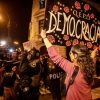
What is Not Good for Democracy in Peru is Not Good for Women
"We are facing a deeply conservative government that is opening the doors to all kinds of setbacks. We have a failed state with a democracy that is no longer a democracy," said Gina Vargas, a Peruvian feminist internationally recognized for her contributions to women's rights.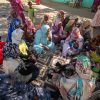
Ending FGM Requires Strengthening Partnerships and Advocacy Efforts
February 6 is the International Day of Zero Tolerance for Female Genital Mutilation (FGM). A practice deemed a gross violation of human rights, tragically the practice persists across multiple countries in Africa, the Middle East, and Asia. Over 230 million women and girls alive today have been subjected to this gruesome practice, and experts warn that at least 27 million more could endure this by 2030.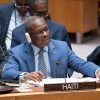
Haitian Government Faces Criticism for its Response to Gang Attack in Kenscoff
The humanitarian situation in Haiti continues to deteriorate as armed gangs expand their control in Port-Au-Prince and escalate acts of violence throughout the nation. Due to heightened insecurity, civilian displacement has reached new peaks, with hunger, disease, and the economic crisis having grown worse. With access to basic services diminished, approximately 5.5 million Haitians are dependent on humanitarian aid for survival. However, relief efforts have been severely hampered due to safety risks, restricted mobility and the vast scale of needs.« Previous Page — Next Page »





One in three women around the world have been subject to violence. Women face physical, sexual, and psychological violence in both public and private. Taking forms such as violence in the intimacy of a relationship, human trafficking, and sexual exploitation, gender violence is an issue that affects women in all countries. Only two-thirds of countries have outlawed domestic violence, leaving millions of women unprotected from abuse including from marital and de facto partners in many cases. Additionally, through human trafficking countless women are subjected to sexual exploitation and sexual violence, including horrific acts such as genital mutilation. Today many actors from individuals, to multinational organizations work to address these issues. These articles help to shed light on the violence that women experience every day and how its is being addressed.

The Week with IPS

Tracking global progress towards a sustainable world
