
Saturday, October 10, 2026



News and Views from the Global South
Gender Violence

‘Reconciliation Will Require Robust Transitional Justice and Accountability Mechanisms’
CIVICUS discusses the ongoing conflict in Ethiopia’s Amhara region with Hone Mandefro, advocacy director at the Amhara Association of America, and Henok Ashagray, PhD candidate and project officer at the Centre for Human Rights at the University of Pretoria.
Afghanistan’s Humanitarian Crisis Expected to Worsen in 2025
The humanitarian crisis in Afghanistan has deteriorated significantly since the 2021 Taliban Offensive, an insurgency that resulted in the Taliban’s reclamation of power and the fall of the nation’s republic. In 2024, the Taliban issued further restrictions on human rights in Afghanistan, particularly for women and girls. These restrictions caused the country to enter a state of economic emergency. This, compounded with heightened insecurity and limited access to basic services, has left over 23 million people in dire need of humanitarian assistance.
Colombia’s Historic Child Marriage Ban
Colombia has just marked a historic milestone in the global campaign against child marriage, with the Senate passing one of Latin America and the Caribbean’s most comprehensive bans on child marriage and early unions. In a country where one in five girls under 18 and one in 10 under 14 are married or live in marriage-like conditions, the new law raises the minimum age to 18 with no exceptions, eliminating a 137-year-old Civil Code provision that allowed children over 14 to marry with parental consent. This achievement aligns with goal 5 of the Sustainable Development Goals (SDGs), which has a target of eliminating harmful practices like child marriage by 2030. The new law now awaits the signature of President Gustavo Petro to come into effect.
Education Cannot Wait Interviews UN Special Rapporteur on the Situation of Human Rights in Afghanistan Richard Bennett
Richard Bennett was appointed as the Special Rapporteur on the situation of human rights in Afghanistan in April 2022. He has served in Afghanistan on several occasions in different capacities, including as the Chief of the Human Rights Service with the United Nations Assistance Mission in Afghanistan. He has previously played a role in the promotion and protection of human rights in Afghanistan and supported the United Nations on a number of human rights issues, such as protection of civilians, transitional justice, child rights, rule of law, rights of people with disabilities, protection of human rights defenders and a range of economic, social and cultural rights.

We Can and Must Do Our Best
As 2024 comes to a close, I dare to say that this has been an especially gruesome year for millions upon millions of young children, their parents and their teachers. The world has witnessed one horrific crisis of cruelty, dispossession and human suffering after another.
To What Extent is Bangladesh’s Hindu Population Under Attack?
Bangladesh has been in the midst of a deepening political crisis and a significant social divide since August 5 when the former Prime Minister Sheikh Hasina fled the country following a mass uprising led by students. Diplomatic relations between India and Bangladesh have since soured and given way to a considerable amount of disinformation, especially surrounding the persecution of the Hindu population.
Heightened Insecurity in Sudan Threatens Nationwide Collapse
As the Sudanese Civil War continues to ravage the people of Sudan, conditions for internally displaced persons grow more dire every day. The situation in Sudan is currently the biggest displacement crisis in the world. Famine, violence, and gender-based violence are rampant. Described as “an invisible crisis” by the United Nations (UN) new emergency relief chief, Tom Fletcher, many believe that the humanitarian response has been largely ineffective in tackling the urgent and growing scale of needs.
UN ECOSOC Special Meeting Highlights the Urgent Scale of Needs in Haiti
As a result of the ongoing hostilities from gang violence in Haiti, children continue to bear the brunt of the humanitarian crisis. Armed gangs have committed various human rights violations, many of which compound issues surrounding food insecurity, displacement, and social instability for millions of children in Haiti. Children have also lost their access to education and continue to be recruited into gangs. It is crucial for the international community to prioritize the multifaceted crisis facing Haitian children in order to avoid losing an entire generation to violence.
Humanitarian Situation in Haiti Deteriorates as Gender-Based Violence Soars
As gangs continuously seize more territory in the Haitian capital, Port-Au-Prince, the humanitarian crisis deepens. Gang violence in Haiti has considerably escalated following the deployment of the Multinational Security Support (MSS) mission and the appointment of the new Prime Minister, Alix Didier Fils-Aimé. Attacks on civilians continue to increase in brutality as the severely underfunded MSS mission and lackluster police efforts do little to combat gang activity. Girls and women have been disproportionately affected by rampant gender-based violence.
UNiTE: Violence Against Women—A Plight That Spares No Country Across All Continents
Despite the 1,583 legislative measures in 193 countries around the world, violence against women has not been eradicated or even abated.
60 Percent of Femicides Are at the Hands of a Partner or Family
Every 10 minutes, one woman or girl is killed at the hands of their partner or other family member. This is only scratching the surface on how femicide, one of the most extreme forms of violence against women, persists at high levels around the world. UN-Women and the UN Office of Drugs and Crime (UNODC) released a joint report, Femicides in 2023: Global Estimates of Intimate Partner/Family Member Femicides, on November 25, the International Day for the Elimination of Violence against Women.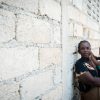
Doctors Without Borders Halts Operations in Haiti Amid Threats from
Doctors Without Borders, the medical humanitarian organization, which has served in Haiti for over 30 years, announced on Wednesday that it would suspend its activities in Port-au-Prince, Haiti’s capital amid repeated threats from local law enforcement. This announcement indicates the precariousness of the situation in Haiti where humanitarian groups on the ground face security issues from even members of law enforcement.
The Overlooked Crisis of Domestic Violence in the Workforce
In Indonesia’s humid heat, I watched as dozens of men on motorcycles lingered outside the garment factory gates, their children hanging off their shoulders, as they waited for their partners to finish their shift. These men – many without jobs of their own – came to pick up the women who provide for their families.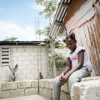
Contingent Mission in Haiti Exacerbates Gang Offensives
Over the past week, the deployment of the Multinational Security Support Mission (MSS) in Haiti and extended efforts by the Haitian National Police has led to local gangs ramping up their offensives in order to hold onto their territories. Humanitarian organizations fear that displacement will skyrocket without more efficient security controls and relief responses.
‘The International Community Must Stop Turning a Blind Eye to the Suffering of Sudanese Women’
CIVICUS discusses Sudan’s civil war and its impact on women with Sulaima Elkhalifa, a Sudanese human rights defender and expert on gender-based violence.
Governments Must Ease Pressure on Families to Stop Children Slipping Through the Cracks
From the cost-of-living crisis to the impacts of war, cuts to social protection and even climate change, families worldwide are facing a combination of pressures that test their capacity to cope and care for children.
‘Ending impunity for violations of Palestinians’ rights would strengthen global norms that protect all humanity’
CIVICUS discusses the gender dimensions of genocide in Gaza with Kifaya Khraim, International Advocacy Coordinator at the Women’s Centre for Legal Aid and Counselling (WCLAC). Founded in 1991, WCLAC is a feminist organisation that documents Israeli violations against Palestinian women and uses this evidence for international advocacy.
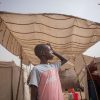
Sudan Faces Esclations in Famine, Humanitarian Law Violations
After 19 months of conflict, the ongoing Sudanese Civil War continues to deteriorate living conditions for millions of Sudanese people. Intensive conflicts between the Rapid Support Forces (RSF) and the Sudanese Armed Forces (SAF) have greatly exacerbated nationwide levels of famine. Numerous civilians have been caught in the crossfire, leading to a rising death toll. Sexual violence and rape have been used as weapons of war, with thousands of cases going unreported due to a pervasive state of fear. Sudan has seen record numbers in displacement, becoming one of the biggest displacement crises in the world.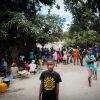
Haiti’s Transition of Power Predicted to Worsen Gang Violence
Gang violence has ravaged Haiti, causing thousands of civilian deaths, displacements, and violations of international humanitarian law. Turmoil is expected to escalate following the removal of Haitian Prime Minister Garry Conille from office on November 11.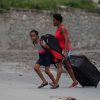
Conditions Deteriorate from Persisting Gang Violence in Haiti
Due to worsening political instability, escalating gang violence, and a lack of basic services, Haiti is in the midst of one of the most severe humanitarian crises in the world. According to a 2024 ACAPS report, gangs have seized 85 percent of the nation’s capital, Port-Au-Prince, resulting in over 700,000 displaced persons.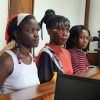
Meet the Young Women Arrested for Fighting Corruption in Uganda
Until recently, Margaret Natabi would never have dreamed of taking her anti-corruption fight on the streets of Uganda’s capital, Kampala.« Previous Page — Next Page »





One in three women around the world have been subject to violence. Women face physical, sexual, and psychological violence in both public and private. Taking forms such as violence in the intimacy of a relationship, human trafficking, and sexual exploitation, gender violence is an issue that affects women in all countries. Only two-thirds of countries have outlawed domestic violence, leaving millions of women unprotected from abuse including from marital and de facto partners in many cases. Additionally, through human trafficking countless women are subjected to sexual exploitation and sexual violence, including horrific acts such as genital mutilation. Today many actors from individuals, to multinational organizations work to address these issues. These articles help to shed light on the violence that women experience every day and how its is being addressed.

The Week with IPS

Tracking global progress towards a sustainable world
