Languages
Thursday, November 19, 2026



News and Views from the Global South
Gender
HEALTH: Breaking the Vicious Circle of Sexism, Poverty and AIDS
An ambitious plan to curb extreme poverty and promote gender equality in the next decade will not get off the ground unless governments in the world's least developed countries put the HIV/AIDS pandemic at the top of their agendas, said U.N. experts yesterday.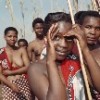
RIGHTS-SWAZILAND: For Women, Constitution Is a Curate’s Egg
There are several reasons why women's rights activists might welcome Swaziland's new constitution, intended to replace the document that was suspended by King Sobhuza in 1973. Then again, there are also reasons why they might not.CORRECTED REPEAT*/RIGHTS-US: Legal Limbo for Battered Women Seeking Asylum
Shortly before he left office, former Attorney-General John Ashcroft told employees at the Department of Justice that the United States is "a freer nation than before because our families can live peacefully in their communities, our wives, daughters and mothers can travel the streets safely, and our children are turning away from illegal drugs."ARGENTINA: Maternal Mortality Claims Increasingly Younger Victims
Almost one-third of the maternal deaths reported in Argentina result from abortion, which is illegal in this South American nation, and a growing number of the fatalities correspond to women under the age of 20, including girls as young as 10.DEVELOPMENT: Wanted: Decent Jobs for Millions of Poor People
When government leaders from around the world gathered in Copenhagen in 1995, they pledged to take decisive action to end extreme poverty and bring gender equality for women in all walks of life.HEALTH-KENYA: Do Safer Births Require a Break With Tradition?
"I use a razor, scissors and thread," says traditional midwife Peris Machanja, describing part of her work in delivering a baby. "Sometimes I use gloves, which I disinfect to use for another job – that is, if they are not torn. If they are, I try to get new ones."POLITICS-CHILE: A Woman’s Place Is on the Campaign Trail
With two women - Socialist Michelle Bachelet and Social Democrat Soledad Alvear - as the leading contenders for the presidential nomination by the ruling centre-left coalition, the opposition is hoping to boost its popularity by "feminising" its own campaign.HEALTH-ASIA: Region Primed for an AIDS Disaster, Experts Warn
Asia is poised on the brink of an HIV/AIDS explosion unless governments take radical steps to rein in the disease, as well as the social and economic problems fuelling its spread, a prominent AIDS expert said Wednesday in New York.POLITICS: Military Gobbles Funds Earmarked for Social Development
The rise in global defence spending and the ongoing war on terrorism are diverting scarce economic resources from social development to the military, says a new U.N. report released here.RIGHTS-CHILE: Sexual Harassment Law Finally Approved After 13 Years
After taking 13 years to make its way through Congress, a law against sexual harassment in the workplace has been unanimously approved by the Senate in Chile, where an estimated 20 percent of working women are subjected to this form of abuse.GUATEMALA: Women’s Lives Are Worth Nothing, Say Anti-Violence Activists
Luz Marina Aragón, a 44-year-old Nicaraguan woman, was murdered and chopped into pieces, which were put into plastic bags and cardboard boxes and scattered around Guatemala City. While her case is especially gruesome, it is just one of the 489 murders of women reported in Guatemala this year.CUBA: Sexual and Reproductive Health Requires Cultural Changes
Adriana was just two years old when she asked her mother what "dialectic" meant. Now she is 14 and understands that it roughly means that "the world is in a ceaseless state of movement and change." But she has new questions.LATIN AMERICA: Pension Reforms Hit Women Hard
Changes to pension systems in Latin America have heightened gender-based discrimination and will lead to greater poverty and vulnerability among women if corrective measures are not adopted, according to Sonia Montaño, chief of the ECLAC Women and Development Unit.WOMEN: Contraception, the Missing Link in the Millennium Development Goals
A woman who only has children if and when she wants to will be better able to work and to cover her family's needs in terms of food, education and health care.RIGHTS-LATIN AMERICA: Women – the Invisible Victims
Latin America and the Caribbean have up-to-date statistics on inflation, trade, GDP growth and other economic indicators. But there are few to no hard figures on violence against women, a problem that reportedly affects as many as four or five women out of 10 in the region.RIGHTS-BRAZIL: Focusing on Men to Combat Violence Against Women
Brazilian television viewers witnessed an unusual scene on Thursday: a soccer player commits a foul, not against a member of the other team, but rather against one of his own team-mates, and mayhem erupts on the field. "Wherever there's violence, everyone loses," declares a voiceover.POLITICS-NEPAL: Women Now Swelling the Ranks of Maoists
Striking images of young women in fatigues, rifles hoisted on their shoulders and purposefully marching forward, stare back when one clicks on the official website of the Communist Party of Nepal (Maoist).AFGHAN ELECTIONS: Women Get to Sing and Want a Place in Mosques
In a move to exercise their rights in a new government to be headed by incumbent President Hamid Karzai, Afghan women have asked for separate places to worship in Afghanistan's mosques venturing for the first time into a controversy that has divided religious authorities in the war-torn country for years.RELIGION: Headscarves Now on German Minds
After a period of what many felt was collective suspicion, Germany's Muslims are searching new ways of recovering identity.RIGHTS: Women’s Discrimination Now a Global Concern – UN
More time, not a new deadline, is needed for universal ratification of the convention to eliminate discrimination against women, says Feride Acar, chairperson of the U.N. committee on the convention.POPULATION-U.S.: Bush Extends Jihad Against UNFPA
In what critics are calling its latest slap at women and multilateralism, the administration of U.S. President George W Bush announced Friday that the 34 million dollars Congress had earmarked for the U.N. Population Fund (UNFPA) will be used for other purposes.« Previous Page — Next Page »


Women make up half the world's population, but don't nearly share half of the world's wealth, well-being and opportunity. Two-thirds of the world poor are women, disproportionally exposing women to precarious living conditions, disease and unmitigated natural disasters. The media, meanwhile, remains a male-dominated sector in much of the world, contributing to women's voices lacking a crucial amplifier to put their concerns on political agendas and unleash the development potential of their ingenuity. Rather than then stereotypical victims of local and global forces, women are also organizer, innovators, conservators and community builders. These are some of their stories.

The Week with IPS

NEXT STOP - SDGs
Tracking global progress towards a sustainable world
Tracking global progress towards a sustainable world
