Languages
Tuesday, October 13, 2026



News and Views from the Global South
Gender

International Women’s Day, 2023

From the earliest days of computing to the present age of virtual reality and artificial intelligence… …women have made untold contributions to the digital world in which we increasingly live.

Why Do 800 Mothers a Day – 1 Every 2 Minutes– Die from Preventable Causes?
The answer is that there are alarming setbacks for maternal health care and, in many cases, even a total lack of maternity services, which threaten to further raise the number of these tragic preventable deaths one million or more a year by 2030.
Our AIDS Response Must Acknowledge and Bridge Gendered Digital Inequalities
Recent crises have pushed the gender inequality gap even wider and new technology has brought new threats to women’s autonomy and safety. This year’s International Women's Day celebrated under the theme “DigitALL: Innovation and technology for gender equality” is an opportunity to strengthen efforts to uplift and empower women and girls’ digital participation to ultimately improve their lives.
International Women’s Day, 2023
Five Sharp Questions on Female Empowerment
International Women's Day is right around the corner and it presents an obvious opportunity to dig into what female and empowerment means for different people.

International Women’s Day, 2023
Promoting Gender Equality and Closing the Digital Divide
The accelerating pace of digitalization has ushered humanity into a whole different era of information and communication. Today, digitalization permeates every aspect of our lives, socio-economically and politically.

International Women’s Day, 2023
Her Land, Her Rights: Advancing Gender Equality & Land Restoration Goals
When it comes to land, gender inequalities are pervasive. Today, nearly half of the global agricultural workforce is female – yet less than one in five landholders worldwide are women 1.

Hate Attacks Against LGBTQI People Increase in Europe – Report
When D.A.* first heard about the fatal attack on a gay bar in the Slovak capital, Bratislava, last October, their first reaction was a mix of grief, shock and anger. But then, soon after, the university student and member of the country’s LGBTQI community immediately began to worry.
Digital Gender Gap in Latin America Reflects Discrimination Against Women
The digital gender gap is multifactorial in Latin America and as long as countries fail to address discrimination against women, inequality will be reflected in the digital space, excluding them from access to opportunities and enjoyment of their rights.
International Women’s Day, 2023
To Strengthen Women’s Resilience to Disasters, Make Wealthiest Pay Their Fair Share
She will be called Aya. This is the name that nurses gave to the infant baby pulled from the rubble of a five-story building in Jinderis, northern Syria. A miracle. Beside her, the rescuers found her mother, dead.

International Women’s Day, 2023
A New Global Architecture to Defend & Promote Rights of Women & Girls
If you want to have a good reading on women and young girls’ activism, there is a high chance that you have missed an incredibly interesting report.

Forget ChatGPT: The Greatest Tech Breakthrough Would Be Getting Cell Phones to Rural Women
While 100 million people worldwide are using the AI chatbot ChatGPT to get ahead on homework and try out for top jobs at Google, more than 370 million women in developing countries lack the services of a simple cell phone.
Racist Political System Thwarts Candidacy of Mayan Woman in Guatemala
Centuries of racism and exclusion suffered by indigenous peoples in Guatemala continue to weigh heavily, as demonstrated by the denial of the registration of a political party that is promoting the presidential candidacy of indigenous leader Thelma Cabrera in the upcoming general elections.
International Women’s Day, 2023
Unleashing Our Region’s Most Untapped Potential: Harnessing the Digital Age to Empower Women & Girls
New technologies and innovations are reshaping our world and its future, often at a dizzying pace. Yet women and girls continue to be left behind in this burgeoning digital universe. How, then, can we harness these developments to create a better future for all of us?

Russia and Ukraine: Civil Society Repression and Response
Over the year since the start of Russia’s war on Ukraine, on one side of the border civil society has shown itself to be a vital part of the effort to save lives and protect rights – but on the other, it’s been repressed more ruthlessly than ever.
Beyond Zero Discrimination: A New Social Contract for Health and Care Workers
While its origins may be rooted in the discrimination faced by people living with HIV, Zero Discrimination Day has evolved to celebrate commitments to the fundamental human right of being treated equally in law and in practice.
Gender Central to Parliamentarians’ Programme of Action
The post-COVID-19 period has been a crucial one for members of parliament who have their work cut out to ensure that issues that arose during the pandemic are addressed, especially concerning the ICPD25 commitments and programmes of action for universal access to sexual and reproductive rights, gender-based violence and building peaceful, just and inclusive societies. Across the world, progress toward achieving the SDGs by 2030 was impacted during the pandemic.
In Zimbabwe, Economic Crisis Pushes Underaged Girls to Sex Work
After other adolescent girls her age have gone to bed at around 10 pm, Kudzai commutes to a shopping centre near her home in Penhalonga, a mining area 25 kilometres outside the third largest Zimbabwean city of Mutare, to look for men to solicit sex.
BRAC ‘Resets’ Program Aimed at Empowering Adolescent Girls in Africa
BRAC’s Empowerment and Livelihood Program (ELA) has benefitted tens of thousands of girls, and its recently released report shows an organization willing to adapt to the circumstances to continue to ensure adolescent girls and young women receive meaningful sexual and reproductive health rights support.
Pakistan’s Free Healthcare Insurance Benefits Women, Poor
A free health insurance initiative started in Pakistan has benefited poor patients, especially women who have outnumbered men in using the cashless health services under the Sehat Card Plus programme. "The initiative is in line with the ICPD25 Programme of Action, under which 4.5 million people have received free services, with 62 percent of them women. In the last three years, we have been able to cut down maternal mortality rate from 186 deaths per 100,000 live births to 172," Dr Muhammad Riaz Tanoli, CEO of the Sehat Card Plus (SCP), told IPS.
Taking a Stance on Feminists’ Prejudice Against Religious Minority Women
Since researching the experiences of gender discrimination against women in poverty who belong to religious minorities, many fellow feminists have turned their back on me.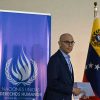
Venezuela: The End of Civil Society as We Know It?
In late January, the UN High Commissioner for Human Rights, Volker Türk, finished an official visit to Venezuela. He said he’d found a fragmented society in great need of bridging its divides and encouraged the government to take the lead in listening to civil society concerns and responding to victims of rights violations.« Previous Page — Next Page »





Women make up half the world's population, but don't nearly share half of the world's wealth, well-being and opportunity. Two-thirds of the world poor are women, disproportionally exposing women to precarious living conditions, disease and unmitigated natural disasters. The media, meanwhile, remains a male-dominated sector in much of the world, contributing to women's voices lacking a crucial amplifier to put their concerns on political agendas and unleash the development potential of their ingenuity. Rather than then stereotypical victims of local and global forces, women are also organizer, innovators, conservators and community builders. These are some of their stories.

The Week with IPS

NEXT STOP - SDGs
Tracking global progress towards a sustainable world
Tracking global progress towards a sustainable world
