Languages
Monday, August 24, 2026



News and Views from the Global South
Eye on the IFIs

Q&A: Crises Are Left for Another Day…
The Doha Financing for Development Conference is over and many are now wondering how it went and what really happened. Sylvia Borren, co-chair of the Global Call to Action Against Poverty (GCAP), was there.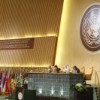
DEVELOPMENT: ‘No Bailout Plan for the Vulnerable’
"Good but not enough!" "Missed opportunity!" "Talks fail to deliver!" These were some of the reactions from civil society as the U.N. Financing for Development (FfD) talks drew to a close in Doha, Qatar, on Tuesday.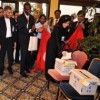
DEVELOPMENT: 'G192' Urged to Put People in Doha Talks
The demand is seemingly simple. ‘Vote for democratic, people-centred development’, advise civil society at the ongoing inter-governmental review of the Monterrey Consensus in Doha, Qatar.INDONESIA: Saying No, Thank You to IMF Loans
When the Asian financial crisis struck a decade ago, savaging South-east Asian economies, including Indonesia, Jakarta turned to the International Monetary Fund (IMF) for help in getting the country back on its feet.POLITICS: World Bank, IMF Heads Under Fire for Skipping Summit
The chief executive officers of the World Bank and the International Monetary Fund (IMF), two financial institutions based in Washington, have come under heavy fire for their decision to skip a major U.N. conference on Financing for Development (FfD), scheduled to take place in the Qatari capital Doha over the weekend.POLITICS: Greybeards Urge Overhaul of Global Governance
Capping a nearly two-year consultation involving dozens of U.S. and international leaders, a new report by three U.S. think tanks is calling on President-elect Barack Obama and other leaders to implement sweeping reforms in global governance to more effectively tackle shared regional and global threats over the next half century.HEALTH-AFRICA: Who Is To Blame for the Crisis?
Health systems on the continent are riddled with inadequate policies, strategies, lack of institutional capacity, poor scientific review mechanisms and weak funding for research in the public and private sector, said Luis Sambo, regional director of the World Health Organisation (WHO) in Africa.
ECONOMY: Scepticism Greets G20 Attempt to Make History
Leaders of the world's 20 biggest economies emerged from weekend crisis talks with an apparent sense of historical accomplishment but key audiences seemed sceptical.
Q&A: "Wanted: A New Global Deal"
A United Nations conference on Financing for Development (FfD) is scheduled to take place in Doha, Qatar, next week against the backdrop of a devastating global economic crisis that has threatened to undermine the basic foundations of Anglo-Saxon capitalism.ECONOMY: Crisis Talks to Confront Dueling Demands
Leaders of the world's 20 biggest economies will confront dueling demands for action when they gather here Saturday in the highest-level acknowledgement so far that the global economy is in crisis.ECONOMY: Emerging G20 Consensus on Solutions to Crisis
For now, a consensus seems to prevail in the Group of 20 (G20) major industrialised and emerging nations, whose finance ministers and central bank presidents ended their 10th annual meeting Sunday, which took on a high profile due to the global financial crisis.ECONOMY: G20 in New North-South Battle
Brazilian President Luiz Inacio Lula da Silva called for "a pact between governments to create a new global financial architecture," while stressing the need to open up the global financial bodies controlled by the industrialised world to emerging economies.ECONOMY: Turning the Pages Back to Marx and Keynes
Among the few things whose sales are picking up in these recessionary times are the works of Karl Marx and John Maynard Keynes. Both, in their own way, argue a central role for the state in managing the economy.RIGHTS: Security Council Could Produce Insecurity
International institutions like the World Trade Organisation or the International Monetary Fund are slowly adapting to the growing economic impact of emerging countries. Even the informal club par excellence, the G8, is bound to open its doors for developing countries. There is one powerful institution though, that seems unable to adapt to the changing realities: the Security Council of the United Nations.FINANCE: Watchdogs Criticise World Bank, IMF Mega Projects
The World Bank and International Monetary Fund (IMF) came under fire last week for failing to adequately promote transparency in extractive industry operations in resource-rich countries where the two institutions work.HAITI: Activists Urge World Bank to Erase Crippling Debt
On a recent visit to the hurricane-ravaged island of Haiti, World Bank President Robert Zoellick declared that 500 million dollars of Haiti's 1.7-billion-dollar foreign debt had been cancelled, and the rest would be soon be written off as well.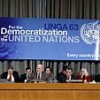
FINANCE: Revolt Against “Elite Clubs” Grows at U.N.
U.N. member states and economists challenged the neo-liberal policies of market deregulation that have long been promoted by powerful global financial institutions like the World Bank and International Monetary Fund (IMF), and called Thursday for a new, more inclusive global financial architecture.FINANCE: NGOs Call for Radical Reforms as IMF Offers New Loans
Two weeks before U.S. President George W. Bush hosts an economic summit to address the six-week-old financial crisis that has wreaked havoc on the world's capital and stock markets, a coalition of nearly 600 non-governmental organisations (NGOs) from 88 countries is calling for a "fundamental and far-reaching transformation on the international financial and economic system."DEVELOPMENT: Bretton Woods II: New Lifeline for Ailing Giants
Europe, by way of the hyperactive French President Nicolas Sarkozy, demands a Bretton Woods II, that is, a major shake-up of the International Monetary Fund (IMF) and the World Bank. This is as much a rescue operation for two organisations that have lost muscle as a call for a new financial architecture.DEVELOPMENT: Democracy Comes to World Institutions, Slowly
Power and democracy don't go together well in global governance. The most powerful global institutions are the least democratic, but things are changing. Slowly.ECONOMY: Poor Sidelined in Rush to Contain Financial Crisis
The worst market crisis since the 1930s has dominated financial leaders' talks here, stoking misgivings that the world's poor are being overlooked.« Previous Page — Next Page »


They underpin the world's financial architecture, with the power to revamp whole economies and channel billions of development dollars each year. But the so-called International Financial Institutions -- the World Bank Group, International Monetary Fund and regional investment banks -- face a new era of public scrutiny and challenges to their relevancy. How are the IFIs responding to growing demands from the South and civil society groups for greater democracy and accountability? And are they living up to their stated mission of promoting economic prosperity for all? IPS reports.

The Week with IPS

NEXT STOP - SDGs
Tracking global progress towards a sustainable world
Tracking global progress towards a sustainable world
