Languages
Thursday, November 19, 2026



News and Views from the Global South
Global Geopolitics
Postponing Emissions Cuts Carries Steep Price-tag
If we're lucky, by the time a tough but fair international treaty to meet the climate change challenge is finalised, it will be largely unnecessary. The snail's pace of negotiations certainly gives countries plenty of time to understand the financial, social and environmental advantages of kicking their dangerous addiction to fossil fuels.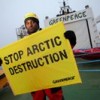
OP-ED: Drilling Deep Mistakes in the Arctic
Nuuk is a long way from my hometown of Durban, and the Arctic is a long way for an African to come to campaign about climate change. Yet, here I sit, in a jail cell, with my colleague Ulvar Arnkvaern, in the ‘Institution’, a prison in Greenland’s capital. I sit here for breaching an exclusion zone and climbing aboard a dangerous deep water drilling rig some 120 km off Greenland’s coast.Another Push for Reproductive Rights
By 2015, women demanding family planning products and services in the developing world will likely reach 933 million, a terrific increase from the current 818 million women demanding access to these basic reproductive commodities.U.N. Political Body Digresses into “Non-Security” Issues
When the U.N. Security Council, the only political body empowered to declare war and peace, decided to include climate change on its agenda back in 2007, the 131-member Group of 77 (G77) launched a vociferous protest.Developing Countries Pledging More Emissions Cuts Than Industrial North
Negotiations over a new international climate agreement are on the brink as new analyses show that carbon emission reduction promises by industrialised nations are actually lower than those made by China, India, Brazil and other developing nations. Even with all the promises or pledges added together they are still far short of cuts needed to prevent global temperatures from rising two degrees Celsius, experts reported here.Turkey Recalibrating Regional Role
As thousands of Syrian refugees pour over the Turkish border, the just re- elected government in Ankara is confronting the limits of its "no problems" policy toward its neighbours.
LABOUR: Neither Servants nor Family Members, Simply Workers
The world's tens of millions of domestic workers finally won international recognition that they have the same basic labour rights as other workers, in a convention adopted Thursday at the annual meeting of the ILO.U.S.: Neoconservatives Losing Hold Over Republican Foreign Policy
Nearly ten years after seizing control of Republican foreign policy, neo- conservatives and other hawks appear to be losing it.OP-ED: G20 Ministers of Agriculture Must Focus on Smallholder Farmers
The first-ever official meeting of Ministers of Agriculture from G20 countries, to be held in Paris Jun. 22-23, presents an extraordinary opportunity. Tasked with developing an action plan to address price volatility in food and agricultural markets and its impact on the poor, the ministers are uniquely positioned to not only tackle the immediate price volatility problems, but also to take on a more fundamental and long-term challenge - extreme poverty and hunger.U.N. Still Lags Far Behind on Gay, Lesbian Rights
The United Nations is lagging far behind some of its own member states in recognising the rights of gays and lesbians who remain closeted in an institution that does not always practice what it preaches to the outside world.Women’s Groups Unite Ahead of Busan Aid Forum
Twenty women from four continents consider the words discussion leader Anne Schoenstein, of the Association for Women’s Rights in Development (AWID), has written on a flip chart. She strikes out in blue ink a previous sentence. She begins writing a new one - a demand aimed at aid donors - dictated by Nurgul Djanaeva.Q&A: Universal Energy Access is Possible With the Right Support
Providing electricity and modern cooking technology to billions of ‘energy poor’ people worldwide is one of the priorities of the U.N.’s Millennium Development Goals (MDGs) - one that experts say is achievable over the next few decades.ICC Urged to Accept ‘Ecocide’ as an International Crime
Images of the immense, dark stain of oil covering the waters of the Gulf of Mexico made their way across the globe last year as one of the largest oil spills in history unfolded. Other images - of the ‘Great Pacific Garbage Patch’, a gigantic pile of litter floating in the North Pacific Ocean; of countless felled trees in the Amazon; of tar sands in Canada - have gained much fewer headlines, but are likely to remain as monuments to the price tag of wanton human appetites.Climate Regulatory Gap Could Result After 2012 Kyoto Expiration
The growing awareness that the ongoing U.N. climate change talks here won't deliver a treaty to extend the international governance regime on reducing greenhouse gas emissions after 2012, is driving environmental experts to foster alternative solutions to global warming.Rule of Law Strongest in Rich Nations, Weakest in Poor
The rule of law - a critical element of good governance - thrives best in Norway, Sweden, and New Zealand and worst in Pakistan, Liberia, Cameroon, Cambodia, Kenya and Venezuela, according to the latest edition of a four-year-old index released Monday by the World Justice Project (WJP).Reducing Soot and Smog Would Help Stabilise Climate
Clean the air, cool the planet and prevent millions of deaths with fast action on soot and smog, a new report urges.Corporate Influence Clouds Vaccine Pledging Conference
Between 2011 and 2012, 6.4 million children could die of preventable diseases, a number greater than the total population of Denmark or Norway.
Industrial Food Production Fuels Spread of E. Coli
In the 1998 medical thriller "Toxin" by U.S. novelist Robin Cook, the ground beef in hamburgers is contaminated with a deadly strain of the Escherichia coli or E. coli bacterium, unleashing a massive epidemic. The novel was inspired by a real outbreak that had taken place several years earlier.
Q&A: “Women Have Yielded the Cooking Profession to Men”
"Women didn't want to be slaves any more, or work professionally at what they were trying to liberate themselves from," renowned Venezuelan chef Helena Ibarra told IPS, explaining why women have taken so long to compete in a workplace as symbolically feminine as the kitchen.Canada Spurns Kyoto in Favour of Tar Sands
Canada was roundly criticised by other nations at a major U.N. climate meeting last week after being caught underreporting carbon emissions from its tar sands oil production facilities, one of the country's biggest and fastest growing sources of global warming gases.OP-ED: Global CO2 Emissions Reach a New Record High
The alarm bells this time are not being rung by climate scientists or by environmental activists. They are being rung by none other than the International Energy Agency (IEA) - the institution established in the 1970s to defend the interests of Western oil consuming nations.« Previous Page — Next Page »


Is the world dominated by three great empires -- the U.S.A, China and the European Union? How much power do the great behemoths of the south -- India, Brazil, and South Africa -- wield? And where does Russia fit in that equation? Are we in the middle of a new Cold War? What are the implications of the armed conflict with Georgia? What about the new axis: Venezuela-Russia? And what role does Turkey play? What about issues like Climate Change and other global forces like the food crisis and the high energy prices? How is all this reshaping the world's forces? IPS looks for some answers.

The Week with IPS

NEXT STOP - SDGs
Tracking global progress towards a sustainable world
Tracking global progress towards a sustainable world
