Languages
Thursday, November 19, 2026



News and Views from the Global South
Global Geopolitics
AIDS Funding Gap Threatens Treatment Targets
A staggering nine million people are still awaiting HIV treatment, yet the 22 billion dollars the Joint United Nations Programme on HIV/AIDS (UNAIDS) says is needed to give them access to medicine and care has far from materialised.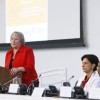
Thirty Years On, AIDS Epidemic a Women’s Battle
As world leaders gather in New York for a high-level conference on HIV/AIDS, United Nations agency heads, goodwill ambassadors and activists alike hope they will remember the virus's most vulnerable victims: women and girls.Russia, China Shield Syria from Possible U.N. Sanctions
A resolution inspired by Western nations critical of civilian killings in politically-beleaguered Syria is facing threats from two veto-wielding permanent members of the Security Council: Russia and China.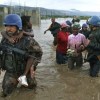
Millions May Soon Be Fleeing the Floodwaters
Mass migration will inevitably be part of human adaptation to climate change, experts agree, since parts of the world will become uninhabitable in the coming decades.Turning Toward the Sun for Energy
One key component of the Plan B climate stabilisation strategy is solar energy. Solar is even more ubiquitous than wind energy and can be harnessed with both solar photovoltaics (PV) and solar thermal collectors.OP-ED: Religion, Revolution and Two Languages
The elderly Venerable Tep Vong, the Supreme Patriarch of the Buddhist community in Cambodia, traveled to Jaffna in Sri Lanka in the midst of the recent civil war. In a broken city under siege, he joined others - Buddhists, Hindus, Muslims and Christians - to try to bring a peaceful end to the violent separatist conflict.
Q&A: “Warts and All, Peacekeeping Works”
U.N. peacekeeping missions face myriad problems but they remain the most effective strategy for dealing with post- conflict situations, says Page Fortna, a political science professor at Columbia University who has extensively researched the impact of various missions around the world.Cautious Push Ahead for Nuclear Energy
Seeking to calm public opinion about the dangers of nuclear energy, government ministers and other representatives from 33 countries have agreed to carry out safety audits and "stress tests" on nuclear plants.Female Journalists Break Silence on Sexual Violence
On Feb. 11, while the world was celebrating former Egyptian president Hosni Mubarak's fall from power, CBS television correspondent Lara Logan was being "mercilessly assaulted" by a group of well over 200 men in a dark corner of Tahrir Square.Solid Growth Forecast for Global South, But Threats Loom
While most of the developing world should enjoy solid economic growth through 2013, several factors could upset such a scenario, according to the latest Global Economic Prospects (GEP) report released by the World Bank here Tuesday.Rich Nations Wage Assault on Generic AIDS Drugs
Moves by developed nations such as the United States to tighten intellectual property laws are threatening to limit production and distribution of generic drugs, which experts say have been and will remain key in the prevention and treatment of HIV/AIDS and currently account for 80 percent of HIV/AIDS treatment.Nukes Decline, But Disarmament Still a Distant Horizon
The world's eight nuclear states - the United States, Britain, Russia, France, China, India, Pakistan and Israel - collectively possess more than 20,500 nuclear weapons - a decline of over 2,000 since 2009.
Q&A: “The U.N. Overlooks Native Rights in Developed Countries”
The United Nations has largely overlooked the plight of indigenous peoples in developed countries, says Crystal Lee, a Native American activist from the Navajo tribe.
Cities Join Forces to Fight Global Warming
Given that the world's 40 biggest cities account for eight percent of the global population and 12 percent of global greenhouse gas emissions, local governments play an increasingly important role in confronting climate change.Urban Transformation for Interethnic Cities
Urban centres, marked by globalisation, migration and the intermingling of culturally and ethnically diverse communities were among the major topics of the International Conference on the Inter-ethnic City held in Rome last week on the eve of the celebrations of Italy’s national day.Governments and Powers-That-Be Fear the Internet
The global reach of the internet, and its ability to transmit information in real time and mobilise populations, creates fear among governments and the powerful, says Frank La Rue, United Nations Special Rapporteur on the promotion and protection of the right to freedom of opinion and expression.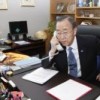
U.N. Chief Seeks Second Five-Year Term from 2012
U.N. Secretary-General Ban Ki-moon, who completes his five- year term by the end of this year, offered himself "for consideration" for a second five-year term as chief administrative officer of the world body.BELARUS: Despite Crackdown, Opposition is Defiant
President Alexander Lukashenko has locked most of his rivals in jail, but the Belarus opposition continues to work diligently to isolate the dictator.Bike vs Car on a Hot Planet
As global carbon emissions hit record-high levels last year, officials from leading Asian nations told the 2011 International Transport Forum in nearby Leipzig that their citizens want more cars.OP-ED: Climate Talks: Voices of the Vulnerable Must Be Heard
Last week, the world received a warning. A disturbing report from the International Energy Agency, the respected international authority on energy policy, found that CO2 emissions in 2010 were the highest ever recorded.U.S. Plan to Boost Nuke Spending Undercuts Nonproliferation, Activists Warn
A Pentagon plan to step up spending on nuclear weaponry would severely undermine global efforts geared towards disarmament, warn independent analysts on U.S. nuclear policy.« Previous Page — Next Page »


Is the world dominated by three great empires -- the U.S.A, China and the European Union? How much power do the great behemoths of the south -- India, Brazil, and South Africa -- wield? And where does Russia fit in that equation? Are we in the middle of a new Cold War? What are the implications of the armed conflict with Georgia? What about the new axis: Venezuela-Russia? And what role does Turkey play? What about issues like Climate Change and other global forces like the food crisis and the high energy prices? How is all this reshaping the world's forces? IPS looks for some answers.

The Week with IPS

NEXT STOP - SDGs
Tracking global progress towards a sustainable world
Tracking global progress towards a sustainable world
