Languages
Saturday, November 21, 2026



News and Views from the Global South
Global Geopolitics
CLIMATE CHANGE: 75 Million Environmental Refugees to Plague Asia-Pacific
Pacific Islanders, aiming to secure their very survival, are calling for immediate commitments from the developed world to reduce greenhouse gas emissions by at least 45 percent by 2020.
Q&A: 'Time to De-Grow'
Serge Latouche, professor emeritus of economic science at the University of Paris-Sud, is one of the main proponents of "the society of de-growth".HAITI: Aid Flowing, But Food Crisis Drags On
Though beleaguered with their own financial problems, donor countries say they are not planning to withdraw financial support for cash-strapped Haiti.BURMA: Suu Kyi’s Trial Gives Rare Glimpse into Burma’s Judicial System
A political trial in Burma that could prolong its pro-democracy icon’s isolation by five more years has opened a rare window for the international community to judge the quality of justice in the military-ruled country.RIGHTS: U.N. Body Relentlessly Pursues Women's Equality
The U.N. Committee on the Elimination of Discrimination Against Women (CEDAW) is known to publicly castigate countries accused of gender discrimination or violating international conventions governing women's rights.EDUCATION: Liberty, e-Quality, Humanity
This city of 100,000 people in the southernmost Brazilian state of Rio Grande do Sul is named after the leader of the 1835-1845 Revoluçao Farroupilha (Ragged Revolution), which under the slogan "Liberty, Equality, Humanity" resulted in the independence of the state from the Brazilian empire. At an international conference here today, peaceful revolutionaries are furthering similar ideals.CHINA: U.S. Nervous About China's Growing Footprint Across Africa
China’s "no strings attached" financial assistance to developing countries in Africa and Asia has come under scrutiny during the recent high-level talks between Chinese and US leaders.
Q&A: About Peas in a Pod
Slow Food, obviously, is the opposite of fast food. And it's a movement now with more than 100,000 members in 132 countries. But what does "slow food" mean in practical terms?BIODIVERSITY: Tight Controls Could Save Global Fisheries
The global race to catch the last fish left in the oceans has been successfully halted in a few regions and fish stocks have rebounded, a new landmark study has found.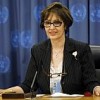
Q&A: "Changing Stereotypes of Women Is the Starting Point"
For the last 10 days, experts from the U.N. Committee on the Elimination of All Forms of Discrimination Against Women (CEDAW) have been reviewing the status of women's rights in 11 countries.CLIMATE CHANGE: Publics See Warming as Urgent, Govts as Failing
A poll of 19 nations released here Wednesday reveals that majorities in most countries believe climate change should be a high priority for their governments, but relatively few thought that their leaders were doing enough about the problem.POLITICS: U.N. Calls for "Green Zone" in Strife-Torn Somalia
Somalia, a perpetually violence-prone country described as one of the world's failed states, may go the way of Iraq.
Q&A: Brazil’s Lesson to the World: Invest in Family Farming
Kanayo F. Nwanze chose Brazil for his first official visit as the recently elected president of the International Fund for Agricultural Development (IFAD), and was pleased to personally attest to President Luiz Inácio Lula da Silva’s commitment to family farming.ENVIRONMENT: Rich Nations Vulnerable to Water Disasters
The growing shortage of water - a perennial problem in the world's poorer nations - is expected to eventually reach the rich nations in the Western world.POLITICS-BURMA: U.S., E.U. Mull New Burma Policy
They may be far from ditching the sanctions imposed on Burma, but there are emerging signs that U.S. and European nations might be open to reviewing a new approach to tackle one of the world’s most oppressive dictatorships.
ENVIRONMENT: Swedes Going Green in Emergency
Patients in Stockholm can now be rushed to hospital in an ambulance that runs on processed sewage.RIGHTS-US: Landmark Disability Treaty Wins U.S. Approval
On Friday, U.S. President Barack Obama announced his intention to sign the U.N. Convention on the Rights of Persons with Disabilities (CRPD), in what will be the U.S.'s first signing of an international human rights treaty in over a decade.SOUTH AMERICA: Brazil Outshines Regional Bloc
The enthusiasm for Brazil today on the economic front and the lead role played by its government in the international arena are in stark contrast with the inertia dogging the Southern Common Market (Mercosur), the regional integration project and trade bloc that has been one of its priorities since the 1980s.
POLITICS: How Far Should U.N. Go to Protect Civilians?
In what one U.N. official characterised as "a historical development", the General Assembly spent much of this week debating the principle of the Responsibility to Protect (R2P), which calls for the international community to intervene with diplomatic and, if necessary, military action, in cases of genocide, ethnic cleansing, war crimes, and crimes against humanity.U.S.: Obama Restores U.S. Intl Image to Pre-Bush Era
President Barack Obama has restored Washington's image virtually everywhere around the world close to the levels it enjoyed before former President George W. Bush took power in 2001, according to a major new international survey released here Thursday by the Pew Global Attitudes Project (GAP).POLITICS: U.N. to Live or Die by Its Policy Ideas
The United Nations has long been described - rather contemptuously - as one of the world's biggest talking shops.« Previous Page — Next Page »


Is the world dominated by three great empires -- the U.S.A, China and the European Union? How much power do the great behemoths of the south -- India, Brazil, and South Africa -- wield? And where does Russia fit in that equation? Are we in the middle of a new Cold War? What are the implications of the armed conflict with Georgia? What about the new axis: Venezuela-Russia? And what role does Turkey play? What about issues like Climate Change and other global forces like the food crisis and the high energy prices? How is all this reshaping the world's forces? IPS looks for some answers.

The Week with IPS

NEXT STOP - SDGs
Tracking global progress towards a sustainable world
Tracking global progress towards a sustainable world
