Languages
Tuesday, November 24, 2026



News and Views from the Global South
Global Geopolitics

Q&A: 'Olympics Used to Legitimise Chinese Rule in Tibet'
Pema Gyalpo was official representative of the Dalai Lama in Japan from 1975 to 1990. Founder of the Tibet Culture Centre International, he is known for his many books on Tibet, his columns in major newspapers, and as an international affairs expert.INDIA/US: New Deal in Nuclear Poker
As the political window of opportunity to conclude the United States-India civilian nuclear cooperation deal during George W. Bush’s presidency further narrows, the "now-it’s-off, now-it’s-on" game of political poker over the agreement has taken another turn in New Delhi.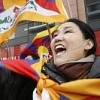
POLITICS: Tibet Bypasses Security Council Scrutiny
When the Security Council is called upon to deal with a crisis that threatens the political, military or economic interests of any of its five permanent members, the U.N.'s most powerful body acts predictably: it does nothing.POLITICS: Parliamentarians to Tackle Poverty
The link between global warming and poverty, and the effects of poverty on women, will be among the topics put in the spotlight during the 118th assembly of the Inter-Parliamentary Union (IPU), which takes place next month in the South African port city of Cape Town.ECONOMY: Workers Will Pay the Costs of Global Crisis
International union leaders warned representatives of governments and employers, and World Bank President Robert Zoellick, that the burden of the current financial turmoil will fall on the world’s workers.
Q&A: Europe Could Be Missing the Green Signal
Tackling climate change was presented as the most pressing task facing European Union governments during 2007. German Chancellor Angela Merkel, who held the EU's rotating presidency for part of the year, underscored how alarming the problems associated with melting glaciers and rising sea levels are when she declared: "It's not five minutes to midnight. It's five minutes after midnight".CLIMATE CHANGE: A Glacial Vanishing Act
Glaciers, the world's freshwater towers, continue their record-breaking meltdown, a new U.N. report shows.OIL: Price Bubble Could Burst in Medium Term
While oil prices recently soared to a record 111 dollars a barrel, fuelled by the weak U.S. dollar, analysts warn that the bubble will not last forever, and may burst in the medium term.DEVELOPMENT: Services Needs Poorly Served
Developing countries say they are unlikely to secure meaningful market access for their short-term contractual and independent services providers in developed countries during the ongoing Doha trade talks.
Q&A: 'China Is No Villain in Africa'
Instead of indulging in China bashing, major western industrial nations should listen to China and its partners in Africa and elsewhere, says Eckhard Deutscher, the new head of the influential Development Assistance Committee (DAC).TRADE-AFRICA: Liberalisation Eroding Poor Countries’ Advantage
The trade liberalisation of the past couple of decades is eroding the advantage that least developed countries (LDCs) enjoy in export markets as duty and quota free access has become less valuable.DEVELOPMENT: Women Seek to Put Equality at Core of Doha
When the second international conference on Financing for Development (FfD) takes place in Qatar come November, women activists are planning to pitch their tents in the capital of Doha in an attempt to demand concrete commitments for "gender equality" and "gender empowerment" from the 192 U.N. member states.CLIMATE CHANGE: Europe Stepping Back
A year after the European Union's governments promised to take the lead in fighting climate change, they appeared to back-pedal on that pledge at a summit in Brussels Mar. 13-14.RIGHTS: EU 'Half-Hearted' in Backing Gender Equality
The European Union's efforts to promote gender equality in poor countries have been dubbed "half-hearted" by the bloc's only directly elected institution.
CLIMATE CHANGE: Most Vulnerable Left to Sink or Swim
The world's minorities and indigenous groups are the "silent victims" of the potentially disastrous effects of climate change, says a new study by Minority Rights Group (MRG) International.RIGHTS: U.S. State Department Found Little to Cheer in 2007
The global human rights panorama offered a decidedly mixed - if not mostly negative - picture in 2007, according to the latest edition of the State Department's annual human rights "Country Reports" released here Tuesday.RIGHTS-US: U.N. Panel Finds Two-Tier Society
The United States government is drawing fire from international legal experts for its treatment of American Indians, Blacks, Latinos and other racial minorities.ECONOMY: Globalisation 'Localises' Inequality
Is the big North-South-divide finally diminishing? It seems to be, though slowly.ECONOMY: Market Heating Up the Globe
One way to look at the climate problem is through the lens of the market. If you do, only one conclusion is possible - the climate change problem is a massive market failure, a failure of market mechanisms to factor in future costs of a change in climate in real time prices.ECONOMY: Save the Market from Market Forces
Neo-liberalism is slowly fading away. That is, if we define neo-liberalism as an ideology that steadily wants to reduce and belittle the role of government, and promote ever freer markets.
AFRICA: Caught Between Peacekeeping and Development
The beleaguered U.N. peacekeeping mission in Sudan, handicapped by lack of troops and helicopters, has come under fire for its unusually high costs.« Previous Page — Next Page »


Is the world dominated by three great empires -- the U.S.A, China and the European Union? How much power do the great behemoths of the south -- India, Brazil, and South Africa -- wield? And where does Russia fit in that equation? Are we in the middle of a new Cold War? What are the implications of the armed conflict with Georgia? What about the new axis: Venezuela-Russia? And what role does Turkey play? What about issues like Climate Change and other global forces like the food crisis and the high energy prices? How is all this reshaping the world's forces? IPS looks for some answers.

The Week with IPS

NEXT STOP - SDGs
Tracking global progress towards a sustainable world
