
Thursday, November 26, 2026



News and Views from the Global South
Q&A: 'China Is No Villain in Africa'
Interview with OECD Development Assistance Committee Chairman Eckhard Deutscher
- Instead of indulging in China bashing, major western industrial nations should listen to China and its partners in Africa and elsewhere, says Eckhard Deutscher, the new head of the influential Development Assistance Committee (DAC).
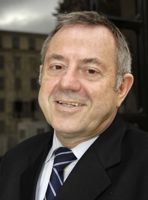
Eckhard Deutscher Credit:
"I think China has an interest in pursuing what we call in development jargon sustainability in its Africa engagement. They are interested in sustainable forms of cooperation. China can learn a lot in this respect from the international development community, as we can learn from China's experiences," Deutscher said in an interview with IPS European director Ramesh Jaura on a visit to Berlin early March. Some excerpts:
IPS: You are the first German to chair the OECD's Development Assistance Committee since its foundation in 1960. Does your appointment indicate a paradigm shift in international development cooperation? After all, DAC groups the world's major aid donors.
Eckhard Deutscher (ED): To be the first German head of the DAC does not necessarily mean a paradigm shift. Every chairman is responsible to the DAC members. He has to coordinate. He has to listen. And he has to concentrate on the activities and interests of the DAC members. With that at the back of my mind, I will follow the international agenda of the DAC members strengthening the Paris Agenda and other important plans in the development cooperation agenda.
IPS: In the past the DAC chair has been held by nine Americans, one Frenchman and one British. Isn't this something significant by itself?
ED: I have no "German agenda" for the DAC chairmanship. For sure, I have my own ideas and objectives which I can only articulate in the context of the common decisions of all the DAC members. And that is why I am listening carefully.
DAC is a very heterogeneous structure. Yet, we should not play down what is on the cards and what has been achieved so far, and this is a lot. For example, a follow-up conference in Accra in September this year will reflect on how far the Paris Declaration (on aid effectiveness issued in March 2005) is being implemented, and on the mutuality of so-called donors and recipient countries.
In fact, I prefer to speak of partner countries. The terms 'donors' and 'recipients' are so to say antediluvian. They smack of a group doling out charity and the other group receiving it with gratitude. Development assistance as charity is – and was always – an entirely misleading misperception.
IPS: Before taking up the present job, you worked as Germany's executive director to the World Bank since 2002 and dean of its Board of Executive Directors since 2006. A part of your tenure was characterised by turbulence at the top of the World Bank. What would you describe as the highlights of your five years at the Bank? Will your experience there be of help to you at the DAC?
ED: All the 24 executive directors of the World Bank played an important role in what you call turbulence (that ended up with the then president Paul Wolfowitz resigning). That apart, in the five years I was there, we moved towards European coordination at the World Bank. Now the European executive directors have a meeting every week; every week they discuss the upcoming agenda of relevance to a multilateral institution like the World Bank.
This is something extremely significant – also in regard to the implementation of making ODA (official development assistance) effective. Additionally I was pushing the agenda on voice and participation of development countries in the Bretton Woods institutions and the thematic issues on climate change, alternative energies, core labour standards and the role of the private sector.
In how far my experience will help me in the next five years: To begin with I am keen to learn about the structure that I am heading. I am planning to have direct contacts with DAC members, with all ministers dealing with development cooperation, to know better their thinking. I have a very heavy travel schedule this year and will travel to Africa and Asia. The contacts I made during my tenure at the World Bank – with a lot of people in the international development community and within the UN system – are helping me; I am not starting from scratch.
IPS: When you took up the DAC job, you said you were planning to work closely with China and India. What exactly do you have in mind?
ED: China has given very clear signals that it wants to cooperate with the OECD and DAC. What I am intending to do is to travel to China and have a look at what could be the next working plans and how we can define a corridor of cooperation. I will go open-minded to these meetings. But I am very optimistic because I think China has an interest in pursuing what we call in development jargon sustainability in its Africa engagement. They are interested in sustainable forms of cooperation. China can learn a lot in this respect from the international development community as we can learn from China's experiences."
IPS: So what you are planning is, on the one hand, to help the DAC members understand what China is doing and proposes to do in Africa and, on the other, influence Chinese thinking on development issues?
ED: We discussed in a seminar last month about what China's interests in Africa are, and what the development policy of China is. I learnt a lot indeed. We have to keep listening. It should not appear that we know everything. Though we have profound experiences from the past decades, the global landscape has changed.
It's not only the DAC, it's not only China. It is also India, Saudi Arabia, Brazil and Mexico. Then there are private donors: in the next years, the Bill and Melinda Gates Foundation alone will spend more than 3 billion dollars a year on development projects. We also need to acknowledge the deficiencies in our aid disbursement. We have to consider the transaction costs of aid. We have to be very open to what others can bring in to this debate. We have to reflect on the lessons we draw.
IPS: Your attitude stands in stark contrast to strong reactions in Germany and elsewhere in Europe to China's engagement in Africa.
ED: I am aware of the perceptions about China's genuine or suspected behaviour. But I cannot share the general view that China is out to support dictators out there and rob Africa of its resources. We have to look country by country what China is doing and cooperate in a mutual way.
Let us not talk about what China is doing; let us talk also about what the partner countries think. I spoke last September with the finance minister of the Philippines. They received 1.2 billion dollars from China. That deal was done within six weeks and the finance minister told me when I was still at the World Bank: 'You need two years from the idea of a project to its realisation.' The lesson is obvious: We must take into account the interests of partner countries. We must stop paying lip service to 'ownership'. We are living in a competitive world. We cannot afford to be self-righteous.
IPS: So you are against some sort of 'neo-colonialist' attitudes that DAC members are seen to have.
ED: We should ask ourselves: Have we done everything well in the past decades? What did we do during the so-called East-West conflict until 1990? What was the instrument of development cooperation we used? Can we say our hands are clean? Let us analyse what we did wrong. Let us identify the changes in the global landscape of development cooperation, see who are all coming in.
We have too many donor agencies. I remember what the Nicaraguan president (Enrique José Bolaños Geyer) told me three years ago: "We have more than 40 donors, 150 international NGOs. We have every week three or four missions coming from the Bank, the IMF and others. And then the same donors who are robbing us of our capacities are blaming us that we have no capacity for fresh money."
'Nicaragua is the Disneyland of the donors,' he told me.
IPS: So there is a lot that needs be done by way of coordination and coherence.
ED: Yes. We have worldwide 24 development banks. We have 280 bilateral development agencies. We have 242 international multilateral institutions. There is a complexity of the system which is really difficult to maintain.
IPS: The Development Cooperation Report 2007 (published on Feb. 14) says the total ODA provided by the members of the DAC amounted to 104.4 billion dollars in 2006. This was 4.5 percent lower than in 2005. In real terms, this was the first fall in ODA since 1997. Do you feel comfortable with this situation right at the beginning of taking up the job?
ED: The 2005 figure included debt relief in particular for Iraq and Nigeria. This brings us to what has been promised by the international donor community and what was realised. This has to do with Monterrey (the first conference on financing for development in 2002 in Mexico), with the quantity and quality of aid, with the greater voice and participation of developing countries, for example in the Bretton Woods institutions. The fact is that 16 of the DAC's 22 member countries met the 2006 targets for ODA that they set at the 2002 Monterrey Conference.
The Monterrey Consensus recognises that substantial increases in ODA are required to enable the poorest countries to cut poverty in half and achieve other internationally agreed development goals. This was reaffirmed by the Paris Declaration three years later. In fact in May 2005 European Union ministers announced a dramatic increase in aid that will see the EU's richest states reach the United Nations' historic goal of giving 0.7 percent of national income (GNI) in aid by 2015. The move would mean a virtual doubling of the EU's combined aid by 2010.
IPS: Do you see that happening in the case of Germany whose ODA constituted 0.36 percent of GNI in 2006?
ED: I can only appeal to countries like Germany which issued statements warning that their budget problems may hit EU borrowing limits and stop them meeting the target. It is a matter of Germany's political credibility, and there are much more intensive discussions with the Parliament needed. Germany wants to play a greater role in the UN as a permanent member of the Security Council on the one hand and on the other hand it is lagging far behind in fulfilling what Chancellor (Angela) Merkel and her predecessors have repeatedly promised.
IPS: The only countries to reach or exceed the UN target of 0.7 percent of GNI (Gross National Income) were Sweden, Luxembourg, Norway, the Netherlands and Denmark. But German officials often argue that in terms of the volume of aid Germany was after the U.S., Britain, Japan and France, the largest donor in 2006. Do you think this argument is legitimate?
ED: No. Absolutely no. There is an informal international agreement to provide 0.7 percent of GNI as ODA. This was repeatedly affirmed by heads of states. We cannot nullify that accord through the backdoor. We should stop such political games. I am sure political games will not meet with approval when the high-level conference takes place in Doha (Qatar) end of the year to review Monterrey.
What is needed in a global risk situation is to deal with poverty, migration, hunger, environmental pollution, climate change. We cannot face all these challenges by arguing that we are giving more than them. This kind of polemics has no place in a globalising world. It does not help us to face global challenges.
 Print
|



Pictures for this story
This story includes downloadable print-quality images -- Copyright IPS, to be used exclusively with this story.


