Languages
Monday, November 9, 2026



News and Views from the Global South
Global Governance

As COVID-19 Burns, World’s Forgotten Wars Continue to take Toll on Civilians as Well
Earlier this year, just before the coronavirus virtually shut down international travel, I sat under a mesquite tree and listened to a rambling speech by a South Sudanese general at a military base outside of the capital, Juba.
COVID-19 – China Tells World Health Assembly They Did their Best
This week’s 73rd World Health Assembly had member states adopt a resolution to review the global response to the coronavirus pandemic. The World Health Organisation (WHO) will also undergo an evaluation for its response to the outbreak.
Will UN Chief & Senior Management Volunteer Pay Cuts in Crisis-Stricken World Body?
As a spiraling financial crisis threatens to undermine the UN’s day-to-day operations worldwide, a proposal being kicked around, outside the empty corridors of the UN, has triggered the question: will senior officials, including the Secretary-General, the Deputy Secretary-General (DSG), Under-Secretaries-Generals (USGs), including 60 heads of UN agencies, Funds and Programs, and Assistant Secretaries-Generals (ASGs), volunteer to take salary cuts— even as a symbolic gesture?
EXCLUSIVE: In the Face of the COVID-19 Pandemic We Are Only as Strong as the Weakest of Us
When the COVID-19 virus travelled from Wuhan, China halfway across the world through Europe, the Americas and beyond in the space of a few weeks, it gave us proof, if one was ever needed, of how tightly interconnected we all are. Not only are our globalized economies interdepended, but also we ourselves are one with the environment around us, and with one another. We are one humankind sharing one planet. And yet, all too often we seem to forget it, as we carelessly revert to misguiding differences between “us” and “them.” Take, for example, the distinction between rich and poor countries, or as economists put it, between advanced economies and least developed countries. In the face of COVID-19, the only difference that matters is if we are sick or healthy. Other than that, we are all the same, regardless of economic status or geographic location.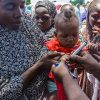
Africa Needs a DOVE Fund: Or Should We Starve So We Can Pay our Debts?
Sub-Saharan Africa has a debt problem. According to the most recent World Bank debt statistics, in 2018 the region had about $493 billion in long term external debt.
Covid-19 Straw Breaks Free Trade Camel’s Back
Economic growth is supposed to be the tide that lifts all boats. According to the conventional wisdom until recently, growth in China, India and East Asian countries took off thanks to opening up to international trade and investment.
South Africa Must Respond – & Lead– on COVID-19 & SDGs
Sitting on the southern tip of Africa during a time of social distancing, while the entire planet fights Covid-19, we cannot help but reflect on how vulnerable our country is to this scourge.
Beyond Trump— US, UN & Global Health Governance
US President Donald Trump’s battle with the World Health Organization (WHO) hides two important issues. One, the long running love-hate relationship between the US and the UN, and two, a better understanding of how global public health is governed and in the overall context of global governance.
The UN Is Hunting for a New Medical Director, Based in New York City
“Are you a senior medical executive with expertise in healthcare management with oversight of clinical services and occupational health at a facility, state, national or international level? The United Nations Secretariat is seeking a Medical Director at the D-2 level in the Department of Operational Support,” an ad posting on the UN’s job portal reads.
The Commonwealth’s Response to COVID-19
The Coronovirus pandemic has been an unforgiving test of advanced economies. Health systems in the United States, France, Italy, Spain, and the UK have been put under immense pressure, with shortages of doctors, ventilators, personal protective equipment and the capacity to test for the virus. Their economies have been battered and the consequences are spoken of in terms of the Great Depression.
On the Agenda of Iraq’s New Government: An Empty Treasury, Low Revenue, and COVID-19
Iraq’s newly-announced leader has brought hope to a country embroiled in a 17-year-long conflict, but authorities must ensure that issues such as swift and rapid response to COVID-19, security concerns, and corruption among others are addressed with urgency, experts said on Tuesday.
Housing is Both a Prevention & Cure for COVID-19
Public health officials are calling the “stay home” policy the sacrifice of our generation. To flatten the curve of COVID-19 infections, this call of duty is now emblazoned on t-shirts, in street art and a celebrity hashtag.
COVID-19: Why We Must Reset Our Thinking
Covid-19 is the most significant event since the Second World War. It changes everything. It brings great sadness to many of us as we lose loved ones, as we see people losing their jobs, and as we see people around the world suffering immensely.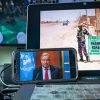
US Pulls the Plug on a UN Global Cease-Fire Resolution
After six weeks of negotiations, the United States shot down hopes for a resolution to be approved in the United Nations Security Council on May 8, refusing to back worldwide cease-fires as the US continues to castigate China and the World Health Organization for the Covid-19 pandemic. Meanwhile, momentum behind tenuous cease-fires is vanishing, experts say.
VE Day Marks the End of the Second World War-But the World is Still at War
The world commemorated the 75th Anniversary to mark the end of the 2nd World War also called VE Day on 08 May 2020. With her nation, and much of the world still in lockdown due to COVID 19, England’s Queen marked 75 years since the allied victory in Europe with a poignant televised address. From Windsor Castle, Queen Elizabeth said, “the wartime generation knew that the best way to honour those who did not come back from the war, was to ensure that it didn’t happen again”.
COVID-19: The Digital Divide Grows Wider Amid Global Lockdown
The digital divide has become more pronounced than ever amid the global coronavirus lockdown, but experts are concerned that in the current circumstances this divide, where over 46 percent of the world's population remain without technology or internet access, could grow wider -- particularly among women.
COVID-19 Pandemic Vulnerable to Exploitation by Proliferators, Terrorists & Criminals
Even during this pandemic, perhaps especially during this pandemic, the global institutions to help prevent the spread of biological and chemical weapons to proliferators or terrorists must continue their work.
Only Sustainable Investment & Global Cooperation Can Counter COVID’s Blow to SDGs
We are today in a time of crisis—a time when our shared choices will shape the way history tells our story and the paradigm shift it has so forcefully provoked.
The Crises of 2020 Will Delay the Transition to Clean Energy
The oil slump, global recession and uncertainty about the magnitude of the COVID-19 pandemic will fuel the appetite for cheaper fossil fuel energy and delay investments in renewables, affecting the targets of the Paris Agreement on climate change and the Sustainable Development Goals (SDGs).
SDGs: the Challenge to Improve Lives After the COVID-19 Crisis
The SDGs, with their universal scope, interlinked nature and focus on leaving no one behind will be more essential than ever during and after this crisis.
Children under Lockdown get a ‘Learning Passport’
Soon schools in Timor-Leste, Ukraine, and Kosovo, where some 6.5 million children are currently at home, will hopefully start teaching their children once again -- albeit online.« Previous Page — Next Page »





The Week with IPS

NEXT STOP - SDGs
Tracking global progress towards a sustainable world
Tracking global progress towards a sustainable world
