Languages
Wednesday, November 11, 2026



News and Views from the Global South
Global Governance

South-South Cooperation: a Path to Implementing UN’s 2030 Agenda
I see five issues that will be central to implementing the Paris Agreement on climate change and achieving the 2030 Agenda for Sustainable Development. South-South Cooperation can offer solutions to all of them. First, rising inequality both between and within countries is eroding trust and deepening a sense of injustice. Globalization has enabled many people to escape poverty – but its benefits are not shared equitably and its costs fall disproportionately on the poor and vulnerable.
Communication, a Key Tool for South-South Cooperation
Communication can be a key tool for the development of cooperation among the countries of the global South, but the ever closer relations between them do not receive the attention they deserve from the media.
South-South Cooperation Now Triangulates with the North
It sounds like a contradictory play on words, but the countries of the industrialised North are currently the big supporters of South-South cooperation, as was demonstrated at the United Nations Second High-Level Conference on this subject, held in the Argentine capital.
South Florida’s Underserved Refugee Communities
South Florida has long been known as a haven for refugees and migrants. Widely referred to as the “gateway to Latin America”, 1 in every 5 Florida residents is an immigrant. Significantly, the “sunshine state” welcomes 1,000 new settlers every day.
How Many Journalists are Jailed in China? Censorship Means We Don’t Know
Reporting on China's harassment of journalists has never been easy. Lately it's been getting much harder, which suggests that conditions for the press could be worsening.
Myanmar and China’s Bride Trafficking Problem
Women and girls from Myanmar are increasingly being trafficked as “brides” to China, a human rights group found.
The System, Youth and Democracy
If we ever needed proof of how the political system has become self-referential and unable to update itself, the latest student march in more than 1,000 towns is a very good example.
Did a Backlash Against Trump Trigger Historic Highs for US Women in Politics?
The dramatic increase in women legislators voted into office last November and the historic high of women candidates for the 2020 presidential elections have visibly changed the male-dominated political landscape in the US.
”As global citizens, we cannot turn a blind eye to the increasing spread of hatred and intolerance”
(Geneva Centre) - The 2019 International Day for the Elimination of Racial Discrimination and this year’s theme devoted to tolerance, empathy towards the Other and celebration of diversity, comes at a timely moment. Religions, Creeds and Value Systems: Joining Forces to Enhance Equal Citizenship Rights.” The conference sought to capitalize on the fundamental convergence of religions, creeds and value systems to mitigate the marginalization of communities worldwide with the goal of eliminating xenophobia and all forms of intolerance. The conference produced an outcome declaration aimed at moving towards greater spiritual convergence to support equal citizenship rights and resulted in a consensual global vision to promote this goal. The Geneva Centre will shortly be issuing a two-volume publication on the world conference. The Geneva Centre wishes on this International Day for the Elimination of Racial Discrimination to join hands with all those involved in such a noble endeavor.
Dismantling Patriarchy Must Begin at Home: A Reflection on Gender Equality
This week, I joined thousands of activists, campaigners, thought-leaders, and change-makers in New York to advocate for women's rights and promote gender equality during the 63rd session of the UN's Commission on the Status of Women (CSW).
UN’s Plan to Offshore Back-Office Jobs is Probably a Waste of Money
A $64 million plan to move 750 back office jobs from the UN’s main duty stations to four new centralized service centres in Budapest, Montreal, Nairobi and Shenzhen, could end up being a waste of money.
Belt and Road Initiative vs Washington Consensus
With the Washington Consensus from the 1980s being challenged, President Donald Trump withdrawing the United States from the Trans-Pacific Partnership (TPP), and China pursuing its Belt and Road Initiative (BRI), most notably with its own initiatives such as the multilateral Asian Infrastructure Investment Bank (AIIB), the political and economic landscape in East Asia continues to evolve. Jomo Kwame Sundaram was interviewed about likely implications for developing countries in the region and beyond.
Fighting the World’s Largest Criminal Industry: Modern Slavery
Modern slavery and human trafficking is one of the fastest growing criminal industries and one of the biggest human rights crises today, United Nations and government officials said.
US Survey Finds Lack of Awareness on Global Warming
The U.N.’s World Water day is fast approaching as the state of the world’s consumable water supply remains dismal. Billions of people face at least the very real risk of scarcity, if they’re not facing scarcity already; and about a third of the world’s groundwater systems are in danger of becoming depleted.
Seven Challenges for US Nominee for World Bank President
All incoming World Bank presidents bring a public record of their views about the bank and about development more generally. David Malpass, who is on track to become the bank’s next president, has not been shy in criticizing the role and management of the institution he now plans to lead.
Europe under Siege: Collusions, Dugin and Bannon
EU Parliament elections take place every fifth year and votes have steadily been decreasing. In the last 2014 election, the overall turnout was 42.54 percent of those entitled to vote, in some nations it was just around fifteen percent. Nevertheless, results will not only be eagerly awaited by pro- and anti-EU activists, but also by ideologist from non-member countries. Particularily vociferous among such people are Steve Bannon, who wants to “Make America Great Again” and Aleksandr Dugin who wants to “Make Russia Great Again”.
Climate Strike: Hundreds of Thousands Unite for the Planet’s Future
Friday, Mar. 15 saw hundreds of thousands of young people across the world take to the streets to join the climate strike. “We are demonstrating today for our planet and for our future. This is the place where we and those who come after us will live,” Jennifer, a 16-year-old girl from Rome, the Italian capital, who opted to join the protests, told IPS.
People Affected by Leprosy in Latin America Unite for Their Rights and Their Voice
With the decision to found a regional coalition to promote rights and greater participation in national and international forums and decisions, the First Latin American and Caribbean Assembly of Organisations of People Affected by Hansen's disease, popularly known - and stigmatised - as leprosy, came to an end.
In Latin America, the Term Leprosy Still Carries a Burden from Biblical Times
Known scientifically as Hansen's disease, leprosy carries a symbolic burden from the past that people affected by the disease and experts from around Latin America are fighting, including the terminology used.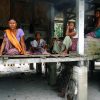
From 2018: When Environmental Crises Hit Homes, Women Suffer the Most
When Mandelena became a mother, she was only 16. During the prolonged dry season in Gwor County, South Sudan, her community saw crops failing and cattle dying. Children stopped going to school because of hunger and women and girls had to walk up to five hours every day to collect water.The Geneva Centre co-organizes a UN Library Event on Leadership in Modern Multilateralism
(Geneva Centre) - Multilateralism must be people-driven. The current rise of populism around the world is inextricably linked to a feeling of being excluded and kept out of decision-making processes broadly shared by ordinary people. These were the main conclusions of a joint event between the Geneva Centre for Human Rights Advancement and Global Dialogue and the UNOG Library entitled Leadership in Modern Multilateralism. The debate was held on 12 March 2019 at the United Nations Office in Geneva in the Library Events Room at Palais Des Nations.« Previous Page — Next Page »





The Week with IPS

NEXT STOP - SDGs
Tracking global progress towards a sustainable world
Tracking global progress towards a sustainable world
