Languages
Wednesday, November 11, 2026



News and Views from the Global South
Global Governance

Civil Society Leaders Meet Amid Protests, Attacks on Rights
Amid rising attacks on rights campaigners, and mass protests in countries such as France and Serbia, civil society groups are urging governments to ensure the protection of “democratic values” and freedom of expression.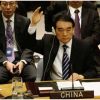
Is Republic of China Still a Permanent Member of the Security Council – Despite its Ouster in 1971?
The Republic of China (Taiwan) withdrew from the United Nations in protest when it was ousted from its highly-prized permanent seat in the UN Security Council (UNSC) about 48 years ago.
Women Activists Protest Torture & Imprisonment Under Repressive Regimes
Faced with an uneven battle against right wing nationalist governments, repressive regimes and extremist groups, scores of civil society organizations (CSOs) are gearing themselves to fight back.
Latin America Resets Its Strategy against Femicides
Several initiatives are seeking to strengthen the fight against femicides in Latin America, a region which, despite growing popular mobilisation and pioneering legislation against gender-based murders, still has the world's worst rates in what has been described as a "silent genocide," says U.N. Women.
Ambitions Are Affordable for Asia and the Pacific
Three years of implementation of the transformative 2030 Agenda for Sustainable Development in Asia and the Pacific shows the region has some catching up to do. Despite much progress, the region is not on track to reach the 17 Sustainable Development Goals set out in the United Nations 2030 Agenda for Sustainable Development. We are living in a time of booming prosperity, yet many are getting left behind. Basic needs, such as the freedom for all from hunger and poverty, ill-health and gender-based discrimination, and equal opportunity for all are elusive. Economic, social and planetary well-being has a price tag. Calculations by the United Nations Economic and Social Commission for Asia and the Pacific (ESCAP) show that it is mostly affordable for the region.
Smart Cities hold Key to Sustainable Development
Asia and the Pacific’s phenomenal development has been a story of rapid urbanization. As centres of innovation, entrepreneurship and opportunity, cities have drawn talent from across our region and driven economic growth which has transformed our societies.
Education for All—Refugees Too
Young Rohingya refugees are now facing new hardships as the Bangladeshi government cracks down on their education and future opportunities.
China and Developing Countries: Managing Chinese Investments
Fifty years ago China was a poor country with little influence in the international sphere and without even a seat at the United Nations. Since then rapid economic growth in China has made it an economic powerhouse that increasingly plays a leading role on the world stage as a trade partners as well as a source of investment.
Has Privatization Benefitted the Public?
In most cases of privatization, some outcomes benefit some, which serves to legitimize the change. Nevertheless, overall net welfare improvements are the exception, not the rule. Never is everyone better off. Rather, some are better off, while others are not, and typically, many are even worse off. The partial gains are typically high, or even negated by overall costs, which may be diffuse, and less directly felt by losers.
Grassroots Organising Points the way in Fight Against Rising Repression
“I never thought it would get so big and I think it is amazing.” The words of a 16-year-old Swedish teenager who skipped school to protest outside her government’s inaction on climate change. Greta Thunberg is marvelling at how, in just a few short months, her solitary protests outside Sweden’s parliament, have inspired and united hundreds of thousands of young people and others across the globe into a powerful, growing grassroots movement for climate change action.
Sierra Leone: Bio Government’s First Year
If the government of Sierra Leone’s President Julius Maada Bio were to be graded on their first year’s performance in office, it is likely that their report card would read, “promising start, which they must surpass in the years ahead”.
Human Rights Defenders Need to be Defended as Much as they Defend our Rights
They are ordinary people – mothers, fathers, sisters, sons, daughters, brothers, friends. But for me they are extraordinary people – the ones who have the courage to stand up for everyone else’s rights. They are the human rights defenders.
What’s in a Name? Everything.
On March 19, 78 years old Nursultan Äbisjuly Nazarbayev unexpectedly announced his resignation as President of Kazakhstan, referring to the need for “a new generation of leaders”. The same day the speaker of the nation´s parliament was appointed as interim president, awaiting presidential elections scheduled for 2020.
The NPT & Conditions for Nuclear Disarmament
Fifty years ago, shortly after the conclusion of the 1968 nuclear Nonproliferation Treaty (NPT), the United States and the Soviet Union launched the Strategic Arms Limitation Talks (SALT).
UK Announces Aid Package for Gazan Hospitals Near Breaking Point
The UK Government has announced an aid package to support hospitals in Gaza that are “near breaking point”. The £2 million package will go to the International Committee of the Red Cross’s 2019 Israel and Occupied Territories (ILOT) Appeal. The aid will contribute to surgical equipment, drugs, wound dressing kits, prosthetics, and post-surgery physiotherapy for up to 3,000 disabled people.
Bridging the Gaps for the Disabled
People with disabilities are being left behind, and steps must be taken to ensure their inclusion in the world of education and work.
Civil Society Organisations Under Attack by Rightwing Governments & Extremist Groups
The widespread political repression in countries such as the Philippines, Egypt and Saudi Arabia-- and rising right-wing nationalism in the US, Brazil, Italy, India, Poland and Hungary-- have increasingly triggered attacks on human rights and civil society organisations (CSOs).
Safe Menstrual Practices Important for Progress
As menstruation continues to be shamed in many communities, one organisation is rising up to the challenge to ensure “safe menstruation for all women of Bangladesh.”
Japan’s Gender Gap
Japan is not making progress in gender equality, at least relative to the rest of the world. Despite the Japanese government’s attempts in recent years to pass legislation promoting the economic activity of women, Japan ranked a miserable 110 out of 149 in the World Economic Forum’s 2018 Gender Gap Index, which benchmarks countries on their progress toward gender parity across four major areas.
The Myth About the Race for Artificial Intelligence
UMEA, Sweden, 26 March 2019 (IPS) -- At this year’s Davos economic forum, US executives warned that China may be winning the so-called Artificial Intelligence (AI) race with Europe. In another recent article, Bloomberg pointed out that countries are rushing to not be left behind.
What They Need: Money, Resources, & a Seat at the Table
As a long-time advocate, I’ve been invited to speak at dozens of global conferences about the needs of girls and women in humanitarian emergencies.« Previous Page — Next Page »





The Week with IPS

NEXT STOP - SDGs
Tracking global progress towards a sustainable world
Tracking global progress towards a sustainable world
