Languages
Friday, October 23, 2026



News and Views from the Global South
Global Governance

Fiscal Reform Needs More Than Strong Finance Ministries
In the human body, connective tissue rarely gets the attention given to the heart, lungs or brain. But without it, even the strongest organs cannot function as a system. It binds, supports and connects a healthy body. Fiscal systems work in a similar way.
This Is Not Just Ukraine: The Global Danger of Normalising Russia’s Occupation Crimes
People often discuss Russia’s aggressive war against Ukraine in terms of drones, missiles, shifting front lines, and territorial borders. But this war has another dimension — the human one.
How the G7 Can Reset Global Finance
When G7 leaders arrive in Evian-les-Bains this month, France will host more than another summit. It will host a test of whether rich-country coordination can still solve problems that no country can manage alone. Aid budgets are shrinking, debt-service bills are crowding out investment, climate shocks are damaging infrastructure, and private capital remains scarce and expensive where it is needed most.
Nuclear Nonproliferation Outcomes Stall in Backdrop of Geopolitical Strife
On principle, the nonproliferation of nuclear weapons is an issue that unites the international community. But for a select few states, these principles came with conditions and a refusal to compromise on their security strategy.
The End of the Gulf Model?
The German government, along with a number of other countries, are currently organising flights to evacuate travellers and influencers stranded in the Gulf states. For many citizens of other nationalities, however, there is no such assistance. They remain stuck in precarious situations, marked by exploitation and insecurity.
The Moral, Practical, Necessary Invigoration of Nuclear Sanity
Martin Luther King Jr. , when he received the Nobel Peace Prize, reminded us of “The fact that most of the time human beings put the truth about the nature and risks of the nuclear war out of their minds because it is too painful and therefore not ‘acceptable’, does not alter the nature and risks of such war. The device of ‘rejection’ may temporarily cover up anxiety, but it does not bestow peace of mind and emotional security.” I have devoted many decades of my life to not ignoring the risk of nuclear annihilation and since 1995 have attended every Review Conference of the Nuclear Nonproliferation Treaty to learn and hopefully contributed to a saner safer world.
Amid Rising Military Tension in War Zones, World’s Nuclear Powers are Modernizing Their Arsenals
As ongoing military conflicts in Europe and the Middle East continue with no signsof winding down, there is increasing focus on nuclear weaponsamid heightened risks of escalation.
New Geopolitics Threatens More Food Crises
Recent geopolitical trends threaten more food crises, especially in developing countries. A new IPES-Food report urges a strategy of ‘resilient self-reliance’, proposing available opportunities to improve equity, sustainability and solidarity.
Downfall of a Superstar
This is the downfall of a diplomatic superstar. Germany’s defeat in the election to the UN Security Council is the consequence of a foreign policy that has proven disastrous in recent times, failing to uphold either the values or the interests of the Federal Republic.
Europe Must Not Turn Its Back on Rural Women’s Empowerment
In the hard-to-reach rural community of West Pokot, Kenya, 156 young women crossed a threshold that once seemed out of reach. Their graduation from HER Lab, a workforce skills programme for marginalized rural young women, was more than a ceremony. It demonstrated the power of targeted investment, trusted local partnerships and women’s economic empowerment.
Iran War Exposes Limits of US Power Projection
The outcome of the current Iran war is still in doubt, but one consequence is already becoming clear: it has weakened America’s capacity to project power. Many are asking who won. The more important question may be what the war has cost.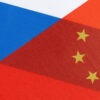
What the Sino-Russian Declaration Exposes
The joint declaration issued by Russia and China on 20 May, Joint Declaration of the Russian Federation and the People’s Republic of China on the Establishment of a Multipolar World and a New Type of International Relations, has been read in sharply different ways. Some welcome its language of sovereign equality, multilateralism and a UN-centred international order. Others dismiss it as legal rhetoric deployed in bad faith. Both responses miss the more important point.
Russia Ensuring Africa’s Food Security
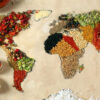
Within the framework of the Expert Council on Africa at Russia's State Duma, the lower chamber of parliamentarians, during its annual round-table conference, held in late May 2026, focused concretely on food security in Africa.
US-Israeli Ceasefire: You Cease, We Fire
If you have been paying attention to the ongoing wars in Ukraine, Iran, Lebanon, and many other places, perhaps you have noticed that battles today are far different from those of the last century. Now it’s not only tanks and planes but also scores of long-range missiles and massive flights of drones linked to cybernetic warfare.
When UN Elections Were Once Tainted by Trade-Offs, Cheque Book Diplomacy & Luxury Cruises…
The year 2026 seems to be an eventful year at the United Nations --a new President of the General Assembly (PGA), who will officially preside over the 81st session in mid-September, plus the election and appointment of a new Secretary-General (SG) who will takeover in January 2027 after the conclusion of a 10-year tenure by the outgoing SG Antonio Guterres.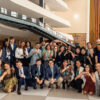
A New Youth Generation: Largest in History & a Decisive Force
In this exclusive interview, Dr. Felipe Paullier, UN Assistant Secretary-General (ASG) and Head of the United Nations Youth Office shares his leadership approach, insights on youth engagement, and his vision for driving institutional change from the grassroot level — redefining what is possible and proving that age is just a number.
Japan and Kazakhstan: A Partnership for an Age of Energy Insecurity and Nuclear Risk
The relationship between Japan and Kazakhstan is often described in terms of diplomacy, investment and regional cooperation. But at a time of growing geopolitical uncertainty, it deserves to be understood in broader terms: as a partnership linking cities, resources, technology and peace.
The Search is On for the Next U.N. Secretary General in a Turbulent World
AS THE WORLD HURTLES TO HELL (albeit in a SpaceX rather than a hand basket), it might seem of only academic interest which cipher vegetates on the 38th floor of the U.N. Headquarters. However, the choice is due by the end of the year, unless, as has happened in the past, the Security Council is veto-bound and asks António Guterres to stay on as interim Secretary General.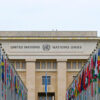
Trump’s Cuts are Pushing the UN out of Geneva. That may be a Win
The $1.2 billion renovation of the Palais des Nations was intended to reaffirm Geneva's centrality to the multilateral system. Instead, the city’s international quarter is emptying.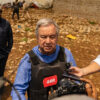
Faced with a Cash Crisis, UN is Urging Senior Staff to Forgo First Class & Business Class Travel
The United Nations has had a longstanding tradition, described by some as a “privilege”, where most senior staffers are entitled to highly-expensive First Class or Business Class seats on trips worldwide.
Iran War Deepens Activist Dangers
Narges Mohammadi, awarded the Nobel Peace Prize for her human rights activism in Iran, has been allowed to go home. After guards found her unconscious in her cell, the apparent victim of a heart attack, she was granted temporary release from prison and transferred to a hospital. However, she still faces the threat of being taken back to jail once her condition has improved.« Previous Page — Next Page »





The Week with IPS

NEXT STOP - SDGs
Tracking global progress towards a sustainable world
Tracking global progress towards a sustainable world
