
Wednesday, October 7, 2026



News and Views from the Global South
IPS UN: Inside the Glasshouse
We Can Solve Global Challenges Through Global Public Investment
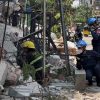
Watching on our screens the devastation wrought by the earthquake which struck South-East Asia last week has brought a stark reminder of our shared vulnerability in this interconnected world. It has exposed again, too, the weak beams of traditional funding models that struggle to ensure a timely response to disasters.
Challenging the Taliban’s Violations of Afghan Women’s Rights
The Taliban’s egregious violations of women's rights in Afghanistan, especially banning women from education and even from speaking in public, are beyond the pale. Imposing economic sanctions alone, however, has not changed in any significant way the Taliban’s treatment of women.
Putting People First: Why SRHR Must Be Central to Health and Development Agendas
As global leaders prepare to convene for the Commission on Population and Development (CPD) in New York, April 7-11, the world finds itself at a critical crossroads. We can either recommit to human dignity, equality, and justice—or risk unraveling decades of progress in global health.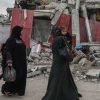
Collapse of Gaza Ceasefire and its Devastating Impact on Women and Girls
The end of the tenuous ceasefire in Gaza is having disastrous consequences for women and girls. From 18 to 25 March—in just those 8 days, 830 people were killed—174 women, 322 children, with 1,787 more injured.
UN Staff Put on Alert — as US Visa Holders Face Threats and Deportation
The Trump administration’s ground-rules are dangerously clear—and devastating. If you are a pro-Palestinian demonstrator, denouncing Israeli atrocities in Gaza, you are either a supporter of the “terrorist organization” Hamas or you are described as anti-Semitic veering on hate crimes liable for prosecution.
Southeast Asia’s Economies Can Gain Most by Packaging Ambitious Reforms
Southeast Asia’s major economies have made major strides over the last couple of decades. The largest have seen income per capita grow at least three-fold over the past 20 years amid global integration and prudent policymaking.
A Chance for Sisi to Follow Sadat’s Vision and Courage
On March 26, Israel and Egypt celebrated the 46th anniversary of their peace treaty, which has upended the very nature of the Arab-Israeli conflict. Egypt remains pivotal in the search for Israeli-Palestinian peace, especially now in the wake of the Israel-Hamas war.
Will UN be a Possible Target as US Goes on a Rampage?
The Trump administration, spearheaded by senior adviser Elon Musk, has been on a wild rampage: mass layoffs of government employees, gutting federal agencies, dismantling the Department of Education and USAID, defying a federal judge and threatening universities with drastic cuts in grants and contracts—decisions mostly engineered by the newly-created Department of Government Efficiency (DOGE).
A Path Towards Ending Child Marriage
As the sun rises over coastal Gopalpur, Odisha, in eastern India, dozens of children prepare for school. Unfortunately, for many girls in the state, the arrival of their first period can mean the end of their school years as they face societal pressures to become brides.
‘What’s Next?’ Women-led Movements Fear for the Future
Women rights advocates who gathered at UN Headquarters for the world’s biggest meeting (10 -21 March) on gender equality have been sharing their concerns about the growing backlash against feminism, and how major funding cuts from donor countries could threaten programmes aimed at improving the lives of women and girls.
World Day for Glaciers
Glaciers Are in Threat, May Not Survive the 21st Century
Many glaciers in the world will not survive the 21st century, according to reports published by the United Nations. Five of the past six years have experienced the most rapid glacier retreat on record; 2022-24 was the largest three-year loss of glacier mass. 
How Aid Cuts Will Shatter Global Water and Sanitation Progress
The principle of leaving no one behind is central to the UN Sustainable Development Goals (SDGs). The progress toward achieving SDG 6, which aims to ensure universal access to water, sanitation, and hygiene by 2030 is increasingly under threat with recent development funding cuts posing a significant barrier.
Why “Pro-Israel, Pro-Peace” Advocates Cling to Genocide Denial
Israel’s renewed assault on Gaza comes several months after both Amnesty International and Human Rights Watch issued reports concluding without equivocation that Israel was engaged in genocide. But very few members of Congress dare to acknowledge that reality, while their silence and denials scream out complicity.
Musk is Wrong. Empathy is Not a Weakness
“The fundamental weakness is empathy,” Musk recently told radio podcast host Joe Rogan. “There is a bug, which is the empathy response.” As Musk has established himself as at least the second most powerful person in an administration seeking a wholesale remaking of institutions, rules and norms, what he said matters, because it encapsulates a political plan. What the Project 2025 report set out in over 900 turgid pages, Musk’s remark captures in a simple pithy mantra for the social media age.
Pioneering Sustainable Energy Solutions in Africa
The 12th Sankalp Africa Summit, held on Feb 26-27 in Nairobi, brought together a pivotal cohort of start-up innovators, investors, entrepreneurs and policymakers to accelerate the innovation needed to enhance Africa’s energy transition.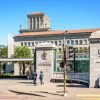
WTO: Standing Tall as the Winds Howl
Winds are also changing in trade policy. As they get rougher and more unpredictable, the much-criticised multilateral trade regime of the World Trade Organization (WTO) has so far proved surprisingly resilient. Paradoxically, Donald Trump’s tariff policy could actually strengthen the WTO.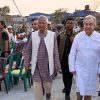
UN Chief’s Ramadan Solidarity Visit Revives Rohingya Refugees Hope
When United Nations Secretary-General António Guterres appeared before the Rohingya refugees wearing a traditional white panjabi, a costume of Muslims, to join an iftar party in Ukhiya refugee camp, thousands who had gathered waved to welcome him.
Trump, Democracy and the U.S. Constitution
In these turbulent and sad times, it is hard to keep quiet about abuses and violations of human rights taking place around the world; in eastern DR Congo, South Sudan, Ukraine, and Gaza. Among the most egregious examples of incomprehensible stances on such abuses is the behaviour displayed by the Trump Administration, not least the President’s behaviour against the lawfully elected president of Ukraine. Trump’s doubts about the validity of a nation’s desperate struggle against the forces of a dictatorial regime, which destroys their country and aims at taking over its richest territory.
Is UN in Danger of Losing its Battle for Gender Equality?
The Trump administration’s decision to abandon DEI—diversity, equity and inclusion— which was aimed at promoting fair treatment in the work place, is having its repercussions at the United Nations. The US has been exerting pressure on UN agencies to drop DEI largely protecting minority groups, and women in particular, who have been historically underrepresented or subject to discrimination.
Trashing Jewish Values Risks Israel’s Survival as We Know It
77 torturous years of the Israeli-Palestinian conflict, punctuated by intense violence and wars, successive Netanyahu-led governments have shattered Jewish values to the core—values that have sustained and preserved Jewish lives for centuries and provided the moral foundation on which Israel was built.
United Nations’ New Efficiency Initiative is Aiming for Structural Changes to Operations
The United Nations chief announced on Wednesday (March 12) a new initiative that aims to assess areas of efficiency and improvement for the international organization to expand its efforts and recognize the need “for even greater urgency and ambition.”« Previous Page — Next Page »





It was dubbed "The Glass House" by U.S. ambassador James Wadsworth in 1966. Half a century later, the United Nations has gradually expanded its role as agent of peace and protector of the world's vulnerable populations, while simultaneously facing internal pressures to become more inclusive, increase transparency and maintain legitimacy in the post-Cold War political and economic order. Highlighting the local impacts of global policies on economic development, environment, health and human rights, IPS's coverage goes beyond the edicts of the Security Council to illuminate the power struggles, successes and shortcomings of the 193-member institution as it grapples with crises like climate change, armed conflict, poverty and HIV/AIDS.

The Week with IPS
