Languages
Monday, November 23, 2026



News and Views from the Global South
Africa
NAMIBIA: U.S. Poverty Grant – Blessing or Curse?
More than $300 million foreign aid will flood Namibia in the next five years through the Millennium Challenge Account (MCA), a development fund governed by the United States government-owned Millennium Challenge Corporation (MCC). But the jury is still out on whether the grant is a blessing or a curse.HEALTH-SOUTH AFRICA: 'Our Lives Are Most Important'
The Fourth South African AIDS conference ended in Durban Friday with optimism over progress in research and policy on AIDS prevention but serious concerns over finding the resources to effectively implement the country's national strategic plan of action.POLITICS: Cleared of Terrorism, Canadian Stranded in Khartoum
The murky post-9/11 sharing of information between western security and intelligence agencies and Sudan's notorious human rights-abusing regime appear to be at the heart of a year-long marooning of Canadian citizen Abousfian Abdelrazik at his country's embassy in Khartoum.
AFRICA: Arbitration Mechanism Demanded to End Scourge of Debt
International debt campaigners are calling for the establishment of a debt arbitration mechanism to respond to the difficulties that many countries of the South are increasingly facing as they attempt to service debt arrears to international lenders.ECONOMY: Insurance to Even Provide Cover Against Global Crisis
The global economic crisis makes it even more imperative that investors ascertain the economic and legal conditions in foreign countries.
SOUTH AFRICA: Nurses Should Be Backbone of ARV Treatment
Effectively scaling up South Africans’ access to antiretroviral (ARV) treatment will require decentralisation of health services from hospitals to clinics and allowing nurses to manage and eventually to initiate ARV treatment and care.ZAMBIA: Diminishing Returns on Agriculture Subsidy
Responding to years of complaints over the management of the Fertiliser Support Programme (FSP), the Zambian government has now proposed that the private sector takes over its running to reduce cases of corruption.DR-CONGO: Electronics Firms Urged to Boycott “Blood Minerals”
The world’s mass consumption of cell phones, laptops and other electronics fuels widespread sexual violence in the Democratic Republic of Congo (DRC), according to a new study released Wednesday by the non-profit Enough Project that echoes what many human rights activists and humanitarian workers have been saying for years.
HEALTH: Using ARVs to Prevent as well as to Treat HIV
Researchers are now investigating if antiretroviral (ARV) drugs can play a role in not just treating HIV, but in preventing infection. Mitchell Warren, executive director of the AIDS Vaccine Advocacy Coalition (AVAC), called it "a pivotal moment in HIV/AIDS research".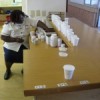
FINANCE: Guns 'n Nurses in Namibia's Budget
Tax relief for lower income groups in Namibia should not conceal that the 2009/10 budget falls short in addressing structural problems in the economy, civil society organisations have charged.AFRICA: ‘‘G20 Should Use Crisis as Opportunity to Fix Inequity’’
The daunting task of making Africa the centre of attention awaits Ethiopia’s Prime Minister Meles Zenawi when the Group of 20 (G20) rich and emerging economies meet in London tomorrow.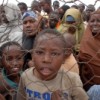
POLITICS-SOMALIA: Refugees Suffering in Kenyan Camps
In early March, Amina Ayanna Yusuf strapped her two-year-old son to her back and set off for the Kenyan border with her small savings.SOUTH AFRICA: Implementation, Not Money the Obstacle to Scaling Up HIV Treatment
The money to scale up HIV treatment is there, but implementation of programmes to curb the pandemic is a problem, health experts said at the opening of the Fourth South African AIDS Conference in Durban.GHANA: Cadbury’s Deal Destined to Sweeten More Farmers’ Lives
The initiative linking British chocolate giant Cadbury’s with a Ghanaian cooperative representing 40,000 cocoa farmers is set to grow further and enhance the livelihoods of more farmers.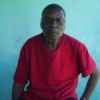
HEALTH-LESOTHO: Migration Calls for Cross-Border Health Policies
The mountain kingdom of Lesotho faces a number of unique hurdles with regard to HIV and AIDS.ZAMBIA: Media Resists Calls for State Regulation
After almost a decade of fighting for self-regulation, the Zambian media may finally have its wishes entrenched with constitutional protection.NAMIBIA: Gender Legislation Futile If Not Implemented
Namibian women’s rights activists say existing gender legislation has failed to improve women’s lives because it is not being implemented widely enough. Last August, Namibia signed the Southern African Development Community (SADC) gender protocol but politicians have yet to ratify it.WORLD: Investors Eyeing South-South Trade to Help End Crisis
Despite the challenges that the global economic crisis poses to Africa and other developing regions in the southern hemisphere, South-South trade still offers huge opportunities as there is room for growth beyond the current levels.
RIGHTS-SOUTH AFRICA: Women Farmworkers Threaten Election Boycott
Women from South Africa's three Cape provinces have marched to parliament in Cape Town to denounce the country's "slow and unbalanced" land redistribution programme. The protesters said if they are not given greater access to land, they will not vote in the country's Apr. 22 general elections.RIGHTS-BENIN: Support for Women Facing Violence
Judges and gynaecologists in Benin have undergone training on the interpretation of forensic evidence in cases of violence against women, as well as in investigative procedures when dealing with rape cases.MINING-AFRICA: Help Yourself, There's Plenty
The African continent is rich in natural resources; but the terms under which multinational companies exploit these resources mean that governments - and Africa’s people - enjoy only a tiny fraction of the benefits.« Previous Page — Next Page » *#*

The Week with IPS

NEXT STOP - SDGs
Tracking global progress towards a sustainable world
