Languages
Tuesday, November 24, 2026



News and Views from the Global South
Africa
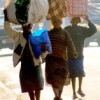
DEVELOPMENT-ZIMBABWE: Ground Realities Stall Basket Fund Take Off
In 2006, there was shared concern among donors and women’s organisations over the fragmented approaches to gender and women’s empowerment programmes in Zimbabwe.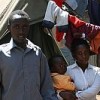
POLITICS: Kenya Falters in Healing Deep Ethnic Tensions
A power-sharing agreement between the opposition Orange Democratic Movement and the Party of National Unity in Kenya has failed at healing ethnic divisions in the one-time politically-troubled East African nation, according to a new report by Minority Rights Group International (MRG).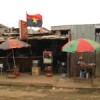
POLITICS-ANGOLA: Some Parties More Equal Than Others
It seems like a playground game. Every day, Angola’s main opposition party sends teams out across Luanda to hang flags, posters and pictures of their leader Isaías Samakuva.RIGHTS-SIERRA LEONE: Activists Will Accept Only Full Abolition
Sierra Leonean rights activists have served notice on the government that they will campaign against any attempt to retain the death penalty in the new constitution and insist the recommendations of the Truth and Reconciliation Commission are fully adopted.
Q&A: "They Mobilised Violence For Their Own Reasons"
The text of the Kenyan National Dialogue and Reconciliation Accord, brokered by former UN chief Kofi Annan in March this year and released to the press in full last Sunday, identifies land as one of the central issues creating "economic, social, political and environmental problems" in the country.RIGHTS-SWAZILAND: Women Challenge King Mswati
Hard on the heels of the signing of the Gender Protocol at the Southern African Development Community (SADC) heads of state summit, Swazi women have challenged King Mswati III on the monarchy's lavish lifestyle in the face of abject poverty and disease.SIERRA LEONE: Commission Launches First Human Rights Report
A barefoot girl watches expressionless as men clad in expensive suits and women in designer clothes make their way on foot to the Community Centre in Kroo Bay, Freetown. They are here to launch the first ever State of Human Rights Report for Sierra Leone; Zainab, 12, is in the midst of another day on the narrow, muddy streets of the area, selling groundnuts to help support her family.SOUTH AFRICA: Rights Work Hampered by Closure Threat
The University of KwaZulu-Natal (UKZN) last week lifted a funding ban on its Centre for Civil Society (CCS) after national and international intellectuals protested loudly against the leftist centre’s potential closure. Yet, the uncertainty of the past few weeks has already impacted negatively on CCS’ operations.DEVELOPMENT: Africa Still Hampered by Lack of Geographical Data
Geographic Information Systems (GIS) could play a vital role in improving agriculture and boosting food security in Africa. However, only a few African countries are capable of developing such systems, partly because of a lack of basic geographical data.SIERRA LEONE: Activists Cry Foul Over Mining Policy
In December 2007, unrest broke out in the diamond mining region of Kono in the east, between kimberlite mining corporation Koidu Holdings and locals in the lease area. The company had promised to relocate hundreds of community residents to make way for its mining operation but the slow pace of implementation of this pledge, coupled with the repeated blasts of dynamite in underground mining sites set the company and its hosts on a collision course.TRADE-KENYA: British Imports Losing Their Appeal
When Kenya purchased Toyota vehicles for its military forces, instead of the all-pervasive Land Rover, it signalled a seismic change - in effect ending the most favoured status enjoyed by imports sourced from its erstwhile colonial master the United Kingdom.
ETHIOPIA: Choosing Among One's Own Amid Food Crisis
The global food crisis has forced families to make grievous choices. When Mulu Baboche travelled from the Ethiopian capital to visit her home town in the drought-stricken southern countryside, she found her brother weakened, his animals emaciated and his nine children wilting from hunger.RIGHTS-ZIMBABWE: Hard Times Continue As Talks Drag On
There was jubilation at Gokwe Centre in Zimbabwe's Midlands province when the Herald newspaper published a story headlined "Deal Sealed" on August 13 - a clear indication of the hopes Zimbabweans have pinned on the deadlocked talks over power-sharing between ZANU-PF and the two MDC formations.
SOUTHERN AFRICA: Free Trade Deal Full of Potential – And Danger
The launch of a free trade area (FTA) within the Southern Africa Development Community (SADC) has brought the region one step closer to a regional customs union by 2010. But the launch of the FTA at the recent SADC heads of state summit was met with mixed reaction.
TRADE-SOUTHERN AFRICA: FTA Will ‘‘Choke’’ Small Business
The Free Trade Agreement (FTA) that Southern African Development Community (SADC) governments agreed to will boost large South African companies’ reach in the region at the expense of small-scale producers and shops.MIDEAST: Egyptian Kinship with Fatah Hampers Mediation
Following renewed fighting between rival Palestinian factions Fatah and Hamas, Egypt has stepped up calls for dialogue and reconciliation. But critics say Cairo's partiality to Fatah - which is backed, like the Egyptian regime itself, by the U.S. - prevents it from mediating fairly in the crisis.Q&A: Finding New Ways To Reach Farmers
When beekeepers in central and eastern Uganda got vouchers to go online at internet cafés, their most popular query was how to treat bee stings. A local agricultural information provider replied in Baganda, the local language.RIGHTS-ZIMBABWE: Towards Parity For Women In Politics
In a highly contested election marred by violence and held under very difficult economic conditions, Zimbabwean women politicians defied the odds to participate as candidates in the March 29th elections.MIDEAST: A Civil War in the Making
Recent weeks have seen the worst fighting between rival Palestinian movements Fatah and Hamas since the latter's takeover of the Gaza Strip last summer. Hamas accuses the "treasonous faction" within Fatah - which worked with U.S. military intelligence in last year's failed bid to destroy the resistance group - of instigating the violence.
CULTURE-SOUTH AFRICA: Crafts That Steal Hearts All Over the World
It is early on a Monday morning and Margret Woermann is late for her interview with IPS. The owner and creative force behind the Heartworks shops is at a meeting discussing a project with a clothing designer.POLITICS-COTE D'IVOIRE: Anti-Xenophobia Law Gets Lukewarm Reception
Human rights organisations are wary of a new law against xenophobia, racism and tribalism adopted by the Ivorian parliament. Certain organisations fear it will lead to infringements on freedom of speech.« Previous Page — Next Page » *#*

The Week with IPS

NEXT STOP - SDGs
Tracking global progress towards a sustainable world
