Languages
Saturday, September 19, 2026



News and Views from the Global South
Africa

Greener Pastures Not So Green for Zimbabweans in the Diaspora
They have high-paying jobs, a high standard of living, and almost everything they need, but for Zimbabweans abroad, all that glitters is not gold. Twenty-eight-year-old Gift Gonye, based in Germany, is one such Zimbabwean, and he is apparently not satisfied with his life abroad.
Tuberculosis: A Disease of the Poor Begs For Rich Funding
The United Nations General Assembly is convening a high-level meeting on Tuberculosis (TB) to get a political commitment for increased funding for programmes and research to end an old disease that today kills more people than AIDS and COVID.
Land Beneficiaries Lament Worsening Poverty in Resettled Areas
Located between two heavily-deforested mountains, Nakadanga Trust in Machinga District in southern Malawi looks lifeless. It is isolated away from all other original communities. Here, the houses are made of mud bricks and they are grass thatched. There is no source of potable water in the area. There is no school nearby, no health centre and no shops for groceries.[related_articles]
Celebrity Chefs Enlisted to Put Climate-Hardy Millets Back on the Menu
Get yourself a nice big pot full of water, dice some onions and throw in the meat of your fancy, followed by chopped tomatoes, tomato paste, dried okra powder, garden eggs and chilli peppers.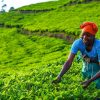
African Women Seek to Boost Innovation and Creativity in Agribusiness
Adeline Umukunzi, a 28-year-old woman mushroom farmer in Musanze, a district located about 100 km north of the capital Kigali, said women have often been the unseen faces of agribusiness in Rwanda. "Women have always played a vital role in agriculture, but behind the scenes. We are starting to see more and more female faces in agribusiness," she told IPS.
Questions Arise About Youth Commitment to Democracy After Nigerian Elections
As Nigeria’s newly-elected president Bola Tinabu seems to be making his mark by undoing many of his predecessor’s policies - another battle is being waged in the courts between him and one of his rivals Peter Gregory Obi.
Food Beyond the Reach for Millions in Horn of Africa
Four months pregnant, Ayan was close to dying of starvation when she arrived at the Kabasa camp in Dolow, on the border between Somalia and Ethiopia.
Women’s Savings in Zimbabwe Struggle Under Weight of Unstable Currency
For years, self-employed and unemployed women in Zimbabwe formed neighbourhood "clubs" where they pooled money together for everything from buying bulk groceries to be shared at the end of the year to meeting funeral expenses.
South Sudan President, Education Cannot Wait Jointly Announce Extended Multi-Year Education Response for Crises-Impacted Sudanese Children
South Sudan is experiencing one of the most severe crises in the world today, causing fragility, instability, and economic stagnation. While a peace agreement was reached in 2018, sporadic intercommunal violence and climate-induced disasters continue to spur displacement. More than 2.2 million people are internally displaced. Another 2.3 million have fled to neighboring countries as refugees.
Innovative Approach to Sustainable Development Policy and Investment for Public, Private Sectors
Oil palm has brought significant benefits and prosperity to Liberia. The export of crude palm oil is a major source of foreign exchange earnings for the government. The palm oil crop covers more than 1 million hectares, hundreds of thousands are employed in the palm oil sector, and at least 21 percent of the farming households produce palm oil.
Human Rights Defenders in Exile Safety Imperiled by Host Countries’ Declining Civil Rights
While leaving one’s country and becoming a refugee is a last resort, it is a decision that many, like Steve Kitsa, have had to make. As conflict becomes increasingly protracted in many African countries, many others will take this step.
Kenya’s Hits and Misses on Journey to Eliminating Plastic Waste
Plastic bags were a part and parcel of life in Kenya. More than 100 million plastic bags were used annually in Kenyan supermarkets alone, with at least 24 million plastic bags discarded every month. Kenya was choking under the weight of plastic bags.
No Peace Until Peace For All
As we head into June, we will commemorate a number of important international days that call for much-needed support to protect refugees, end child labour, stop sexual violence in conflict and ensure human rights for the innocent children victims of aggression.
The Fight for Equity in Education Continues in Africa
June 16 marks the International Day of the African Child, a day commemorating student uprisings in Soweto Township, South Africa, in 1976. The day is meant to honor the brave students who stood against a system of violence and oppression, raising their voices for equality as human beings and for the right to learn in their native languages at school.
Cyclone Freddy has put Women & Girls in Malawi at Greater Risk of Sexual Abuse & Exploitation
“Cyclone Freddy was a terrible experience, and now many women who lost their homes and their livelihoods are at increased risk of sexual exploitation and abuse,” warns Caleb Ng'ombo, Director of People Serving Girls at Risk (PSGR), a frontline NGO in Malawi that supports vulnerable women whose lives have been devastated by the record-breaking tropical storm.
Kenya Moots Disbanding the Loss and Damage Fund, Seeks Fair Equitable Climate Action
The Climate Change envoy to the President of Kenya has asked Kenya’s and, by extension Africa’s negotiators at the ongoing climate conference in Bonn, Germany, not to put much emphasis on financing the Loss and Damage kitty but instead calls for fairness and equity.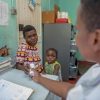
Close Inequalities to End AIDS & Prepare for Future Pandemics
The COVID-19 crisis has shone a light on the danger of pandemics; social crises have shone a light on the danger of inequalities. And the reality is that outbreaks become the pandemics they do because of inequality. The good news is that both can be overcome – if they are confronted as one.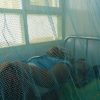
Of the Sahel and the Merchants of Death
There is a tangled trafficking web that has been woven across the Sahel, which spans almost 6.000 kilometres from the Atlantic Ocean to the Red Sea, and is home to more than 300 million people in 10 countries: Burkina Faso, Cameroon, Chad, The Gambia, Guinea, Mali, Mauritania, Niger, Nigeria, and Senegal.
What Sub-Saharan African Nations Can Teach the U.S. About Black Maternal Health
New research shows that Black mothers in the United States disproportionately live in counties with higher maternal vulnerability and face greater risk of preterm death for the fetus, greater risk of low birth weight for a baby, and a higher number of maternal deaths.
Waiting Game for Nigerian Students Awaiting Evacuation from Sudan
Seven weeks after the bloody conflict in Khartoum, Sudan started, and 41 days after the Nigerian government began the evacuation of residents studying there, students are still waiting to be airlifted back to their home country.
Kenyan Scientist’s Trend-Setting Research into Health Benefits of Snails
Snails and slime are usually followed by the thought ‘EEW!’ from most people … some might even scream at seeing a snail near them. For Dr Paul Kinoti, however, these slimy creatures could earn him international recognition because his research on snails landed his institution, Jomo Kenyatta University of Agriculture and Technology (JKUAT), a Ksh. 127 million (USD 1 million) grant.[related_articles]« Previous Page — Next Page » *#*

The Week with IPS

NEXT STOP - SDGs
Tracking global progress towards a sustainable world
Tracking global progress towards a sustainable world
