Languages
Monday, October 26, 2026



News and Views from the Global South
Armed Conflicts

Importing Empire: Why America’s Legacy of Dehumanization in Foreign Wars Is Now a Reality at Home
Before military aid is appropriated, troops deployed, or bombs dropped, the United States lays the groundwork for its political violence by first stripping adversaries of their humanity. Diplomacy is sidelined, legal restraints are treated as inconveniences, and profit is valued over human life. This machinery of dehumanization, imposed around the world for decades and honed in Gaza the past three years, has now returned home, turned inward against Americans by the elected officials and systems meant to protect them.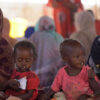
Sudan’s War Nears 1,000 Days as Violence and Hunger Reach Unprecedented Levels
As Sudan approaches 1,000 days of civil war, late December and early January saw a brutal escalation of violence, with drone strikes hitting areas at the center of the country’s deepening hunger crisis.
Maternal Deaths Spike in War-Torn Ukraine
“It was an emergency caesarean section when the life of the pregnant woman was at risk. We did the operation with just flashlights and no water, and against a backdrop of constant explosions,” says Dr Oleksandr Zhelezniakov, Director of the Obstetrics Department at Kharkiv Regional Clinical Hospital, in eastern Ukraine.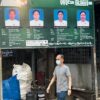
Bombing and Ballots, Myanmar’s Contentious Election
With thousands of civilians killed in years of civil war and over 22,000 political prisoners still behind bars, no one was surprised that early results from Myanmar’s first but tightly controlled elections since the 2021 coup show the military’s proxy party speeding to victory.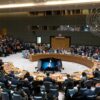
Security Council’s Deep Concern Over United States’ Venezuela Action
United Nations Secretary-General Antonio Guterres expressed deep concern about the immediate future of Venezuela. In a statement read by Under-Secretary-General for Political and Peacebuilding Affairs Rosemary DiCarlo, Guterres told the Security Council’s emergency meeting he was deeply concerned about “possible intensification of the instability in the country, the potential impact on the region, and the precedent it may set for how relations between and among states are conducted.”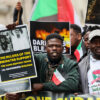
Sudan’s Crisis: Mass Killings Continue While the World Looks Away
Satellite images show corpses piled high in El Fasher, North Darfur, awaiting mass burial or cremation as the Rapid Support Forces (RSF) militia tries to cover up the scale of its crimes. Up to 150,000 El Fasher residents remain missing from the city, seized by the RSF in November. The lowest estimate is that 60,000 are dead. The Arab militia has ethnically cleansed the city of its non-Arab residents. The slaughter is the latest horrific episode in the war between the RSF and the Sudan Armed Forces, sparked by a power battle between military leaders in April 2023.
A Grim Year for Democracy and Civic Freedoms – but in Gen Z There Is Hope
2025 has been a terrible year for democracy. Just over 7 per cent of the world’s population now live in places where the rights to organise, protest and speak out are generally respected, according to the CIVICUS Monitor, a civil society research partnership that measures civic freedoms around the world. This is a sharp drop from over 14 per cent this time last year.
UN Warns Gaza’s Fragile Improvement Could Reverse Without Sustained Aid and Access
Despite notable improvements in the humanitarian conditions in the Gaza Strip following the October 10 ceasefire, progress remains critically fragile. With the enclave having averted famine across multiple regions, the United Nations (UN) and its partners warn that sustained humanitarian access, a steady flow of resources, and the restoration of critical civilian infrastructure are essential in preventing further deterioration, which could have long-lasting consequences for an already deeply traumatized population.
‘From the Moment They Enter Libya, Migrants Risk Being Arbitrarily Arrested, Tortured and Killed’
CIVICUS discusses migrants’ rights in Libya with Sarra Zidi, political scientist and researcher for HuMENA, an international civil society organisation (CSO) that advances democracy, human rights and social justice across the Middle East and North Africa.
Nigeria: Will Nnamdi Kanu’s Life Sentence End the Violent Agitation for Biafra?
On 20 November 2025, a Nigerian court in Abuja sentenced separatist leader Nnamdi Kanu to life imprisonment after finding him guilty of terrorism and several related offenses, bringing an end to a decade-long legal battle.
A Global Movement for Nutrition Is Needed Now More than Ever
In my more than 30 years with the United Nations, I’ve seen enormous change, collaboration and progress towards improving human development. But I’ve also seen how history has a way of repeating itself to entrench some of the most intractable global challenges.
Day Laborers, Trapped in a Complex War Between M25 Rebels and the DRC, Return Home
Fulgence Ndayizeye, a Burundian bicycle taxi driver who used to cross the Congolese-Burundian border every day to support his family, wanted to return home. He and more than 500 other Burundians, including women, men, and children, stranded in Uvira on the border between the DRC and Rwanda, were finally allowed to return to their country on Sunday, December 14, 2025, by M23-Congo River Alliance (AFC) rebels after being stuck in the DRC due to an M23 rebel offensive that had taken the town a few days earlier.
End of Year Video 2025
 Multiple shocks defined 2025: conflict, climate breakdown and shrinking democracy.
Multilateral institutions were tested as never before.
Multiple shocks defined 2025: conflict, climate breakdown and shrinking democracy.
Multilateral institutions were tested as never before.

Rescued from Fire: the World in 2025
Our traditional “year-ender” usually kicks off with a grim litany of world disasters and crises over the past 12 months, highlights IPS partners and contributors and culminates in a more positive-sounding finale. This time I’d like to begin on a more personal note intended also as a metaphor.
Myanmar’s Sham Election: Trump Legitimises Murderous Military Dictatorship
Myanmar is heading for an election, beginning on 28 December, that’s ostensibly an exercise in democracy – but it has clearly been designed with the aim of conferring more legitimacy on its military junta.
Escalating Food Insecurity in Asia-Pacific Undermines Health, Economic Growth, and Stability
2025 marked a notable year of progress in reducing global hunger; yet climate pressures, economic instability, and ongoing conflicts continue to push agri-food systems to their limits, undermining food availability. In a new report, UN agencies raise the alarm on how these factors are particularly pronounced in the Asia-Pacific region, which accounts for 40 percent of the world’s undernourished.
Ahead of Brutal Winter Season, Intensified Attacks Cripple Basic Services Across Ukraine
In recent weeks, the Russo-Ukrainian War has taken a considerable turn for the worse, with armed hostilities escalating in both frequency and intensity, causing extensive damage to civilian infrastructure and a significant loss of life across Ukraine. Attacks on energy infrastructures and the resulting power outages are forcing the most vulnerable civilians to deal with a “cold, frightening ordeal” in the winter season, warned the United Nations (UN) human rights chief.
Killer Robots: The Terrifying Rise of Algorithmic Warfare
Machines with no conscience are making split-second decisions about who lives and who dies. This isn’t dystopian fiction; it’s today’s reality. In Gaza, algorithms have generated kill lists of up to 37,000 targets.
Refugees Forced to Fill Gaps as Funding, Power and Legal Recognition Move Out of Reach
The global refugee system is entering a period of deep strain. The delivery of protection and assistance is undergoing a transformation due to funding cuts, institutional reforms, and shifting donor priorities.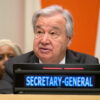
Millions at Risk in 2026 as Aid Budgets Hit Historic Lows
2025 has been an especially turbulent year for humanitarian aid operations as global aid budgets have experienced record declines in funding. As conflicts, environmental disasters, and economic crises intensify and disproportionately impact the world’s most vulnerable communities, the resources available in global emergency funds are falling far short of rapidly growing needs.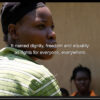
Human Rights Day 2025
In a world of turbulence and doubt, one promise remains.
In 1948, nations adopted the Universal Declaration of Human Rights.
« Previous Page — Next Page »





Armed conflicts are a sad constant on daily front pages worldwide. Wars, civil wars, revolts, coups, genocides, ethnic and political violence, and global terrorism capture our attention for the geopolitical landslides, human suffering, food crises and streams of migration that follow in their wake. As in times of natural disaster, man-made crises claim frequent casualties among the poor, women and children. IPS examines emerging and ongoing armed conflicts around the world with an eye on the underlying social and political dynamics, and special focus on the lived experiences of those most affected by armed conflict.

The Week with IPS

NEXT STOP - SDGs
Tracking global progress towards a sustainable world
Tracking global progress towards a sustainable world
