Languages
Saturday, October 24, 2026



News and Views from the Global South
Armed Conflicts

‘After Decades of Denial and Silence, the Suffering of Rohingya People Is Being Heard at the World’s Highest Court’
CIVICUS discusses the genocide case against Myanmar at the International Court of Justice (ICJ) with Mohammed Nowkhim of the Arakan Rohingya Society for Peace & Human Rights (ARSPHR), a civil society organisation led by Rohingya people born out of refugee camps in Bangladesh to document atrocities, preserve survivor testimony and advocate for accountability and justice.
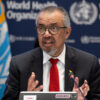
WHO Launches $1 Billion Appeal Amid Funding Shortfalls and Widening Gaps in Healthcare Access
On February 3, the World Health Organization (WHO) launched its 2026 global appeal to help millions of people living in protracted conflicts and humanitarian crises access lifesaving healthcare. Following a trend of sharply declining international funding, the agency warns that it is becoming increasingly difficult to respond to emerging health threats, including pandemics and drug-resistant infections.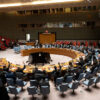
Humanitarian Access Collapses as Yemen’s Political and Security Crisis Deepens
In recent weeks, Yemen’s humanitarian crisis has sharply worsened, as escalating food insecurity and brutal clashes between armed actors have prompted United Nations (UN) officials to warn that the country is approaching a critical breaking point. Intensified violence has increasingly obstructed lifesaving humanitarian operations, while deepening economic and political instability continues to erode access to essential services. As a result, millions of Yemenis now face the growing risk of being left without the support they need to survive, with children being the hardest-hit.
Myanmar: Five Years Since the Coup and No End in Sight To War
Five years of conflict since the military seized power have reduced Myanmar to a failed state and taken a huge toll of lives lost and destroyed. But with all sides seeking total victory, there is no end in sight.
The UN is Being Undermined by the ‘Law of the Jungle’
UN Secretary-General Antonio Guterres was dead on target when he told the Security Council last week that the rule of law worldwide is being replaced by the law of the jungle. “We see flagrant violations of international law and brazen disregard for the UN Charter. From Gaza to Ukraine, and around the world, the rule of law is being treated as an à la carte menu,” he pointed out, as mass killings continue.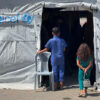
‘Unfathomable But Avoidable’ Suffering in Gaza Hospitals, Says Volunteer Nurse
“I’d never encountered anything like it before. I had no idea that there could be a place that needed humanitarian aid and that a government entity wouldn’t allow physicians or health workers into [that place],” says Jane.*
Exiled: Myanmar’s Resistance to Junta Rule Flourishes Abroad
From construction and hotel workers to kitchen and restaurant staff—estimates of the numbers of Myanmar migrants living in Thailand range up to six million, with a surge of new arrivals since the 2021 military coup.
Binalakshmi Nepram: Engineering Peace, Creating History
It was Christmas eve: some two decades ago. Binalakshmi Nepram was a witness to the killing of a 27-year-old. In utter disbelief, she saw a group of three men dragging the victim from his workshop. Within minutes, he was shot dead.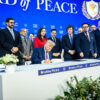
Another of Trump’s Quixotic Imperial Designs
At a press conference at the World Economic Forum in Davos last week, Trump unveiled his newly formed Board of Peace to end the Israel-Hamas war. During a press conference in the White House, he explained that he created the board because “The UN should have settled every one of the wars that I settled. I never went to them. I never even thought to go to them.”
Is the US Board of Peace Aimed at Undermining the UN?
Judging by the mixed signals coming out of the White House, is the Board of Peace, a creation of President Donald Trump, eventually aimed at replacing the UN Security Council or the United Nations itself? At a ceremony in Davos, Switzerland last week, Trump formally ratified the Charter of the Board — establishing it as “an official international organization”.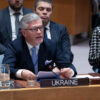
Systemic Infrastructure Attacks Push Ukraine Into Its Deepest Humanitarian Emergency Yet
Nearly four years into Russia’s full-scale invasion, Ukraine faces another winter marked by widespread humanitarian suffering and continued indiscriminate attacks. The final months of 2025 were particularly volatile, characterized by routine bombardment of densely populated areas and repeated strikes on residential neighborhoods, critical civilian infrastructure, and humanitarian facilities. As hostilities expanded into new territories over the past year, humanitarian needs grew sharply, with many war-torn communities residing in uninhabitable areas.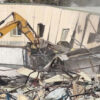
UN Peacekeepers and Associated Personnel Killed in Malicious Attacks in 2025
At least 21 United Nations personnel — 12 peacekeeping personnel and nine civilians — were killed in deliberate attacks in 2025, according to the United Nations Staff Union Standing Committee on the Security and Independence of the International Civil Service.
The World’s Ongoing Conflicts Underline Nuclear and Non-Nuclear States
The two current ongoing conflicts, which have claimed the lives of hundreds and thousands of people, are between nuclear and non-nuclear states: Russia vs Ukraine and Israel vs Palestine, while some of the potential nuclear vs non-nuclear conflicts include China vs Taiwan, North Korea vs South Korea and the United States vs Iran (Venezuela, Mexico, Colombia, Cuba and Denmark).
World Living Beyond Its Means: Warns UN’s Global Water Bankruptcy Report
The world has entered what United Nations researchers now describe as an era of Global Water Bankruptcy, a condition where humanity has irreversibly overspent the planet’s water resources, leaving ecosystems, economies, and communities unable to recover to previous levels.
Children and Armed Conflict Must be at the Forefront of the Global Agenda
Thirty years ago, the groundbreaking report by Graça Machel, renowned and widely respected global advocate for women's and children's rights, to the United Nations General Assembly laid bare the devastating impact of armed conflict on children and shook the conscience of the world. It led to the historic decision of the General Assembly to create the mandate of the Special Representative of the Secretary-General for Children and Armed Conflict (SRSG-CAAC).
Jailed by the Generals She Defended as ICJ Opens Genocide Case Against Myanmar
Held incommunicado in grim prison conditions for nearly five years, Aung San Suu Kyi quite possibly does not even know that this week the International Court of Justice (ICJ) opened a landmark case charging Myanmar with committing genocide against its Rohingya minority a decade ago.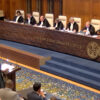
ICJ Begins Proceedings for Rohingya Genocide Allegations Case Against Myanmar
On January 12, the International Court of Justice (ICJ), opened landmark hearings in a case brought by the Republic of The Gambia, alleging that Myanmar’s military committed acts of brutal genocide against the Rohingya minority during its 2017 crackdown. Described by the United Nations (UN) as a case “years in the making,” the ICJ will spend the next three weeks reviewing evidence and testimony from both sides to determine whether the Myanmar military violated the Genocide Convention.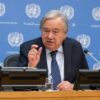
The Iranian Military Is the Only Institution Capable of Catalyzing the Downfall of the Regime
Unlike ever before, Iran’s Islamic regime is facing a revolt led by a generation that has lost its fear. Young and old, men and women, students and workers, are flooding the streets across the country.
Gaza: Physicians Call For Unimpeded Aid To Restore Reproductive Healthcare
Israel must lift all restrictions on medicine, food and aid coming into Gaza, rights groups have demanded, as two reports released today (Jan 14) document how maternal and reproductive healthcare have been all but destroyed in the country.
Roots of Evil: Ethnic cleansing in Europe and the U.S.
At the moment, ICE’s advancement in the U.S. is apparently dividing the nation’s population into desired and undesirable elements. The Immigration and Customs Enforcement (ICE) was born after the September 11, 2001 attacks on the Twin Towers and intended to be a response to terrorism. However, with Donald Trump’s return to the White House, federal immigration agents have become the president’s praetorian guard, implementing his immigration politics.
Importing Empire: Why America’s Legacy of Dehumanization in Foreign Wars Is Now a Reality at Home
Before military aid is appropriated, troops deployed, or bombs dropped, the United States lays the groundwork for its political violence by first stripping adversaries of their humanity. Diplomacy is sidelined, legal restraints are treated as inconveniences, and profit is valued over human life. This machinery of dehumanization, imposed around the world for decades and honed in Gaza the past three years, has now returned home, turned inward against Americans by the elected officials and systems meant to protect them.« Previous Page — Next Page »





Armed conflicts are a sad constant on daily front pages worldwide. Wars, civil wars, revolts, coups, genocides, ethnic and political violence, and global terrorism capture our attention for the geopolitical landslides, human suffering, food crises and streams of migration that follow in their wake. As in times of natural disaster, man-made crises claim frequent casualties among the poor, women and children. IPS examines emerging and ongoing armed conflicts around the world with an eye on the underlying social and political dynamics, and special focus on the lived experiences of those most affected by armed conflict.

The Week with IPS

NEXT STOP - SDGs
Tracking global progress towards a sustainable world
Tracking global progress towards a sustainable world
