Languages
Friday, November 20, 2026



News and Views from the Global South
Armed Conflicts

LAOS: For Cluster Bomb Survivors, War Far From Over
Eighteen-year-old Phongsavath Manithong rubbed his eyes with the back of his arms as he described how his life changed forever.Multi-Billion-Dollar Arms Deals Could Haunt U.S.
When the Shah of Iran, a strongly pro-U.S. ally, was ousted from power after the Islamic Revolution in 1979, the stridently anti-U.S. regime of Ayatollah Khomeini that captured power also inherited a military bonanza: billions of dollars worth of state-of-the-art weapons provided by the United States.
DEATH PENALTY: Sudan Still Sentencing Minors to Death
Four minors are among nine people who have been sentenced to death for a carjacking in Khour Baskawit in South Darfur. The case has raised fresh concerns over protection for children's rights in Sudan.BOOKS-US: Dissecting the Perpetual War Machine
Andrew J. Bacevich emerged in the first decade of the century as this country's most widely read and widely respected critic of U.S. militarism and empire.
Cancer Treatment Out of Reach for Ugandan Women
Josephine Adongo's heart leapt when she heard that two doctors from Kampala were offering free medical exams in Soroti. She was diagnosed with cervical cancer at a regional hospital more than a year previously, but unable to afford to travel to the capital for treatment.Sexual Violence Is Not “Collateral Damage”
On the tenth anniversary of a groundbreaking U.N. resolution, a conference on "Women and War" opened here Wednesday to discuss the disproportionate impact violent conflict has on women and possible ways to prevent these atrocities.POLITICS: Cluster Munitions Treaty Leaves U.S. Behind
A campaign to rid the world of cluster munitions has still to rope in the U.S. government, a major producer and stockpiler of the deadly payload, on the eve of a key global conference in Laos to ban its production and use.Afghan Women Demand Liberation, Not Lip Service
Afghanistan will not know peace until women are equal participants in negotiations, stresses a report released Thursday by the University of Notre Dame's Kroc Institute for International Peace Studies.
Female Factor Key to Human Rights
Gender training for peacekeeping operations "is not something you do for two weeks before you go for deployment," says Florence Butegwa, UNIFEM representative to the African Union (AU) and U.N. Economic Commission for Africa (UNECA).
SUDAN: Rape Is Not Adultery
Women in the Sudanese region of Darfur have been raped with impunity since the start of the conflict there in 2003. Now a campaign to reform the rape law is gaining momentum in the country, promoted by Alliance 149, a national coalition born in late 2009.Wikileaks Paints Grim Picture of Iraqi Civilian Casualties
Two revelations await the reader of the Wikileaks section dealing with civilian deaths in the Iraq War: Iraqis are responsible for most of these deaths, and the number of total civilian casualties is substantially higher than has been previously reported.Leaked Report, New Iraqi Alignment Reveal U.S. War Failure
A newly released Wikileaks document on Iraq and the new political alignment between Moqtada al-Sadr and Iraqi Prime Minister Nouri al-Maliki both provide fresh evidence that Gen. David Petraeus's war against Shi'a militias in 2007-2008 was a futile exercise.Women Warriors Take the Offensive in War Zones
The world's traditional peacemakers - a title long conferred on women - may be undergoing a gradual transformation.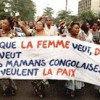
DR CONGO: ‘An Opportunity to Say Never Again’
Civil society in the DRC's eastern province of South Kivu is determined that meaningful action will follow from the publication of the U.N.'s Mapping Project, a report detailing some of the most serious human rights violations by state and non-state actors in the DRC between 1993 and 2003.More Iraqi Prison Abuses Exposed on Wikileaks
The publication of a motherlode of secret field reports from the Iraq War are shining a bright light on heretofore unknown or underreported suspicions about the power of private security contractors and the abuse of Iraqi prisoners by their fellow Iraqis, often with their U.S. military counterparts "turning a blind eye".
India’s Female Peacekeepers Inspire Liberian Girls
It is break time at the Victory Chapel School in Congo Town. Children dressed in their royal blue uniforms with bright yellow and white trim fight to get under the shade of the only mango tree in the yard. It is the start of the dry season and the scorching sun will soon be almost unbearable to stand in.
Without Investment in Agriculture, Africans Stay Hungry
Inadequate access to water, recurring floods and droughts as well as a lack of political will to invest in small-scale agriculture perpetuate hunger across Africa, the continent’s food security experts say.AFGHANISTAN: Do Peace Talks Have Traction?
Reports over the past 10 days of high-level talks between the government of Afghan President Hamid Karzai and senior representatives of the Taliban have spurred growing speculation here about whether Washington is looking for a speedy exit to the longest foreign war in its history.The Prospects and Pitfalls of 1325
Ten years after the Security Council issued its landmark resolution 1325, designed to address the "disproportionate and unique impact of war on women", U.N. officials and international human rights advocates say it is high time the principles it espouses move from paper to reality.War Is Hell, Especially for Women
As the United Nations commemorates the 10th anniversary of a landmark Security Council resolution (1325) on the protection of women in war zones, a new study details the successes and failures of a long-drawn-out effort to battle gender-based violence and provide women a key role in male-dominated peacekeeping and peace-building operations.
Q&A: What the U.S. Undid for Women in Iraq
The U.S.-led invasion and then occupation of Iraq brought a sharp setback to the rights of women in that country, UNFPA head Thoraya Obaid tells IPS in an interview.« Previous Page — Next Page »


Armed conflicts are a sad constant on daily front pages worldwide. Wars, civil wars, revolts, coups, genocides, ethnic and political violence, and global terrorism capture our attention for the geopolitical landslides, human suffering, food crises and streams of migration that follow in their wake. As in times of natural disaster, man-made crises claim frequent casualties among the poor, women and children. IPS examines emerging and ongoing armed conflicts around the world with an eye on the underlying social and political dynamics, and special focus on the lived experiences of those most affected by armed conflict.

The Week with IPS

NEXT STOP - SDGs
Tracking global progress towards a sustainable world
Tracking global progress towards a sustainable world
